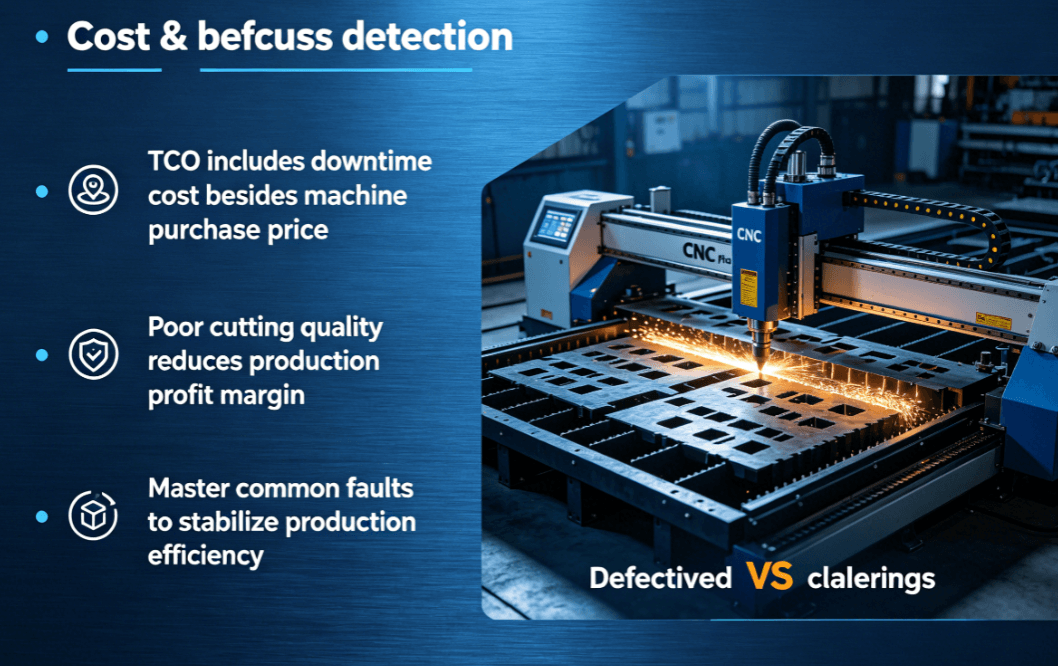
In industrial manufacturing, the "Total Cost of Ownership" (TCO) of a plasma cutting table isn’t just the sticker price—it’s the cost of every minute the machine isn’t running. For procurement professionals and brand owners, understanding plasma troubleshooting is essential for maintaining lean supply chains and ensuring that OEM/ODM partners are delivering high-quality components.
Whether you are sourcing a new CNC plasma table from a global manufacturer or managing a high-volume production line, cut quality issues like excessive dross, inconsistent bevels, and short consumable life can erode your profit margins. This guide explores the most frequent plasma cutting problems and provides actionable solutions to keep your operations efficient.
Identifying Poor Cut Quality: The Procurement Impact
When a batch of parts arrives from a supplier with poor edge quality, it results in secondary finishing costs or, worse, a complete rejection of the shipment. Recognizing these visual cues helps buyers hold suppliers accountable or troubleshoot in-house machinery.
Dross Formation (Top and Bottom)
Dross is the solidified metal that remains attached to the cut edge. It is the most common complaint in plasma cutting.
- High-Speed Dross: Appears as a thin, hard bead along the bottom. It requires grinding to remove.
- Low-Speed Dross: A thick, bubbly globule that is usually easy to knock off.
- Top Dross: Often caused by a torch that is positioned too high or by traveling at excessive speeds, causing the arc to blow metal across the top of the plate.
Excessive Bevel Angle
While a small amount of bevel (1–3 degrees) is normal in plasma cutting, a significant "lean" in the cut edge indicates a technical failure. This is often caused by a worn nozzle or an incorrect torch-to-work distance. For procurement teams, excessive bevel means parts may not fit during final assembly, leading to costly redesigns.
The Core of Plasma Troubleshooting: A Systematic Workflow
To minimize downtime, operators and maintenance teams should follow a standardized troubleshooting hierarchy. Most issues stem from three areas: Air quality, Consumables, and Parameters.
Step 1: Validate Air Purity and Pressure
Contaminated air is the "silent killer" of plasma torches. Moisture or oil in the air line causes the arc to sputter and ruins consumables instantly.
- The Test: Perform a "white cloth test" at the torch lead to check for moisture.
- Sourcing Tip: When purchasing a plasma table, ensure the supplier provides integrated air filtration systems or specifies the exact CFM (Cubic Feet per Minute) and PSI requirements.
Step 2: Inspection of Consumables (The Shield, Nozzle, and Electrode)
Consumables are the most frequent recurring expense in plasma procurement.
- The "Pit" Test: Inspect the electrode. If the hafnium center has a pit deeper than 1/16th of an inch (1.5mm), it’s time to replace it.
- The Orifice Check: If the nozzle’s center hole is elongated or nicked, your arc will be diverted, causing beveling.
- Procurement Insight: Buying "cheap" non-OEM consumables often leads to higher long-term costs due to frequent failures and poor cut consistency.
Step 3: Torch Height Control (THC) Calibration
If the torch is too close, you risk "diving" into the metal; too far, and the arc becomes unstable. A functioning THC is critical for bulk buyers who need consistent quality across thousands of parts.
| Problem | Likely Cause | Solution |
|---|---|---|
| Short Consumable Life | Low air pressure / Contaminated air | Check filters and compressor PSI |
| Incomplete Piercing | Pierce delay too short / Torch too high | Increase delay; Lower pierce height |
| Arc Fails to Start | Worn electrode / Grounding issue | Replace electrode; Check ground clamp |
| Irregular Bevel | Worn nozzle / Incorrect travel speed | Replace nozzle; Calibrate feed rate |
Buyer Scenarios: Troubleshooting the Supplier Ecosystem
Procurement isn't just about buying a machine; it’s about sourcing a reliable manufacturing partner. Here is how different buyers should approach plasma problems:

The Small Buyer & Ecommerce Seller
For those running small-scale workshops for Etsy or Shopify stores, the most common issue is input power fluctuations. Small shops often lack stabilized industrial power, leading to weak arcs.
- Advice: Source machines with "Inverter Technology" that can handle minor voltage drops without sacrificing cut quality.
The Brand Owner (OEM/ODM)
If you are outsourcing production to a factory, your "troubleshooting" involves quality auditing.
- Audit Tip: Ask your supplier for their consumable replacement log. If they aren't tracking consumable wear, they aren't controlling their quality.
- Red Flag: If a supplier blames "bad steel" for poor cuts, check their gas setup. Most "material" issues in plasma are actually "gas/parameter" issues.
Bulk Buyers & Importers
When importing high-volume CNC plasma tables, the biggest risk is after-sales support and parts availability.
- Sourcing Strategy: Verify that the manufacturer uses standardized components (e.g., Hypertherm or Victor Thermal Dynamics compatible parts). If the manufacturer uses proprietary, hard-to-find consumables, your production is at risk if they go out of business or have shipping delays.
Optimizing the Sourcing Process for Reliability
To avoid the headache of constant troubleshooting, procurement managers should evaluate suppliers based on "Machine Duty Cycle" and "System Integration."
- Duty Cycle Verification: A machine rated at 50% duty cycle will overheat and cause arc failures if pushed to 100% in a bulk production environment. Always source a machine that exceeds your daily requirements by 20%.
- Software Compatibility: Many plasma cutting problems are actually CNC programming errors (lead-in/lead-out issues). Ensure your supplier provides a software suite that matches your team’s technical level.
- The Grounding Factor: Poor grounding is the leading cause of "ghost" errors in CNC electronics. Ensure your procurement contract specifies high-quality, copper-braid grounding kits.
Logistics and Maintenance: Preventing Long-term Issues
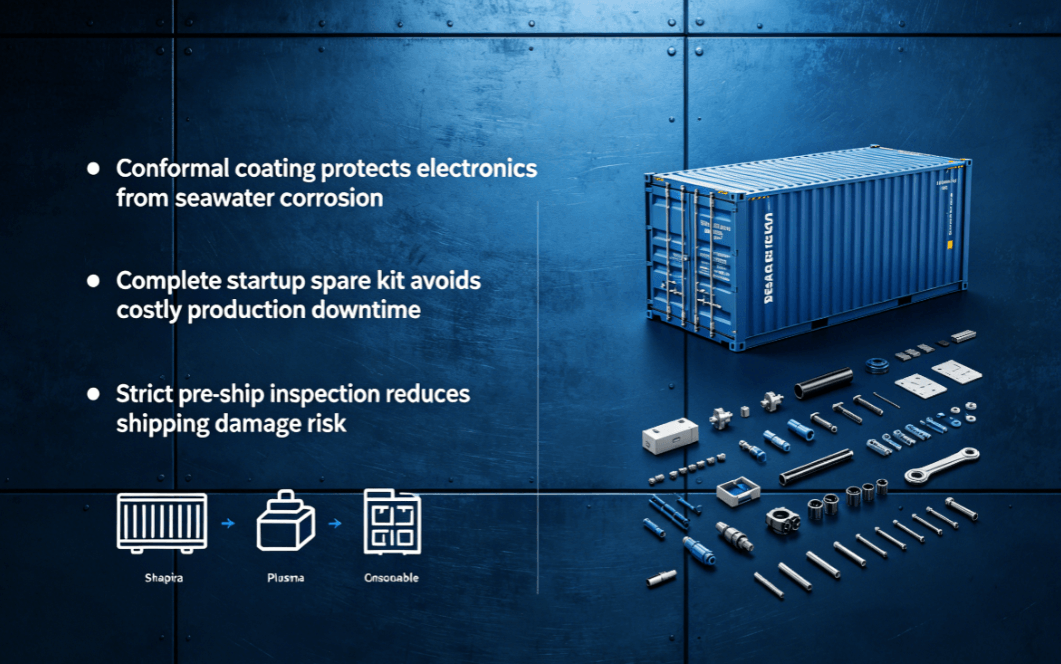
In the import/export world, many plasma tables are damaged during sea freight due to salt air corrosion.
- Pre-Shipment Inspection: Ensure all electronic boards are treated with a conformal coating to prevent moisture damage during transit.
- Spare Parts Kits: Never buy a plasma table without a "Launch Kit." This should include at least 20 nozzles, 10 electrodes, and 2 swirl rings. For cross-border trade, waiting 2 weeks for a $10 part can cost $10,000 in lost production.
Summary
Successful plasma procurement in 2026 requires a balance between machine specifications and maintenance discipline. By identifying dross and bevel issues early, validating air quality, and auditing supplier consumable logs, B2B buyers can drastically reduce the Total Cost of Ownership. Ensure your sourcing contracts include remote diagnostic support and comprehensive spare parts kits to safeguard your production timeline against common plasma cutting problems.
Reference Sources
American Welding Society: Plasma Arc Cutting Standards