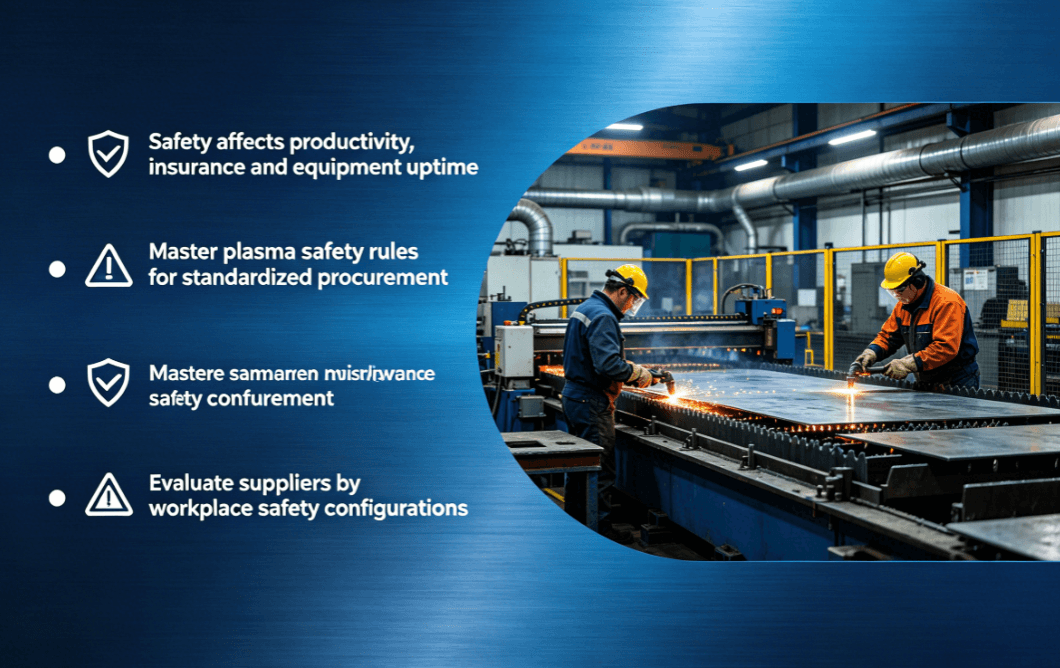
In the sophisticated landscape of 2026 metal fabrication, plasma cutting remains a cornerstone technology for speed and precision. However, for procurement professionals, sourcing a plasma cutting table involves more than comparing cutting speeds and torch heights. Safety is a critical operational variable that influences worker productivity, insurance liabilities, and long-term machine uptime.
Whether you are a bulk buyer for a manufacturing conglomerate or a brand owner setting up a private-label fabrication shop, understanding the nuances of plasma safety is non-negotiable. This guide provides a strategic deep dive into the safety protocols, equipment requirements, and supplier evaluation logic necessary for a safe and efficient workplace.
Understanding the Plasma Arc and Radiation Hazards
The plasma cutting process involves creating a high-velocity jet of ionized gas at extreme temperatures. This process generates intense electromagnetic radiation across several spectrums. For buyers, the goal is to source equipment and PPE that mitigate these invisible risks before they manifest as workplace injuries.
How to Prevent Arc Eye and Skin Burns?
The plasma arc emits a high concentration of Ultraviolet (UV) and Infrared (IR) radiation. Exposure to the naked eye can cause photokeratitis, commonly known as "Arc Eye," which feels like sand in the eyes and can lead to permanent retinal damage.
- Sourcing the Right Shade: When procuring helmets, ensure they offer a variable shade range. For plasma cutting, a shade of 5 to 9 is typically required, depending on the amperage.
- Skin Protection: The radiation is strong enough to cause "welder’s flash" or skin burns similar to a severe sunburn. Ensure that operators are equipped with flame-resistant (FR) clothing that covers all exposed skin, particularly the neck and wrists.
- Reflective Surfaces: Be mindful that radiation can reflect off stainless steel or aluminum surfaces. Procurement teams should consider sourcing non-reflective welding curtains to surround the CNC station.
Mitigating Noise and Acoustic Risks?
Plasma cutting is an inherently loud process. The gas exiting the nozzle at supersonic speeds creates a high-pitched noise that often exceeds 100 decibels (dB). In a professional sourcing scenario, the acoustic profile of a machine is a key "Quality of Life" metric.
- Engineering Controls: Water tables are significantly quieter than downdraft tables because the water helps to muffle the arc.
- Personal Protection: If the workshop noise level remains high, procurement should standardize the use of electronic noise-canceling ear protection that allows for verbal communication while blocking harmful frequencies.
Respiratory Safety: Fume Extraction and Air Quality
In 2026, air quality compliance is a primary concern for industrial importers. Plasma cutting vaporizes metal, creating a "fume cloud" of metallic dust, ozone, and nitrogen oxides. If you are sourcing for a facility in a highly regulated market, the fume extraction system is just as important as the plasma power source itself.
Choosing Between Water Tables and Downdraft Systems?
The choice between these two systems is one of the most significant decisions in the procurement of a plasma cutting table. Each has distinct safety and maintenance profiles.
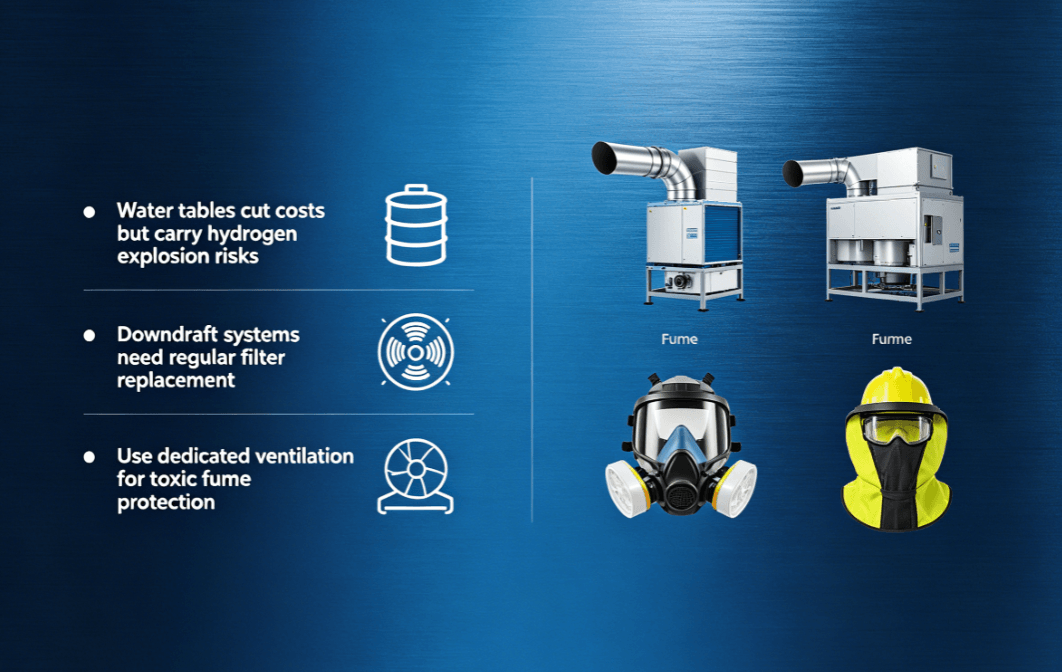
- Water Tables: These trap approximately 95% of the dust and fumes within the water. From a sourcing perspective, they are cost-effective because they do not require expensive filters. However, they introduce a "Hydrogen Risk." When cutting aluminum, hydrogen gas can be trapped in pockets under the plate, leading to a risk of explosion.
- Downdraft Tables: These use high-powered fans to pull fumes through a filtration unit. They provide a cleaner, drier cutting environment but require a recurring budget for filter replacements. Buyers must ensure the filtration system meets HEPA or local industrial standards.
Managing Hazardous Material Exposure?
When cutting galvanized steel, stainless steel (containing hexavalent chromium), or lead-painted metals, the fumes become toxic. Procurement managers must ensure that the ventilation system is rated for these specific materials. In some cases, a localized "at-the-source" fume extractor or supplied-air respirators (PAPR) may be necessary for the operator.
Essential PPE for High-Volume Operations
For bulk buyers and factory owners, standardizing PPE across the workforce is essential for compliance and safety. The following table outlines the minimum PPE requirements for a professional plasma cutting environment.
| Protective Gear | Specification Standard | Procurement Rationale |
|---|---|---|
| Welding Helmet | ANSI Z87.1 / EN 175 | Protects eyes from UV/IR and flying dross. |
| Cutting Gloves | Grade A Leather / Kevlar Stitching | Provides heat resistance and cut protection from sharp edges. |
| Protective Apron | Split Cowhide Leather | Protects the torso from heavy sparks and molten spray. |
| Safety Boots | Steel Toe / Metatarsal Guard | Essential for handling heavy metal plates and off-cuts. |
| Respirators | N95 or P100 (if no extraction) | Prevents inhalation of fine metallic particulates. |
Standardizing Protective Gear?
In a procurement workflow, sourcing PPE in bulk from specialized manufacturers allows for better quality control. Avoid "generic" safety gear found on consumer marketplaces. Instead, look for suppliers that provide certification batch reports (EEAT compliance) to ensure the leather thickness and lens shade accuracy meet industrial safety benchmarks.
Electrical Hazards and Grounding Requirements
The electrical intensity of a plasma cutter is significantly higher than many other workshop tools. A typical system uses high-voltage DC (up to 400V) and high-frequency (HF) starting mechanisms. This creates a risk for both the operator and the shop's electronic infrastructure.
Avoiding Electrical Shock and Fires?
Grounding is the most frequently misunderstood safety tip in plasma cutting. A "floating ground" can lead to electricity seeking the easiest path to earth, which might be through the CNC controller or the operator.
- Work Lead Connection: The ground clamp must be attached directly to the metal being cut or to the table slats that have a clean, metal-to-metal connection with the workpiece.
- Cable Inspection: Procurement should include a regular maintenance schedule for inspecting torch leads. Any nicks or exposed wires in the torch cable are immediate "stop-work" hazards due to the high voltage involved.
- Primary Power: Ensure the power supply is connected to a dedicated circuit with an appropriately rated circuit breaker and a lockout/tagout (LOTO) system.
Mitigating EMI and High-Frequency Noise?
Many plasma cutters use High Frequency (HF) to start the arc. This can create Electromagnetic Interference (EMI) that disrupts nearby computers, Wi-Fi, or even pacemakers.
- Sourcing Solution: If your facility uses sensitive CNC equipment or robotics, look for "Blow-back" start torches (also known as pneumatic start). These eliminate the need for HF and are much safer for modern, digitally integrated factories.
Fire Prevention in Metal Fabrication Suites
Plasma cutting produces a constant stream of molten metal sparks, known as dross. These sparks can travel up to 35 feet and remain hot enough to ignite flammable materials long after the cut is finished.
- The 35-Foot Buffer: Maintain a clear zone around the plasma table. Sourcing managers should plan the workshop layout to ensure that solvent tanks, oil drums, or wood storage are kept well away from the cutting zone.
- Dross Collection: Modern CNC tables often include a dross drawer or hopper. Ensure the design allows for easy cleaning, as a buildup of fine metallic dust (especially aluminum) can be a combustion hazard.
- Fire Extinguishers: Class D extinguishers are required if you are cutting combustible metals like magnesium or specific aluminum alloys. For general steel cutting, a standard ABC extinguisher should be mounted within 10 feet of the operator station.
Supplier Evaluation and Safety Benchmarks
When conducting an RFQ (Request for Quote) for a new plasma cutting system, safety should be a primary evaluation pillar. A supplier’s willingness to provide safety documentation is a major indicator of their engineering maturity.
Critical Questions for Your RFQ?
Professional buyers should use the following questions to vet potential OEM/ODM suppliers:
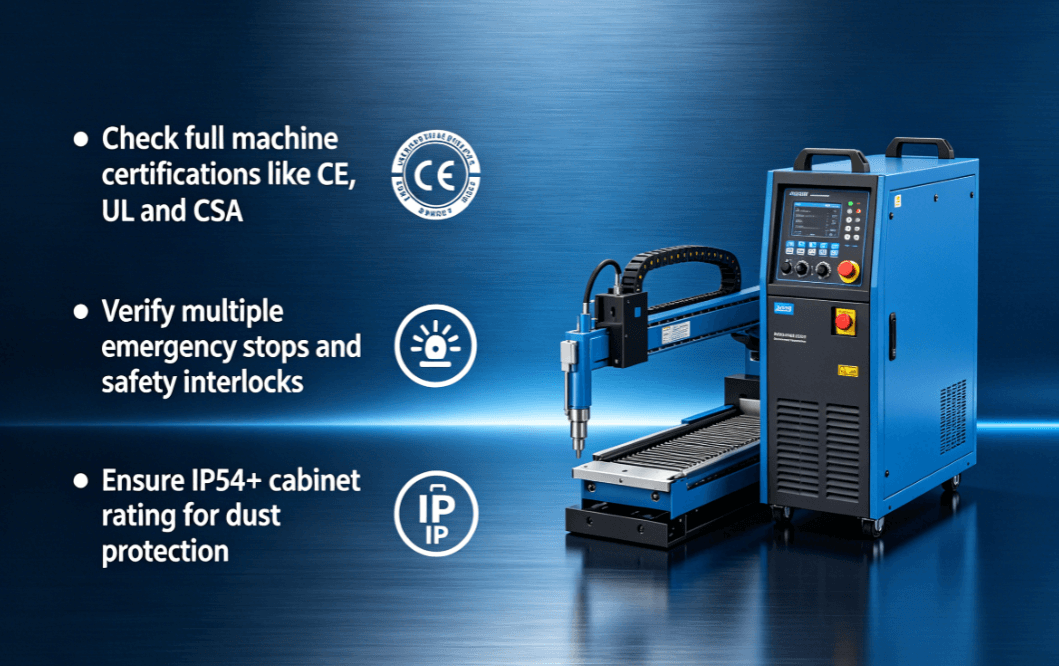
- Certification Compliance: Does the machine carry a valid UL, CE, or CSA mark for the entire assembly, including the CNC controller?
- Emergency Stop Integration: Are there multiple physical E-Stop buttons located at the torch, the controller, and the power supply?
- Safety Interlocks: Does the system have sensors to detect low gas pressure or a "parts-in-place" sensor that prevents the arc from firing if the torch is disassembled?
- Enclosure Quality: Is the electronics cabinet rated IP54 or higher to prevent metallic dust from entering and causing a short circuit?
By prioritizing these questions, sourcing agents can filter out low-quality "hobbyist" machines that pose a significant risk in an industrial procurement setting.
Summary
In 2026, the safety of a plasma cutting operation is an integrated ecosystem involving machine design, PPE sourcing, and workshop management. High-quality procurement logic dictates that safety features are not "optional extras" but essential components that preserve the value of the investment. By following these plasma safety tips—from proper grounding and ventilation to rigorous supplier vetting—buyers can ensure a productive, compliant, and hazard-free fabrication environment.
Reference Sources
ANSI Z49.1 Safety in Welding and Cutting Standards