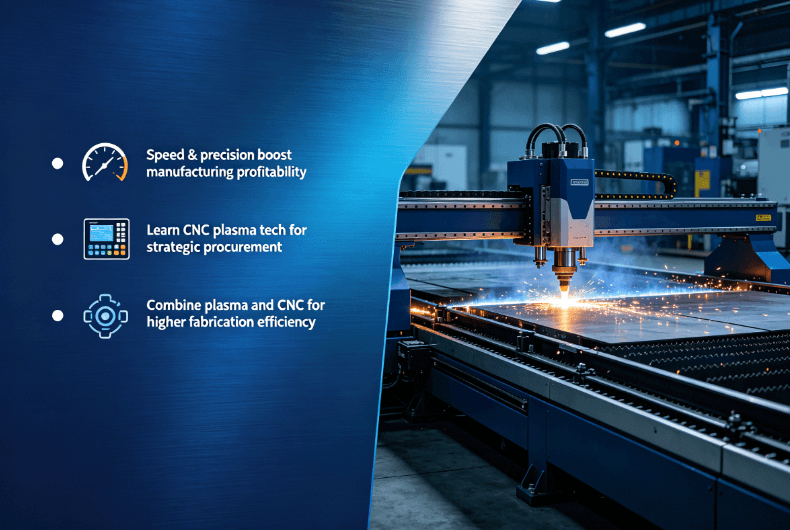
In the 2026 manufacturing landscape, speed and precision are the primary drivers of profitability. For procurement professionals and business owners, understanding how CNC plasma tables work is no longer just a technical requirement—it is a strategic necessity. Whether you are sourcing from industrial clusters in China or evaluating high-definition domestic suppliers, the efficiency of your metal fabrication line depends on the synergy between plasma physics and computer numerical control.
The Physics of Plasma: Turning Gas into a Tool
To understand the "table," one must first understand the "arc." Plasma is often described as the fourth state of matter. In a CNC plasma cutter, this state is harnessed to melt through conductive metals with surgical precision.
The Ionization Process
The process begins when a gas (such as compressed air, nitrogen, or oxygen) is forced through a constricted nozzle at high pressure. Simultaneously, an electrical arc is introduced to this gas flow from the power supply. This electrical energy "ionizes" the gas, turning it into a high-temperature plasma arc.
- Temperature: Plasma arcs can reach up to 25,000°C (45,000°F).
- Action: The heat melts the metal instantly, while the high-velocity gas blows the molten material away, creating a "kerf" (the gap left by the cut).
Procurement Note: When evaluating suppliers, the "Pilot Arc" feature is critical. A non-touch pilot arc allows the torch to ignite without touching the workpiece, significantly extending the lifespan of consumables—a key factor in Total Cost of Ownership (TCO).
Core Components: The Anatomy of a CNC Plasma System
A CNC plasma table is an integrated ecosystem. If one component is underpowered, the entire system’s ROI drops.
The CNC Controller (The Brain)
The controller translates digital designs into physical movement. In 2026, most industrial-grade tables use specialized PLC (Programmable Logic Controller) or PC-based systems that handle real-time adjustments.
- Key Feature: Look for controllers that support "Look-Ahead" logic, which slows the torch down during tight corners to prevent "rounding" errors.
The Plasma Power Supply (The Muscle)
This unit determines the thickness capacity and duty cycle of the machine.
- Inverter Technology: Modern tables use IGBT inverter technology, which is more energy-efficient and provides a more stable arc than older transformer-based models.
- Duty Cycle: For bulk buyers, a 100% duty cycle at the required amperage is essential for continuous 24/7 production.
The Gantry and Motion System
The gantry is the bridge that moves the torch along the X and Y axes.
- Drive Systems: High-end tables use helical rack-and-pinion drives combined with AC servo motors. Cheap "hobbyist" tables often use belt drives and stepper motors, which lack the torque and precision required for heavy industrial plates.
Torch Height Control (THC)
Perhaps the most overlooked component, the THC maintains a constant distance between the torch tip and the metal plate.
| Component | Standard Requirement | High-Performance (Industrial) |
|---|---|---|
| Drive Motor | Stepper Motor | AC Servo Motor |
| Guide Rails | Round Rails | Linear Profile Rails (HIWIN or equivalent) |
| Plasma Source | Air Plasma | High-Definition (HPR) Oxygen Plasma |
| Software | Basic CAM | Integrated Nesting with Auto-Layout |
The Digital Workflow: From CAD to Cut
For a procurement manager, understanding the software chain is vital because software compatibility issues are a leading cause of post-purchase downtime.
- CAD (Computer-Aided Design): The operator creates a 2D vector drawing of the part.
- CAM (Computer-Aided Manufacturing): This software takes the CAD file and determines the "toolpath." This is where "Nesting" occurs—arranging parts to minimize scrap metal.
- Post-Processor: This converts the CAM path into G-Code, the universal language that the CNC controller understands.
- The Execution: The controller moves the gantry and fires the torch according to the G-code instructions.
Fume Management: Water Tables vs. Downdraft Systems
CNC plasma cutting generates significant smoke, dust, and sparks. How the table handles this determines the safety and cleanliness of your facility.
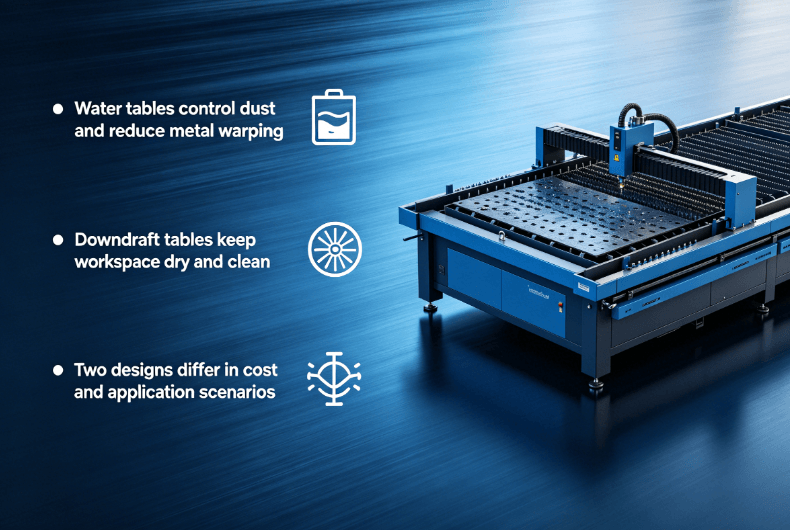
Water Tables
The metal plate sits on slats either submerged in or just above a tank of water.
- Pros: Low cost, effectively traps sparks and dust, keeps the metal cool (reducing warping).
- Cons: Messy; water becomes contaminated with "slag" (dross) and requires disposal.
Downdraft Tables
A high-powered fan sucks smoke through the slats and into a filtration system.
- Pros: Cleaner for the operator, better for cutting materials that shouldn't get wet (like certain aluminum alloys).
- Cons: More expensive to install; requires ducting and expensive filter replacements.
What Defines "High-Definition" Cutting?
As you browse suppliers, you will see "High-Definition" (HD) plasma mentioned frequently. For bulk buyers and brand owners, understanding this distinction is crucial for product quality. Traditional plasma tables have a slightly tapered cut (the top of the hole is wider than the bottom). High-Definition Plasma uses a vented nozzle technology that swirls the gas to constrict the arc even further.
- Result: Squarer edges, virtually no dross, and the ability to cut bolt-ready holes.
- Procurement Impact: HD systems are significantly more expensive but eliminate the need for secondary finishing (grinding/drilling), which can save thousands in labor costs annually.
Buyer's Checklist: Evaluating a CNC Plasma Table Supplier
When sourcing globally, use these criteria to move beyond the sales pitch and into technical reality.
Verify the "Table Frame" Construction
A lightweight frame will vibrate at high speeds, leading to jagged edges (chatter marks). Industrial tables should have a fully welded, stress-relieved steel frame. Avoid "bolt-together" kits for serious production.
Consumable Accessibility
The torch uses nozzles, electrodes, and swirl rings that must be replaced regularly.
- The Trap: Buying a machine with a "proprietary" torch that forces you to buy expensive consumables from only one supplier.
- The Solution: Source tables that use industry-standard torches (like Hypertherm or Kjellberg) where consumables are available globally.
Support and Technical Documentation
In a B2B procurement cycle, the "product" is also the support. Ensure the supplier provides:
- Wiring diagrams in your native language.
- A comprehensive "Cut Chart" (specifying speed/pressure for different thicknesses).
- Remote diagnostic capabilities via the CNC controller.
Operational Costs: The "Hidden" Side of the Mechanism
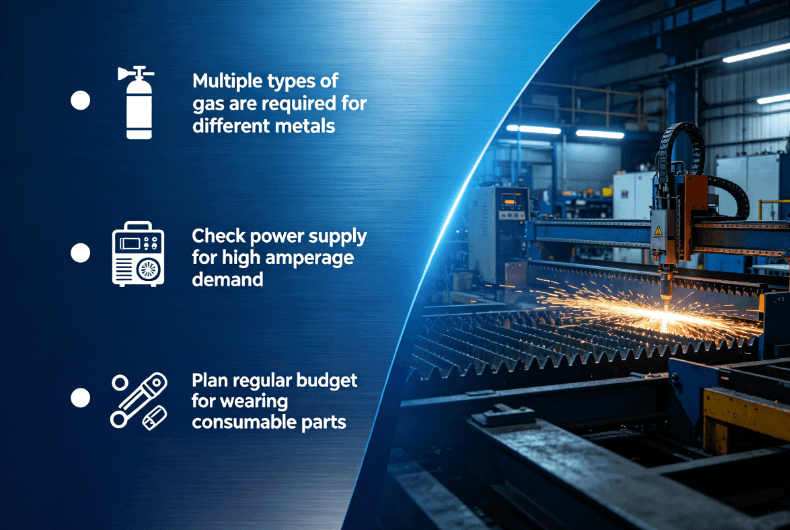
A common mistake for first-time buyers is focusing only on the purchase price. The "how it works" aspect involves ongoing inputs:
- Gas Consumption: Depending on the metal, you may need Oxygen, Nitrogen, or H35 (Argon-Hydrogen).
- Electricity: Industrial plasma systems are high-draw. Ensure your facility's power grid can handle the peak amperage.
- Consumables: Budget for $50–$200 per week in electrodes and nozzles for a single-shift operation.
Summary
Understanding how CNC plasma tables work allows buyers to distinguish between entry-level equipment and industrial-grade machinery. By focusing on the synergy of the CNC controller, power supply, and motion system, procurement teams can ensure they invest in technology that minimizes secondary finishing and maximizes long-term ROI.
Reference Sources
American Welding Society: Standards for Thermal Cutting