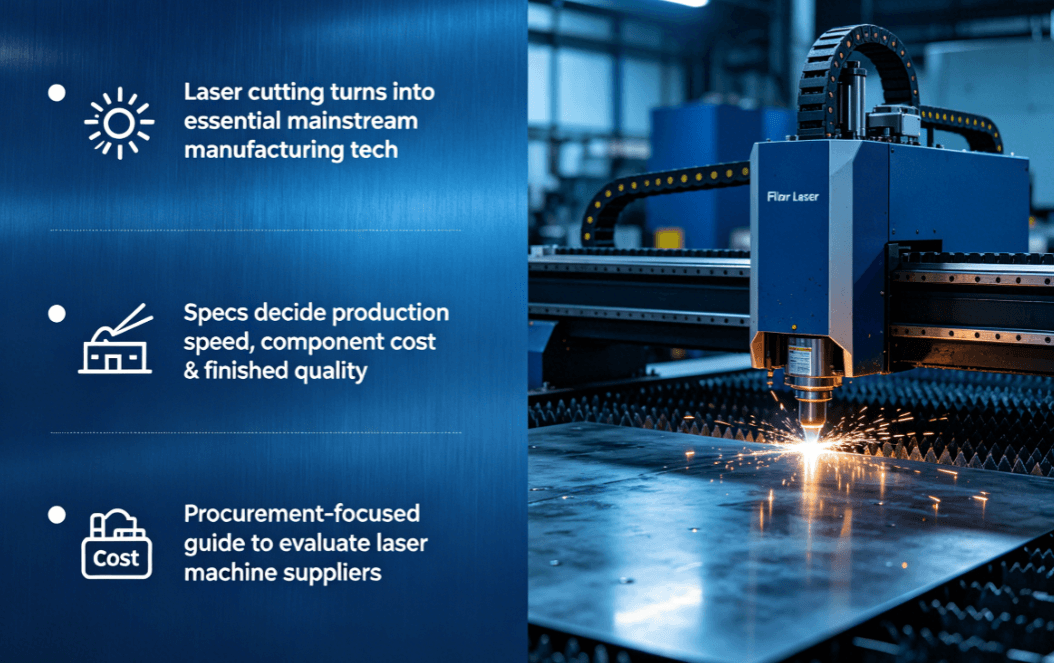
In the landscape of modern manufacturing, laser cutting has transitioned from a high-end niche capability to a fundamental industrial requirement. For procurement professionals, brand owners, and bulk buyers, understanding laser cutting basics is no longer just about knowing how a machine works; it is about understanding how this technology dictates production speed, part cost, and final product quality.
As we move through 2026, the global sourcing market for laser-cut components and machinery has become more specialized. This guide breaks down the technical core of laser cutting through the lens of a procurement specialist, helping you navigate supplier capabilities and technical specifications.
What is Laser Cutting in Modern Manufacturing?
At its simplest, laser cutting is a non-contact, thermal-based manufacturing process that uses a focused, high-power laser beam to sever materials—typically metals, plastics, or composites. From a sourcing perspective, it is a high-precision alternative to mechanical cutting (like CNC milling or die-cutting) that eliminates the need for physical tool changes, thereby reducing setup times for small-to-medium batches.
The process starts with a digital file (usually CAD). The laser machine follows the programmed path, melting, burning, or vaporizing the material. A high-pressure gas (assist gas) then blows away the molten debris, leaving a high-quality surface finish.
Why buyers prioritize laser cutting:
- Precision: Standard tolerances often reach ±0.1mm.
- Minimal Waste: Advanced "nesting" software allows parts to be packed tightly on a sheet.
- No Tool Wear: Unlike physical blades, the laser does not dull, ensuring consistency across a 10,000-unit run.
Choosing Between Fiber and CO2 Laser Technology?
When evaluating a supplier’s factory floor, the type of laser they utilize will determine the price point and material compatibility of your project.
| Feature | Fiber Laser | CO2 Laser |
|---|---|---|
| Best For | Thin to medium metals (Steel, Brass, Copper) | Non-metals (Wood, Acrylic, Leather) & Thick Steel |
| Energy Efficiency | High (lower operational cost) | Lower (higher overhead) |
| Maintenance | Low (no moving parts/mirrors) | High (requires mirror alignment) |
| Cutting Speed | 2-3x faster on thin materials | Faster on thick non-metal materials |
| Sourcing Context | Ideal for high-volume automotive/electronics | Ideal for signage, textiles, and specialized thick plate |
Why Fiber Lasers Lead the Metal Market?
In 2026, fiber lasers dominate the metal fabrication market. They use solid-state diodes to create the beam, transmitted through a fiber optic cable. For a bulk buyer, this means faster lead times and lower per-part costs for stainless steel and aluminum.
When Should Buyers Choose CO2 Lasers?
CO2 lasers use a gas mixture stimulated by electricity. While older, they remain essential for organic materials. If you are a brand owner sourcing custom packaging or wooden retail displays, your supplier must have CO2 capabilities.
The Standard Sourcing Workflow for Laser Components?
Navigating a laser cutting contract requires a structured workflow. Understanding these steps ensures you don't encounter "hidden" costs during the production phase.
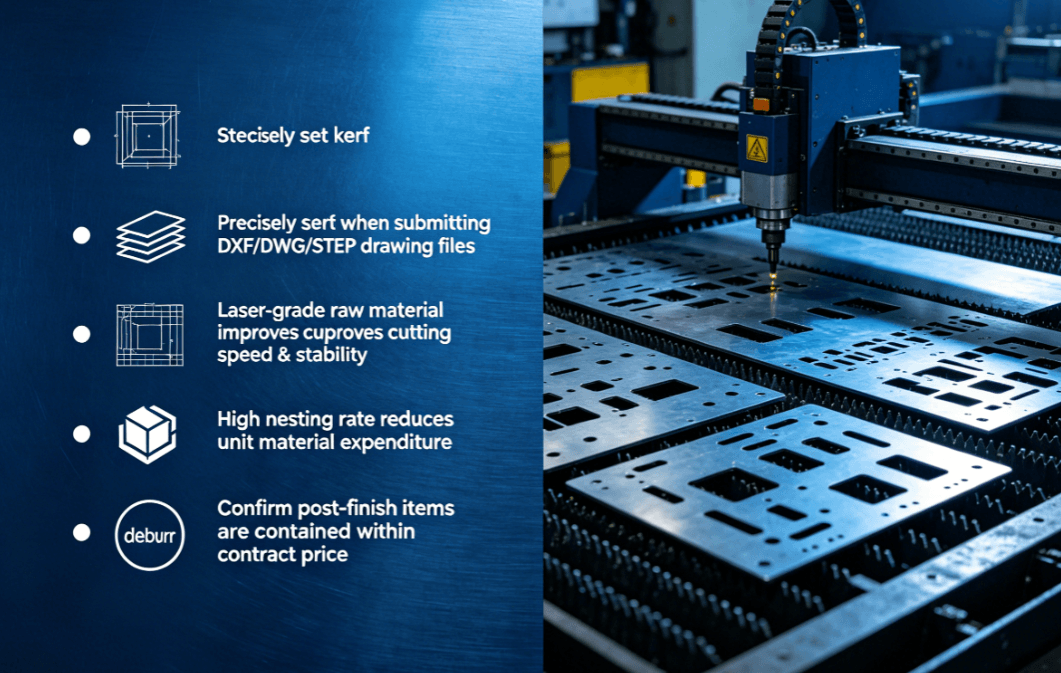
- Technical File Preparation: A supplier will request DXF, DWG, or STEP files. Ensure your engineering team has accounted for "kerf" (the width of the laser cut).
- Material Selection & Sourcing: The grade of material significantly affects the laser's performance. "Laser Grade" steel is cleaner and allows for faster cutting.
- Nesting and Yield Optimization: Professional suppliers use nesting software to arrange parts on a sheet. A high-efficiency nest (90%+ material utilization) lowers your per-unit cost.
- Post-Processing: Laser cutting often leaves a "dross" (burr). Ensure your quote includes deburring, tapping, or surface finishing.
How to Evaluate Laser Cutting Supplier Capability?
Not all laser cutting shops are created equal. When conducting a factory audit or reviewing a new supplier, look for these indicators of high-level procurement readiness.
Assessing Machine Wattage and Bed Capacity?
A supplier with a 12kW fiber laser can cut significantly thicker plate than one with a 3kW machine. Furthermore, if your parts are 3 meters long, a standard 1.5m x 3m bed won't suffice. Match the hardware to your dimensions to avoid markups.
Identifying Automation and Smart Manufacturing?
The most competitive suppliers in 2026 utilize automated loading and unloading systems. This allows the factory to run 24/7 without manual intervention, drastically reducing lead times for high-volume orders.
Verification of Quality Control Standards?
For industries like aerospace or medical devices, ISO 9001 is the bare minimum. Look for suppliers who use automated optical inspection (AOI) to verify part dimensions against the CAD file in real-time.
Primary Cost Drivers in Laser Procurement?
Understanding where the money goes allows you to negotiate more effectively.
- Machine Time: This is the primary cost. Complex geometries with many "pierces" take longer than straight lines.
- Assist Gases: Nitrogen cutting (for a clean edge) is more expensive than oxygen cutting.
- Material Market Price: Since laser cutting is for high-volume metalwork, fluctuations in the metal market will impact your RFQ validity period.
- Setup Fees: For small batches, the time taken to load the program can be higher than the actual cutting time.
Managing Risks in the Laser Supply Chain?
Every procurement professional must be aware of potential pitfalls in the laser cutting ecosystem:
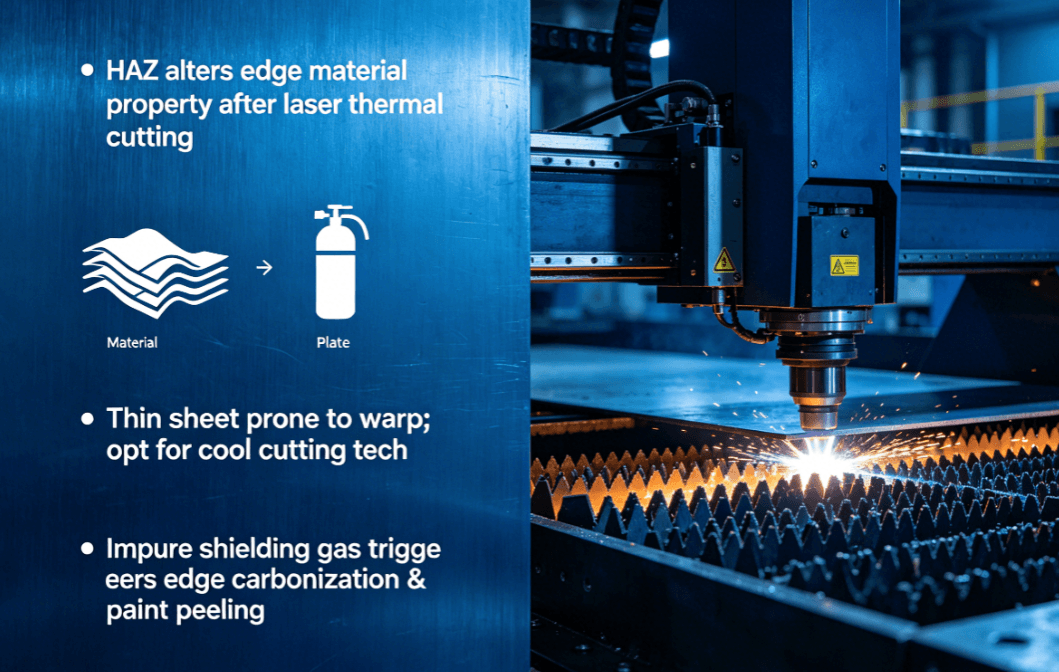
- Heat Affected Zone (HAZ): Laser cutting is a thermal process that can slightly change material properties at the edge.
- Material Distortion: Thin sheets can warp due to heat; check for "cool cutting" technologies.
- Inconsistent Gas Purity: Low-quality gas can lead to carbonization on edges, causing paint to flake off later.
Summary
The laser cutting industry is shifting. In 2026, the focus is on AI-driven quoting for transparency and fiber laser efficiency for sustainability. Choosing a supplier that integrates these technologies ensures your procurement remains competitive in both cost and carbon footprint.
Reference Sources
International Laser Display Association (ILDA) Official Site
Fabricators & Manufacturers Association (FMA) Industry Resources