In the rapidly evolving landscape of global manufacturing, procurement professionals are increasingly prioritizing technologies that offer both agility and cost-predictability. Laser cutting has transitioned from a specialized service into a foundational requirement for modern supply chains. Whether you are managing bulk orders for industrial components or small-batch private label products, understanding the strategic benefits of this technology is essential for maintaining a competitive edge in 2026.
This guide provides a comprehensive analysis of laser cutting advantages from a procurement and sourcing perspective, focusing on material efficiency, lead-time reduction, and supplier evaluation logic.
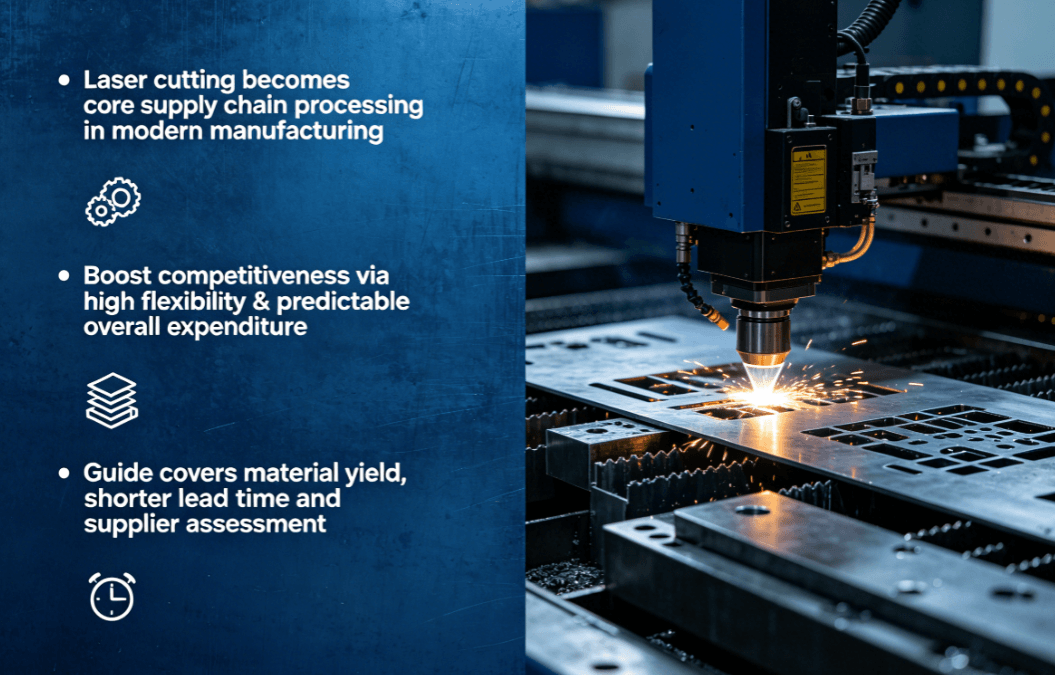
Core Laser Cutting Advantages for Modern Sourcing
The decision to utilize laser cutting over traditional mechanical methods often comes down to the balance between initial quote price and total cost of ownership. Laser technology provides several key benefits that directly impact the quality and reliability of sourced components.
High Precision and Edge Quality
The most prominent advantage of laser cutting is its ability to achieve extreme precision. Using a concentrated beam of light, the machine can maintain tolerances that mechanical cutters cannot match. For a procurement officer, this precision translates into higher assembly yield rates and fewer defective parts.
- Reduced Secondary Finishing: Laser cuts are often "burr-free," meaning parts don't need additional grinding or deburring.
- Intricate Geometries: You can source parts with complex internal cutouts that would be impossible or prohibitively expensive via CNC milling.
Unmatched Speed and Throughput
In 2026, supply chain velocity is a major differentiator. Fiber laser machines, especially those with high wattage, can process thin to medium-gauge metals at speeds that far exceed traditional plasma or waterjet systems. This high throughput allows suppliers to offer shorter lead times even during peak demand periods. When evaluating an RFQ, a supplier with modern fiber laser equipment is typically better equipped to handle urgent production spikes.
Material Versatility
The ability to process a wide range of materials with a single machine setup reduces the need for multiple specialized vendors. This consolidation simplifies the procurement ecosystem.
- Metals: Carbon steel, stainless steel, aluminum, brass, and copper.
- Non-Metals: Acrylic, wood, glass, and certain polymers (primarily via CO2 lasers).
Procurement Realism: How Laser Cutting Impacts Bottom Line
A successful sourcing strategy looks beyond the surface-level machine rate. Laser cutting offers several structural financial benefits that can significantly lower the overall cost of a production run, particularly for OEM and ODM projects.
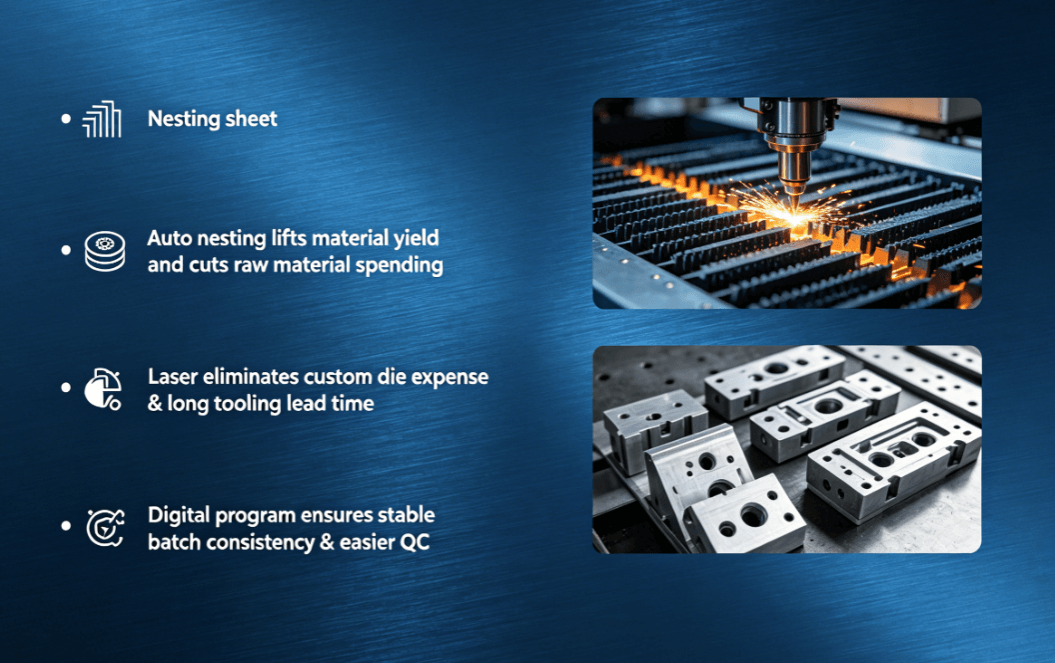
Material Utilization via Automated Nesting
Raw material costs are often the largest variable in a manufacturing quote. Laser cutting systems utilize sophisticated nesting software that arranges parts on a sheet to minimize scrap. This efficiency is a critical "hidden" advantage for bulk buyers.
- Sourcing Tip: Ask your supplier about their nesting efficiency. A supplier that achieves 90% material utilization can often offer lower per-unit prices than one at 75%, even if their hourly machine rate is higher.
Zero Tooling Costs
For brand owners and ecommerce sellers, the absence of tooling costs is a game-changer. Traditional stamping or punching requires expensive custom dies that can take weeks to manufacture. With laser cutting, the "tool" is a digital file.
- No Tooling Lead Time: Production starts as soon as the CAD file is uploaded.
- Low-Cost Prototyping: You can iterate on designs without paying for a new mold every time a dimension changes. This makes laser cutting the ideal choice for OEM/ODM projects in the early stages.
Consistency Across Batches
Digital manufacturing processes offer superior repeatability. Once a cutting program is optimized for a specific material and thickness, the machine can replicate that exact cut thousands of times with negligible variance. This level of consistency simplifies quality control (QC) and reduces the need for intensive third-party inspections of every batch.
Comparison: Laser vs. Traditional Cutting Methods
To choose the right manufacturing partner, it is important to compare laser cutting against other common industrial cutting technologies. Each method has a specific "sweet spot" based on material thickness and volume.
| Feature | Laser Cutting | Plasma Cutting | Waterjet Cutting | CNC Punching |
|---|---|---|---|---|
| Precision | Excellent (<0.1mm) | Moderate (~0.5mm) | High (<0.1mm) | High |
| Speed (Thin Metal) | Extremely High | High | Low | High |
| Heat Affected Zone | Minimal | Large | None (Cold Cut) | None |
| Material Range | High (Metal/Plastics) | Metals Only | Almost Anything | Metals (Thinner) |
| Tooling Cost | $0 | $0 | $0 | High (Dies) |
| Best For | Complex/Precision | Thick/Rough Parts | Heat-sensitive parts | Simple/High Volume |
Strategic Sourcing: Evaluating a Laser Cutting Supplier
When auditing a new factory, procurement professionals should look for specific technical indicators that signal a high-performance operation. A supplier’s equipment list is a direct reflection of their ability to meet tight tolerances and aggressive deadlines.
Power and Technology Grade
The wattage of the laser source determines the maximum thickness the machine can cut cleanly and the speed at which it operates.
- Fiber Lasers (the Gold Standard): Best for metals. Ask if they have 6kW to 20kW machines if you are sourcing thick plates (over 20mm).
- CO2 Lasers: Still relevant for non-metals like acrylic or specialized fabrics.
- Brand of the Source: High-tier suppliers use laser sources from brands like IPG, nLight, or Trumpf. These offer better beam stability and lower failure rates.
Gas Selection and Edge Oxidation
The choice of assist gas significantly affects the finish of the cut edge. Buyers should specify the required edge quality based on the product's final application.
- Nitrogen Cutting: Essential for stainless steel if you require a clean, silver edge that is ready for welding or painting without cleaning.
- Oxygen Cutting: Generally used for carbon steel; it's faster but leaves an oxide layer that may need removal before powder coating.
Automation and Loading Systems
For high-volume bulk buyers, labor costs can be a bottleneck. Suppliers that have invested in automated loading and unloading towers can operate "lights-out" shifts, providing 24-hour production capability. This level of automation typically results in more competitive pricing for large-scale contracts.
Identifying the Right Buyer-Technology Match
Different buyer types should prioritize different aspects of laser cutting to maximize their supply chain efficiency.
- Ecommerce Sellers: Focus on the low MOQ potential. Since there are no tools to set up, you can order smaller batches of customized items (e.g., personalized metal wall art or custom enclosure panels) to test the market.
- Bulk Buyers: Focus on the nesting efficiency and the throughput speed of high-power fiber lasers to ensure supply chain stability during peak seasons.
- Sourcing Agencies: Use the lack of secondary finishing as a "selling point" for your clients, ensuring they receive a retail-ready product directly from the factory.
Sourcing Challenges and Risks to Mitigate
Despite the clear benefits, procurement involves managing risks. When sourcing laser-cut parts, be aware of the technical limitations that might affect your project's success.
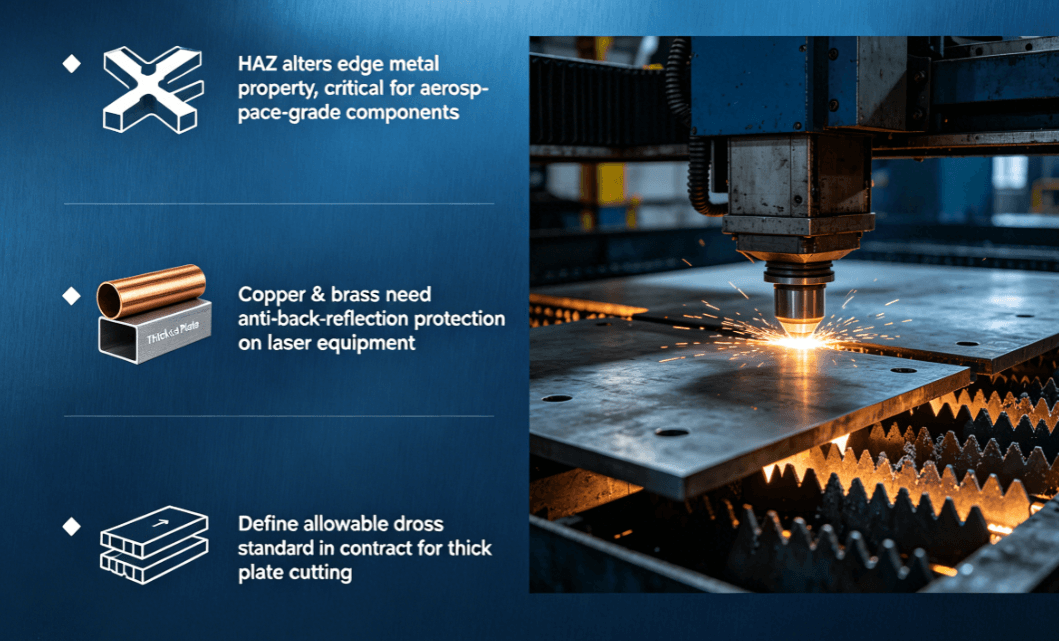
- Heat Affected Zone (HAZ): While minimal, the heat from the laser can slightly change the properties of the metal at the edge. If your part requires extreme structural integrity for aerospace, this must be audited.
- Reflective Metals: Brass and copper can reflect the laser beam back into the machine, damaging it. Ensure your supplier has "back-reflection" protection if you are sourcing these materials.
- Dross on Thick Plates: As thickness increases, the likelihood of "dross" (hardened molten metal) on the bottom edge increases. Set clear quality standards for "acceptable dross" in your contract.
Summary
Laser cutting is a versatile and high-precision technology that offers significant advantages for modern procurement, including reduced material waste and the elimination of tooling costs. By understanding the technical nuances—such as fiber vs. CO2 sources and the importance of assist gases—buyers can better evaluate supplier quotes and ensure long-term production consistency. As we move through 2026, the integration of automation and higher-wattage lasers will continue to drive down costs, making this technology the preferred choice for a wide array of manufacturing sectors.
Reference Sources
Official resources from the Fabricators Manufacturers Association
ISO 9013 standards for thermal cutting quality classification
Technical data on fiber laser sources and industrial applications