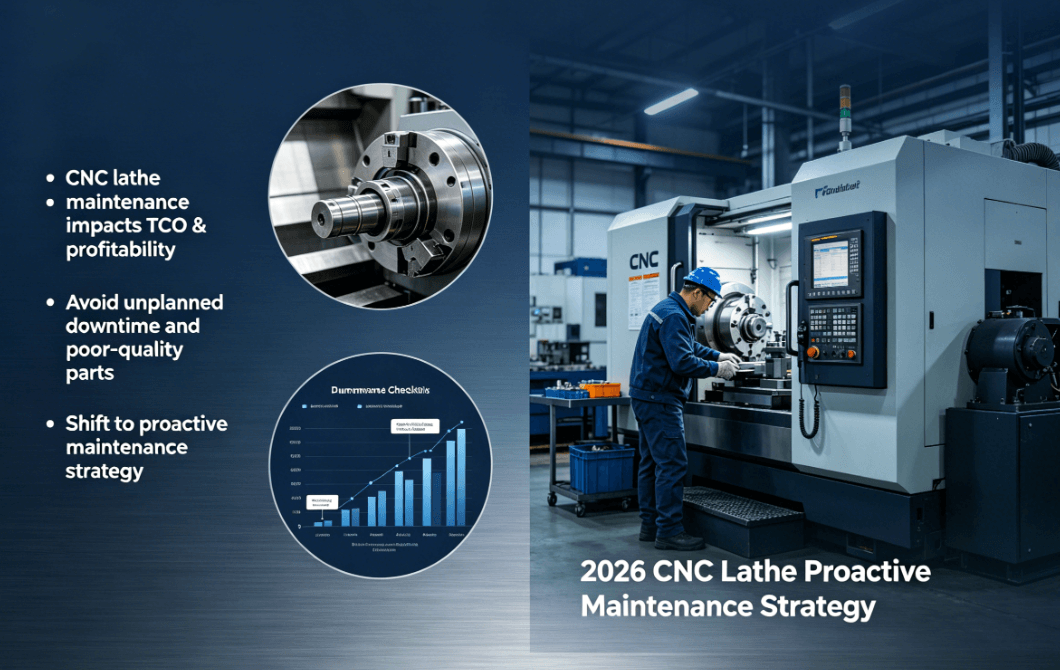
In the competitive landscape of 2026 global manufacturing, a CNC (Computer Numerical Control) lathe is more than just a piece of equipment; it is a high-precision asset that dictates your production capacity and bottom-line profitability. For procurement professionals and factory owners, the "total cost of ownership" (TCO) is heavily influenced by how effectively the machine is maintained.
Unplanned downtime can cost a facility thousands of dollars per hour, not to mention the risk of delivering sub-par parts to clients. This guide provides a strategic overview of CNC lathe maintenance, designed to help buyers transition from reactive "firefighting" to a proactive, value-driven maintenance culture that aligns with modern procurement standards.
Why Maintenance is a Procurement Priority
From a sourcing perspective, maintenance is often overlooked during the initial RFQ (Request for Quote) phase. However, seasoned buyers know that a machine that is easy to maintain and supported by a robust spare-parts ecosystem is far more valuable than a cheaper alternative with poor serviceability.
- Precision Retention: CNC lathes are designed for tolerances measured in microns. Without proper lubrication and calibration, physical wear leads to dimensional drift, resulting in rejected batches and wasted material.
- Asset Depreciation: A well-maintained machine retains a significantly higher resale value. In the secondary market, documented service logs can increase a machine's value by 20-30%.
- Supply Chain Reliability: Consistent maintenance ensures you meet lead times, which is critical for maintaining "Tier 1" supplier status in global supply chains.
The 2026 Preventive Maintenance Framework
To streamline operations, maintenance should be categorized into daily, weekly, and semi-annual intervals. This structured approach allows floor managers to schedule work without disrupting the main production flow, ensuring that procurement schedules remain on track.
Daily Maintenance Checklist (The "Must-Dos")
These tasks should take no more than 10–15 minutes but are the frontline defense against catastrophic failure and expensive emergency repairs.
- Check Hydraulic Fluid Levels: Ensure the pressure is within the manufacturer's specified range (typically around 500 PSI / 35 bar). Low pressure can lead to chuck slippage.
- Coolant Concentration & Level: Modern high-speed cutting generates immense heat. Check coolant levels and use a refractometer to verify the concentration to prevent bacterial growth and tool corrosion.
- Way Lube Levels: Never run a machine with a dry central lubrication system. This is the primary cause of "stiction" and premature bed way wear.
- Chip Removal: Accumulation of metal chips can jam the conveyor or damage the way covers. Clear the chip pan and check for blockage.
- Spindle Taper Inspection: Clean the spindle taper to ensure tool holders seat correctly, preventing runout and ensuring surface finish quality.
Weekly and Monthly Milestones
- Filter Cleaning: Clean or replace the air filters on the electrical cabinet. Overheating is the #1 cause of CNC control board failure and circuit burnout.
- Check the Lubrication Pump: Ensure it is cycling correctly and that the oil is reaching the furthest points of the X and Z axes.
- Leveling Verification: Over time, floor vibrations and building shifts can cause a machine to "settle." Use a precision spirit level to ensure the bed remains perfectly horizontal to avoid taper in long workpieces.
Advanced Sourcing Logic: Maintenance-Friendly Features
When evaluating new suppliers or OEM/ODM partners, procurement teams should look beyond the price tag and spindle speed. A machine’s design dictates its maintenance difficulty and long-term operational costs.
| Feature | Sourcing Benefit | Maintenance Impact |
|---|---|---|
| Automatic Lubrication | Reduced human error | Ensures constant protection of ball screws and linear guides. |
| Telescopic Way Covers | Longevity of machine ways | Protects precision surfaces from hot chips and abrasive dust. |
| Standardized Components | Easier sourcing of parts | Uses global brands (e.g., Fanuc, Siemens, NSK) for easier local replacement. |
| IoT Diagnostics | Predictive maintenance | Sends alerts to mobile devices before a part fails, preventing downtime. |
Troubleshooting Common Maintenance-Related Failures
Many "mechanical failures" reported by operators are actually the result of neglected maintenance. Understanding these can help procurement managers challenge unnecessary repair quotes from external service providers.
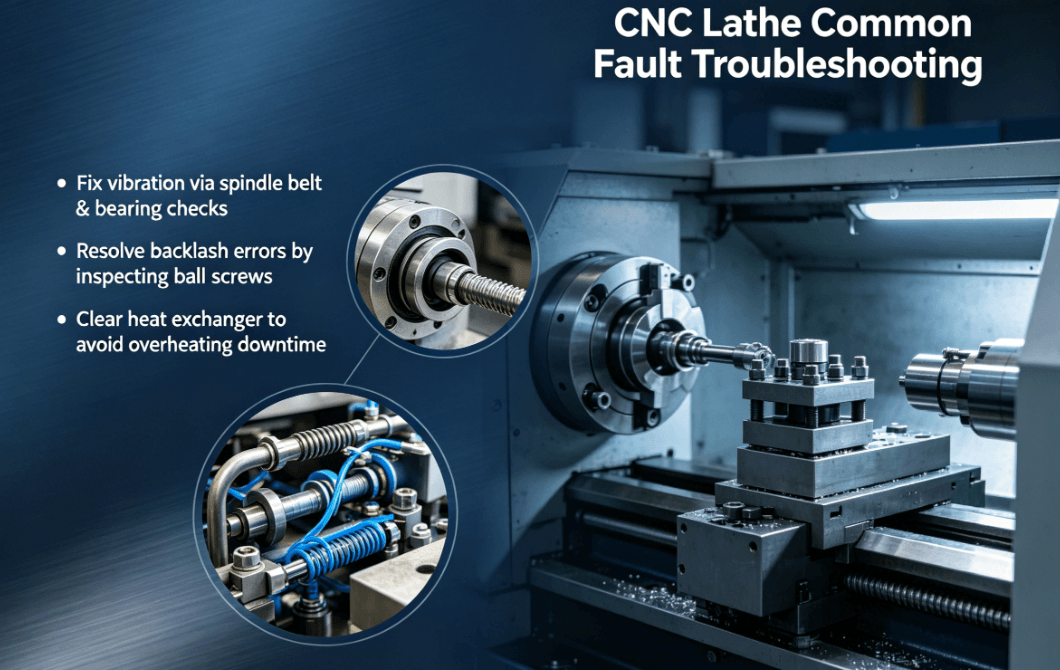
- Vibration and Poor Surface Finish: Often caused by a loose spindle belt or worn-out spindle bearings. Regular tension checks and vibration analysis can prevent this.
- Accuracy Errors (Backlash): If the machine isn't hitting dimensions, the ball screw may have developed "play." Backlash compensation in the CNC controller can temporarily fix this, but physical inspection of the ball screw mounting is required.
- Overheating Alarms: Usually traced back to a clogged heat exchanger or a failing cooling fan in the electrical cabinet. This is a 10-minute fix that prevents a 10-day downtime event.
Supplier Evaluation: The After-Sales Ecosystem
For bulk buyers and brand owners, the maintenance guide is only as good as the support behind it. When sourcing a CNC lathe, your evaluation criteria should include a deep dive into the manufacturer's service infrastructure.
- Spare Parts Availability: Does the supplier maintain a regional warehouse, or will parts take 3 weeks to clear customs? A machine is only as good as the availability of its smallest seal.
- Documentation: Are the maintenance manuals available in English (or your local language) with clear exploded-view diagrams? Poor documentation is a red flag for OEM quality.
- Remote Technical Support: In 2026, many top-tier manufacturers offer "Augmented Reality" (AR) support, where their engineers can see what your technician sees via a headset or smartphone, drastically reducing the need for expensive site visits.
Implementation Strategy for Different Buyer Types
Different procurement scales require different maintenance focuses to stay efficient and profitable.
- Small Buyers / Job Shops: Focus on "Daily Ownership." Ensure every operator is responsible for their own machine’s cleanliness. A clean machine is easier to inspect for leaks or cracks.
- Ecommerce Sellers (Private Label): If you are outsourcing production, ask your factory for their Preventive Maintenance (PM) Logs. This ensures the quality of the products you receive remains consistent over long-term contracts.
- Bulk Buyers / Industrial Importers: Negotiate "Service Kits" into the initial purchase. Having a 1-year supply of filters, belts, and seals on hand reduces the risk of long-term downtime and avoids shipping costs for small items.
The Future of CNC Maintenance: AI and IoT
We are seeing a shift toward Condition-Based Maintenance (CBM). High-end CNC lathes now come equipped with vibration sensors on the spindle and thermal sensors on the motor. Instead of changing a part every 6 months, the machine tells you exactly when a bearing is starting to degrade based on real-time data. For procurement managers, this means more efficient spending on spare parts and zero wasted maintenance hours, allowing for leaner operations.
Summary
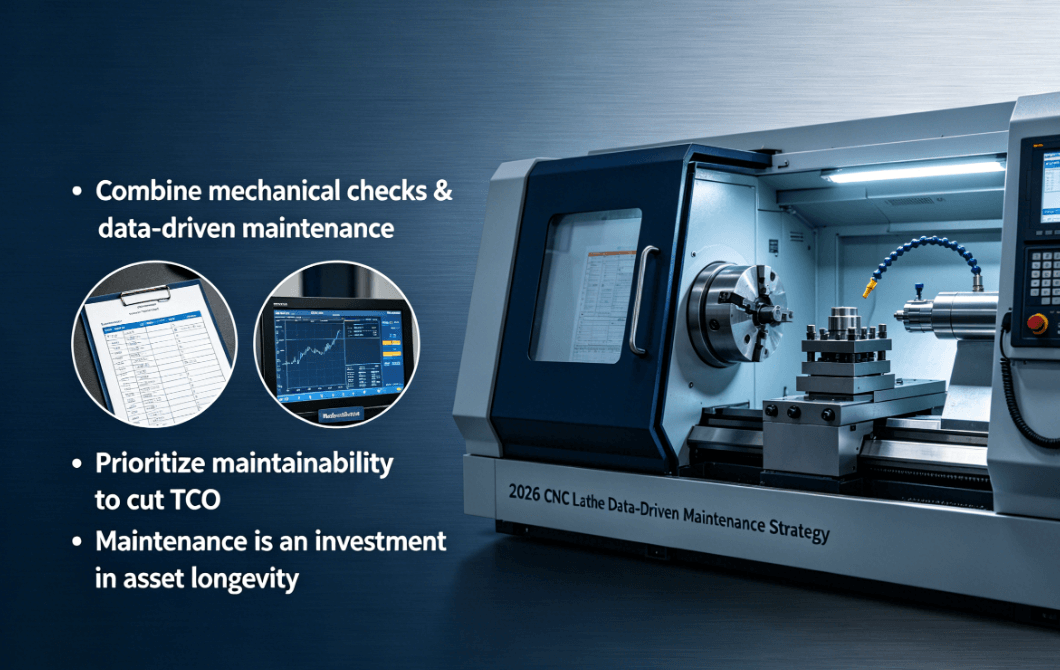
Maintaining a CNC lathe in 2026 requires a blend of traditional mechanical vigilance and modern data-driven strategies. By integrating maintenance checklists into daily workflows and prioritizing "maintainability" during the sourcing process, businesses can significantly lower their TCO and ensure a reliable production output. Effective maintenance is not an expense—it is an investment in the longevity and accuracy of your most critical manufacturing assets.
Reference Sources
Official ISO Standards for Machine Tool Testing Accuracy