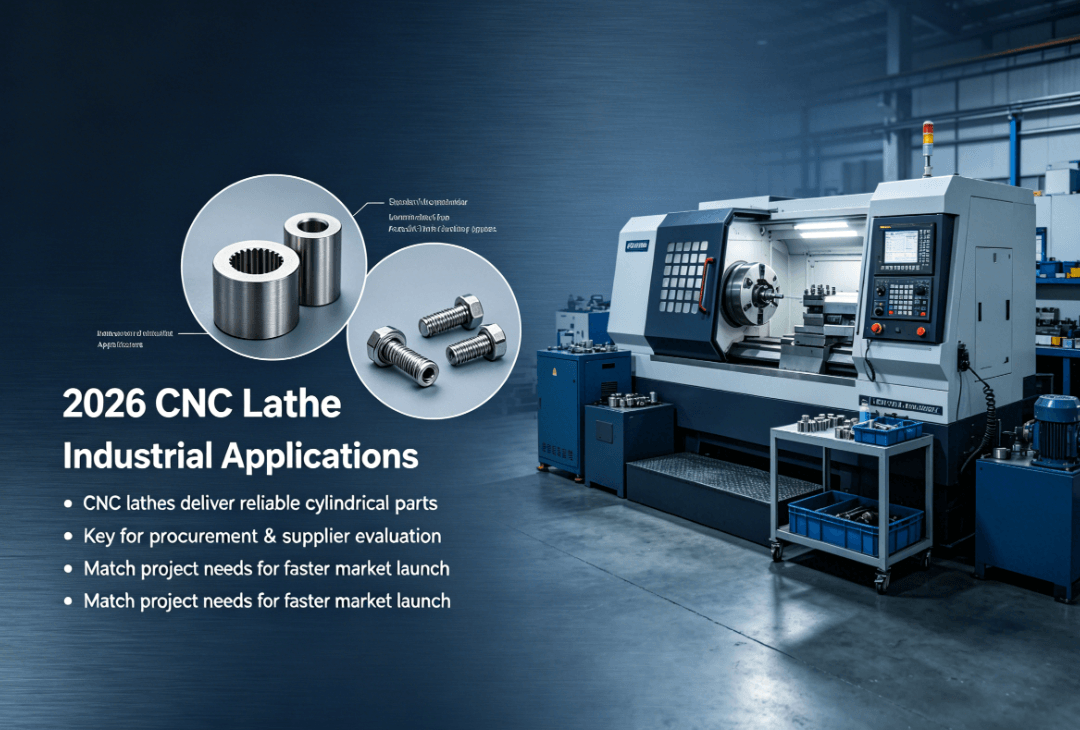
In the 2026 manufacturing landscape, the CNC (Computer Numerical Control) lathe remains the foundational technology for producing cylindrical components with unmatched repeatability. For procurement officers and sourcing specialists, understanding the breadth of CNC lathe applications is not merely a technical requirement; it is a commercial necessity to ensure supplier compatibility and cost-efficiency.
Whether you are a brand owner developing a new hardware prototype or a bulk buyer securing a supply chain for automotive fasteners, the ability to match your project requirements with the right CNC turning capabilities determines your speed-to-market and bottom-line profitability.
What Are CNC Lathes and Why Do They Dominate Modern Sourcing?
At its core, a CNC lathe operates on the principle of "turning." The workpiece rotates at high speeds while a stationary cutting tool removes material to create precise circular or cylindrical shapes. Unlike manual lathes, CNC versions are driven by G-code, allowing for tolerances as tight as +/- 0.005mm in high-end facilities.
For procurement professionals, the value proposition of CNC turning lies in three pillars:
- Scalability: From single-unit prototypes to million-unit production runs.
- Material Versatility: Capability to process everything from aircraft-grade titanium and stainless steel to specialized engineering plastics like PEEK.
- Complexity Management: Modern multi-axis lathes (including 3-axis and live-tooling options) can perform milling, drilling, and tapping in a single setup, reducing "work-in-progress" (WIP) time.
Key Industry Applications: Where Precision Meets Production
Understanding where CNC lathes are deployed helps buyers identify specialized factories. Not all machine shops are equal; a supplier excels in medical-grade micro-turning may not be the right fit for heavy-duty oil and gas components.
1. Automotive Industry: High-Volume Reliability
The automotive sector is perhaps the largest consumer of CNC turned parts. As the industry shifts toward Electric Vehicles (EVs), the focus has moved from traditional engine valves to high-precision battery connectors and sensor housings.
- Common Parts: Axles, bushings, shafts, spark plug components, and brake system cylinders.
- Sourcing Logic: Buyers in this space prioritize IATF 16949 certification and the ability to handle high-volume PPAP (Production Part Approval Process) requirements.
2. Aerospace and Defense: High-Stakes Complexity
Aerospace applications demand materials that can withstand extreme temperatures and pressures. CNC lathes are used to machine exotic alloys like Inconel and Grade 5 Titanium.
- Common Parts: Landing gear components, turbine fasteners, fuel nozzles, and hydraulic fittings.
- Sourcing Logic: Procurement must focus on AS9100 certified suppliers who offer full material traceability and non-destructive testing (NDT) capabilities.
3. Medical Device Manufacturing: Micro-Precision
The medical field utilizes "Swiss-type" CNC lathes, which are specialized for long, thin, and incredibly small parts. These machines are essential for surgical instruments and implants.
- Common Parts: Orthopedic screws, dental implants, catheter components, and surgical tool handles.
- Sourcing Logic: Look for ISO 13485 compliance. Biocompatibility of materials and cleanroom packaging are often non-negotiable requirements for these buyers.
4. Electronics and Telecommunications: Heat Management
As 5G and AI hardware evolve, the demand for heat dissipation components has surged. CNC lathes create the intricate geometries required for shielding and connectors.
- Common Parts: RF connectors, heat sinks, antenna bases, and housing for optical fibers.
- Sourcing Logic: Focus on surface finish requirements (Ra values) and conductivity specs. Plating services (gold, silver, nickel) are often a key part of the RFQ.
How to Evaluate Supplier Capability for CNC Lathe Projects
When reviewing a supplier’s profile on a B2B marketplace or during a factory audit, the "Applications" section of their catalog only tells half the story. To ensure procurement realism, buyers must dig into the technical infrastructure.
Machine Fleet Analysis
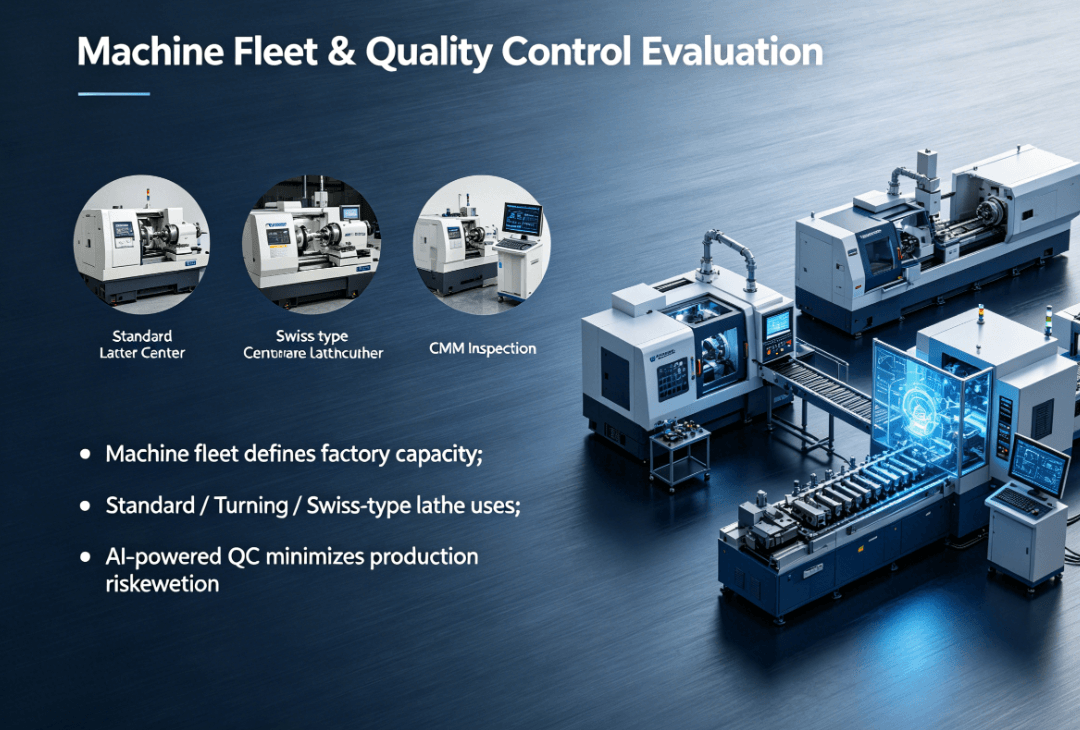
A factory's capability is defined by its machinery. A "Market Guide" approach to evaluation includes:
- Standard CNC Lathes: Best for simple cylindrical parts and cost-sensitive bulk orders.
- CNC Turning Centers: Equipped with "Live Tooling," these can perform secondary operations (like milling a flat surface on a round bolt) without moving the part to another machine.
- Swiss-Type Lathes: Essential for parts with a diameter under 32mm that require extreme length-to-diameter ratios.
Quality Control Ecosystem
For a global buyer, the "Price vs. Risk" calculation is paramount. Does the supplier use manual calipers, or do they have an automated CMM (Coordinate Measuring Machine) and optical comparators? In 2026, top-tier suppliers are integrating AI-driven vision systems directly onto the lathe to catch tool wear before it causes a batch of rejects.
Sourcing Scenarios: Matching Buyer Needs to Production Models
The "best" CNC lathe application depends entirely on your business model. Here is how different buyer types should approach the market:
| Buyer Type | Primary Focus | Recommended Sourcing Strategy |
|---|---|---|
| Ecommerce Sellers | Low MOQ / Speed | Look for "Rapid Prototyping" shops that offer CNC turning with 7‑day lead times and surface finishing in‑house. |
| Brand Owners | Customization / OEM | Seek ODM‑capable factories that can assist in DFM (Design for Manufacturing) to reduce material waste. |
| Bulk Importers | Unit Cost / Stability | Target large‑scale manufacturing clusters (e.g., Ningbo or Vietnam) with ISO 9001 and automated bar‑feeding systems for 24/7 production. |
| Sourcing Agencies | Verification / Compliance | Prioritize suppliers with transparent ERP systems and real‑time production tracking for multi‑client management. |
The 2026 Shift: Sustainability and "Green Turning" in Procurement
Sustainability is no longer a "nice-to-have" in the global supply chain. In 2026, procurement professionals are increasingly evaluating CNC lathe applications through an environmental lens.
- Coolant Recycling: Leading factories now use closed-loop systems to recycle cutting fluids.
- Scrap Management: Aluminum and steel chips are compressed and sold back to smelters, often allowing suppliers to offer "material credits" to high-volume buyers.
- Energy Efficiency: Newer servo-driven lathes consume up to 30% less power than models from a decade ago, a critical factor for buyers tracking their Scope 3 emissions.
Procurement Workflow: From RFQ to Final Inspection
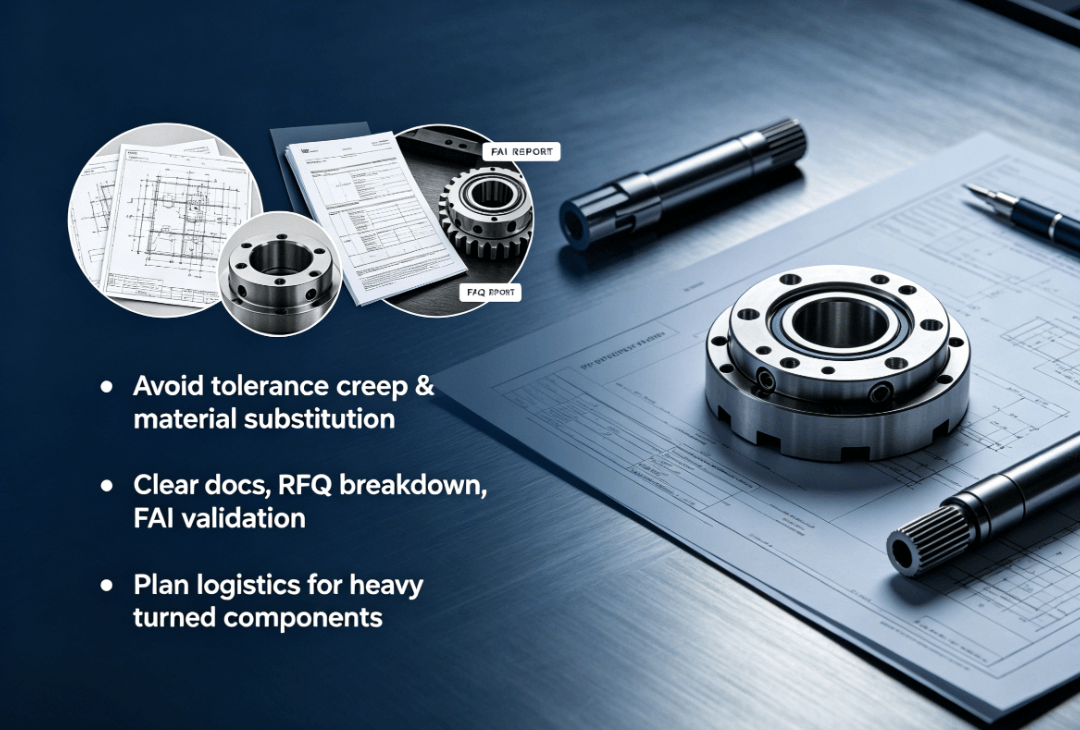
Navigating CNC lathe applications requires a disciplined sourcing workflow to avoid common pitfalls like "tolerance creep" or "material substitution."
- Technical Documentation: Provide a 2D drawing (PDF) with tolerances and a 3D model (STEP/IGS). Clearly state the material grade and required surface roughness.
- RFQ (Request for Quote): Ask for a breakdown of "Setup Cost" vs. "Unit Cost." For CNC turning, the setup time is a significant portion of the expense for small batches.
- Sample Validation: Always request a "First Article Inspection" (FAI) report. This proves the machine setup is capable of meeting your specs before the full run begins.
- Logistics Coordination: CNC turned parts are often heavy (especially steel/brass). Factor in sea freight lead times vs. air freight costs early in the procurement cycle.
Summary
The applications of CNC lathes are expanding as material science and machine intelligence evolve. For the 2026 buyer, success lies in moving beyond the "commodity" mindset. Treat your CNC supplier as a technical partner. By understanding the specific constraints and advantages of CNC turning—from automotive safety standards to medical-grade micro-machining—you can build a resilient, high-quality supply chain that stands up to global competition.
Reference Sources
AS9100 Aerospace Quality System Standard Requirements.
Modern Machine Shop: Precision Machining Industry Trends.
NIST Manufacturing Extension Partnership Technical Resource.