In the modern manufacturing landscape, precision and material integrity are the cornerstones of high-quality production. For procurement managers and brand owners, selecting the right fabrication method is a strategic business decision. Among the array of CNC machining options, waterjet cutting stands out as one of the most versatile and "material-friendly" technologies available today.
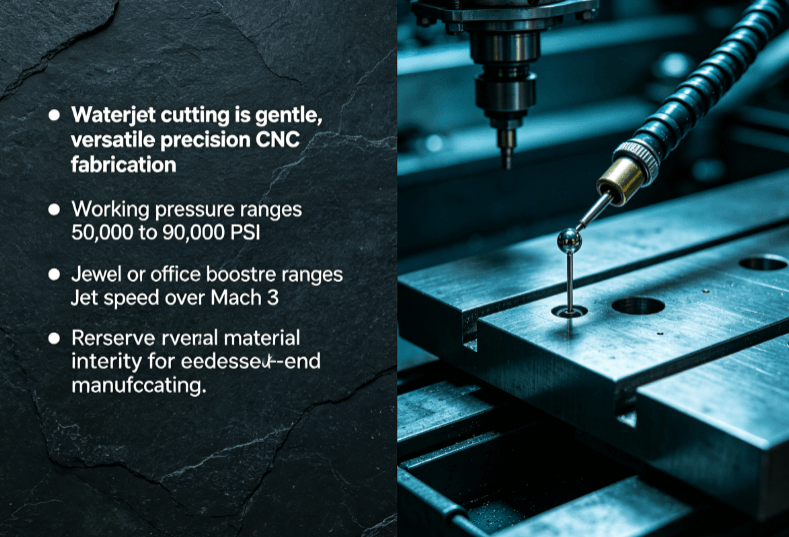
The process uses a high-pressure stream of water to erode a narrow line in a material. Industrial waterjets operate between 50,000 and 90,000 PSI. The pressure is converted into velocity through a tiny jewel orifice, creating a stream that travels at speeds exceeding Mach 3.
Pure Waterjet vs. Abrasive Waterjet?
From a sourcing perspective, it is vital to understand which type of waterjet a supplier utilizes:
- Pure Waterjet: Uses only water. It is ideal for "soft" materials such as gaskets, foam, plastics, rubber, and food products. It results in an extremely thin kerf (cut width).
- Abrasive Waterjet: Introduces an abrasive grain (typically garnet) into the water stream. This allows the machine to cut "hard" materials like stainless steel, titanium, stone, glass, and carbon fiber.
Why Should Procurement Teams Choose Waterjet?
When evaluating a manufacturing workflow, procurement teams must look beyond the initial price per part. Waterjet cutting offers several "hidden" cost-saving benefits that impact the total cost of ownership (TCO) and product quality.
Elimination of the Heat-Affected Zone (HAZ)?
Unlike laser or plasma cutting, waterjet is a "cold cutting" process. Thermal cutting methods often change the molecular structure of the material at the edge, leading to hardening or warping. In industries like aerospace or medical device manufacturing, HAZ is often unacceptable. Waterjet maintains the original material properties, reducing the need for secondary heat treatment.
Material Versatility and Sustainability?
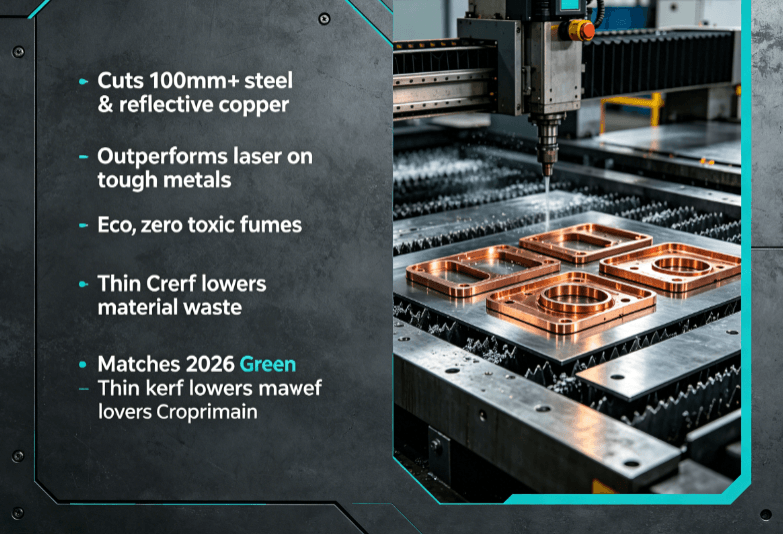
One of the primary reasons bulk buyers prefer waterjet suppliers is the ability to cut virtually anything. While lasers struggle with reflective metals like copper or thick plates, a waterjet can slice through 100mm+ of steel.
In 2026, green procurement is essential. Waterjet cutting is eco-friendly:
- No Toxic Fumes: Unlike thermal cutting, waterjet produces no hazardous vapors.
- Tight Nesting: Because the kerf is so small, parts can be nested closely, reducing raw material waste.
Waterjet vs. Laser vs. Plasma Comparison?
For procurement professionals weighing their options, the following table simplifies the decision-making process based on common sourcing KPIs:
| Feature | Waterjet Cutting | Laser Cutting | Plasma Cutting |
|---|---|---|---|
| Precision | High (± 0.1mm) | Very High (± 0.05mm) | Moderate (± 0.5mm) |
| Material Range | Almost Unlimited | Metals & Some Plastics | Conductive Metals Only |
| Thickness Limit | Very High (200mm+) | Medium (Up to 25mm) | High (Up to 50mm+) |
| Heat Impact | None (Cold Cut) | High (HAZ present) | Very High (Large HAZ) |
| Cutting Speed | Slow to Moderate | Very Fast (Thin items) | Fast |
| Edge Finish | Smooth, Satin-like | High Quality | Rougher |
Understanding the Sourcing Ecosystem?
When you are looking to source a Water Jet Cutting Machine or hire a fabrication service, the supplier landscape generally falls into three categories.
Types of Suppliers in the Market?
- High-End OEM Manufacturers: These suppliers focus on providing the machinery and CAPEX solutions for brand owners bringing production in-house.
- Specialized Contract Manufacturers: These are service providers (job shops) who offer "cutting-as-a-service."
- Component and Abrasive Suppliers: They provide consumables like garnet, nozzles, and high-pressure seals essential for machine operation.
How to Evaluate Waterjet Suppliers?
If you are vetting a new supplier for waterjet services in 2026, use these criteria to ensure quality:
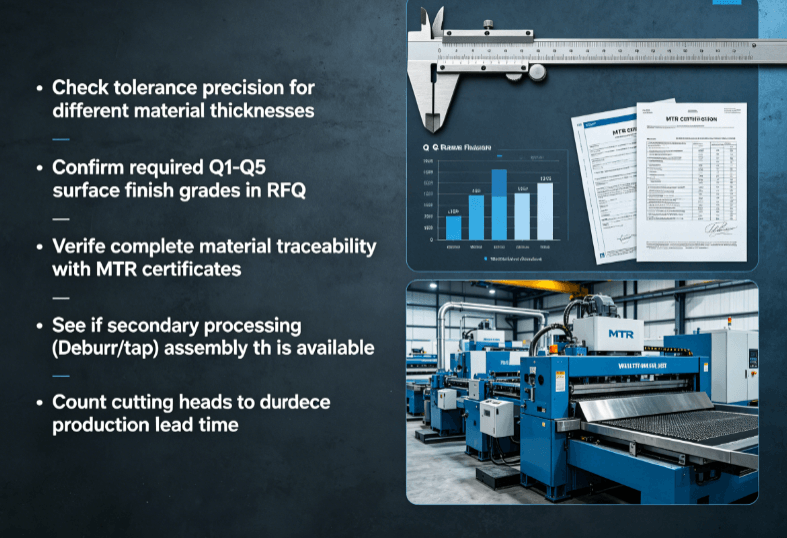
- Tolerance Capabilities: Ask for their capability on specific thicknesses. Precision often drops as material thickness increases.
- Surface Finish Grades: Waterjet finishes are graded from Q1 (rough) to Q5 (smooth). Ensure your RFQ specifies the "Q" level.
- Material Verification: Ensure the supplier has a system for tracking material certifications (MTRs) for traceability.
- Secondary Operations: Check if the supplier offers deburring, tapping, or assembly to reduce the number of sub-vendors.
- Lead Time Management: Ask about their number of cutting heads per machine to gauge their actual throughput.
Summary
Waterjet cutting is a vital pillar of the 2026 global supply chain. For the Small Buyer, it offers a way to produce complex prototypes without expensive tooling. For the Bulk Buyer and Brand Owner, it provides a reliable method for processing exotic materials and thick plates without thermal distortion. By focusing on the absence of heat and material versatility, procurement professionals can build more resilient and high-quality product lines.
Reference Sources
WJTA - Waterjet Technology Association