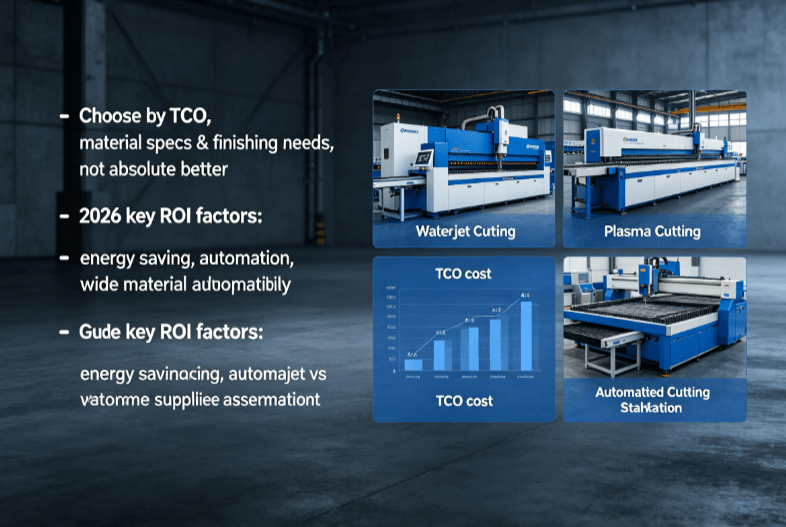
For procurement managers and sourcing leads, the debate between waterjet vs plasma cutting is rarely about which machine is "better" in a vacuum. Instead, it is a strategic decision based on Total Cost of Ownership (TCO), material specifications, and the required secondary finishing processes.
As we move into 2026, the global supply chain for cutting machinery has shifted. Energy efficiency, automation compatibility, and material versatility are now the primary drivers of ROI. This guide provides a deep dive into the technical and commercial realities of both technologies to streamline your supplier evaluation process.
The Fundamental Distinction: Cold vs. Hot Cutting
From a sourcing perspective, the most critical difference lies in the physics of the cut, which directly impacts the "as-delivered" quality of your parts.
- Waterjet Cutting (Cold Process): Uses a high-pressure stream of water mixed with an abrasive (usually garnet). Because there is no heat involved, there is zero Heat Affected Zone (HAZ). This is crucial for aerospace and medical components.
- Plasma Cutting (Hot Process): Uses an accelerated jet of hot plasma. This introduces thermal stress to the material, leaving a hardened edge that often requires secondary grinding if the part requires welding.
Many importers find that if the project involves heat-sensitive materials like certain plastics, composites, or high-grade alloys, waterjet is often the only viable choice despite the higher per-hour machine rate.
Comparison Matrix: Waterjet vs Plasma for Procurement Logic
To simplify the decision-making process, we have summarized the key metrics that influence procurement outcomes.
| Feature | Waterjet Cutting | Plasma Cutting |
|---|---|---|
| Material Versatility | Virtually any material | Conductive metals only |
| Precision/Tolerance | Superior (+/- 0.003") | Standard (+/- 0.020") |
| Cut Speed (Thin Steel) | Slower | Extremely Fast |
| Edge Quality | Satin-smooth; no finishing | Rougher; needs de-burring |
| Operational Cost | High (Abrasive + Power) | Low (Gas + Electricity) |
| Thickness Capacity | Up to 6-10 inches | Best for 1/4" to 2" |
Total Cost of Ownership (TCO) and ROI Realities
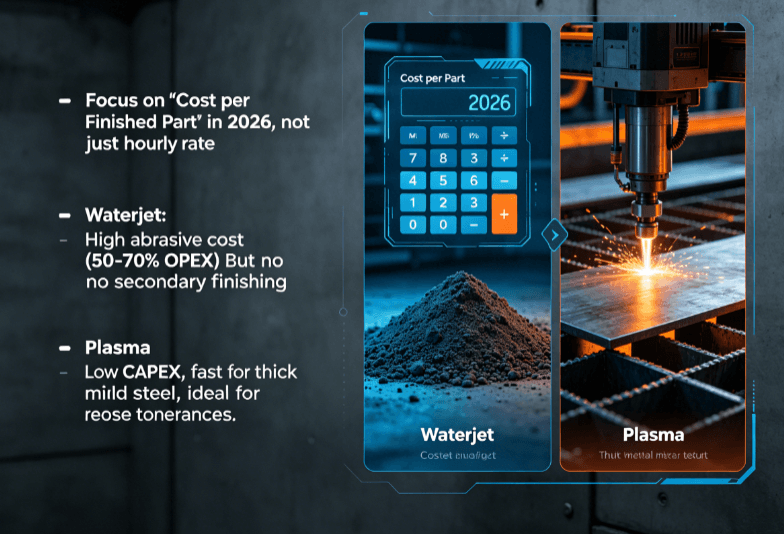
When evaluating quotes from OEMs or service providers, buyers often make the mistake of looking only at the hourly rate. In 2026, sophisticated sourcing requires looking at the "Cost per Finished Part."
The Waterjet Premium
Waterjet machines are expensive to run. The cost of abrasive (garnet) typically accounts for 50-70% of the operating expense. However, because the cut is "final quality," you save money on downstream labor. There is no slag to chip off and no edge discoloration to polish.
The Plasma Value Proposition
Plasma is the "workhorse" of the structural steel and shipbuilding industries. The initial capital expenditure (CAPEX) for a plasma system is significantly lower than a waterjet of the same table size. If your tolerances are loose and the material is thick mild steel, plasma’s speed offers an unbeatable ROI.
Selecting the Right Technology by Buyer Type
Your procurement strategy should align with your business model. Here is how the choice typically breaks down across the buyer ecosystem:
For Brand Owners & OEMs (High-Precision Parts)
If you are manufacturing branded hardware or specialized equipment, waterjet is your standard. The ability to cut complex geometries in exotic metals without altering the tempering of the metal ensures consistent product performance and aesthetic appeal.
For Bulk Buyers & Wholesalers (Structural/Industrial)
If you are sourcing thousands of brackets, base plates, or structural components for construction, plasma is the logical choice. The speed allows for high-volume throughput, and the lower cost per inch of cut significantly improves margins on bulk orders.
For Small Buyers & Ecommerce Sellers
Ecommerce sellers often deal with thinner materials and smaller batches. While plasma is cheaper, the "cleanliness" of a waterjet cut is better for consumer-facing products. Many "DTC" brands prefer waterjet because it reduces the need for secondary finishing.
Supplier Evaluation: What to Verify
When sourcing a machine or a service provider, use this checklist to ensure the supplier meets 2026 industrial standards:
- Software Integration: Does the supplier use advanced nesting software to minimize material scrap?
- Pump Technology: Is it a Direct Drive or Intensifier pump? Direct drive is more energy-efficient for sustainability targets.
- Gas Console Type: High-definition plasma (X-Definition) can produce cuts that rival laser/waterjet on certain thicknesses.
- Material Traceability: Can the supplier provide MTRs (Material Test Reports) regarding structural integrity?
Sourcing Workflow: How to Request an Effective RFQ
To get an accurate comparison between vendors, your RFQ must be specific:
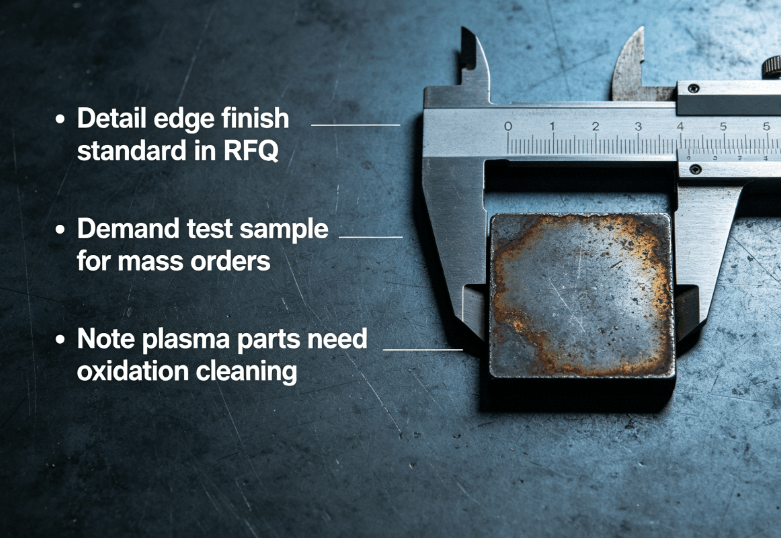
- Specify the Edge Finish: Don't just say "cut." Specify "ISO 9013 Range 3" or "No secondary grinding required."
- Request a Sample Cut: For high-volume contracts, always request a "test coupon" of your specific material to observe the kerf and taper.
- Logistics Check: Plasma parts may arrive with a light layer of oxidation that requires cleaning before painting or plating.
2026 Market Outlook: Why the Choice is Changing
The rise of high-power fiber lasers has compressed the market for both waterjet and plasma. However, waterjet remains the king of non-conductive and thick materials, while plasma remains the king of thick-plate economical cutting. In 2026, the most efficient procurement strategy is often to split your BOM: use plasma for internal structural ribs and waterjet for the external, visible components.
Summary
Choosing between waterjet and plasma requires balancing material integrity against production speed. Waterjet offers cold-cutting precision for premium components, while plasma provides cost-effective volume for structural steel. For 2026 procurement, focus on the "cost-per-finished-part" to ensure the highest ROI for your specific application.
Reference Sources
Industrial cutting standards from Fabricators & Manufacturers Association
Welding and thermal cutting guidelines at American Welding Society
Technical waterjet specifications from OMAX Waterjet Systems