In the high-stakes world of industrial manufacturing, a laser machine is often the heartbeat of the production line. Whether you are operating a 12kW fiber laser for heavy industry or a desktop CO2 engraver for a boutique brand, the maintenance of this asset directly dictates your bottom line. In 2026, as global supply chains remain sensitive and equipment costs fluctuate, ensuring the longevity of your existing fleet is more critical than ever.
From a procurement and sourcing perspective, maintenance is not merely a technical chore—it is a risk management strategy. This guide provides a comprehensive look at the maintenance workflows, sourcing considerations, and technical checkpoints necessary to keep your laser systems running at peak performance.
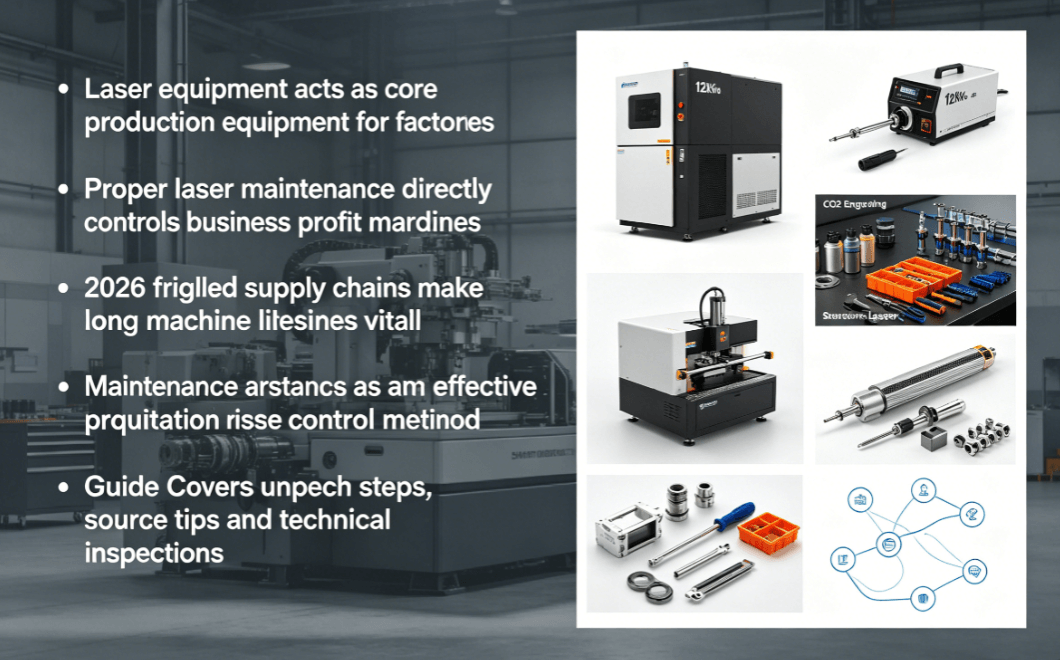
Why Maintenance is a Procurement Strategy?
When sourcing a laser machine, many buyers focus exclusively on the initial purchase price (CAPEX). However, the Total Cost of Ownership (TCO) is where the real business battle is won or lost.
The Cost of Neglect
An unmaintained laser system experiences "power drop," leading to slower cutting speeds and increased scrap rates. For a bulk buyer or a high-volume manufacturer, a 5% decrease in efficiency across five machines can result in thousands of dollars in lost monthly revenue. Maintenance ensures that the machine continues to operate at the specifications promised by the supplier during the RFQ stage.
Protecting the Asset Value
For those looking to upgrade their fleet in 2-3 years, a well-documented maintenance log is the most valuable asset during a resale or trade-in. Procurement managers must view maintenance as an insurance policy that preserves the machine’s residual value.
Universal Laser Maintenance Checklist
A structured maintenance workflow is the backbone of manufacturing reliability. Whether you are a small business owner or a sourcing agent overseeing a factory cluster, these steps are non-negotiable.
Daily Maintenance: The First Hour Rule
- Optics Inspection: Check the protective windows and focus lenses for dust or splatter. Even a microscopic speck of debris can absorb laser energy, heat up, and crack the lens.
- Water Chiller Check: Ensure water levels are optimal and the temperature is set according to the laser source manufacturer’s specifications.
- Gas Pressure Monitoring: Verify that auxiliary gases (Oxygen, Nitrogen, or Air) are at the correct pressure for the day’s materials.
- Clean the Slats: Remove debris and small parts that have fallen through the cutting bed to prevent "tip-ups" that can damage the laser head.
Weekly Maintenance: Moving Parts and Filtration
- X/Y/Z Axis Lubrication: Wipe down the guide rails and apply the manufacturer-recommended lubricant. Avoid over-greasing, as this attracts dust.
- Exhaust and Filter Systems: Clean or replace filters in the dust collector. Poor ventilation leads to smoke buildup on the optics, shortening their lifespan.
- Electrical Cabinet Check: Ensure the cooling fans for the electrical components are spinning freely and the vents are not blocked by factory grime.
Monthly and Quarterly: Technical Deep Dives
- Beam Alignment: For CO2 lasers, check the mirror alignment. For Fiber lasers, ensure the beam is centered in the nozzle.
- Chiller Deep Clean: Drain the water, flush the system with a cleaning agent (if recommended), and refill with deionized or distilled water.
- Belt and Gear Tension: Check for signs of wear in the drive system. Loose belts lead to "rounding" of corners in precision cuts.
| Component | Maintenance Action | Frequency | Impact of Neglect |
|---|---|---|---|
| Protective Window | Cleaning/Inspection | Daily | Lens thermal crack |
| Water Chiller | Water replacement | 3–6 Months | Laser source overheating |
| Guide Rails | Cleaning & Lubrication | Weekly | Mechanical vibration/inaccuracy |
| Exhaust Fan | Debris removal | Monthly | Smoke damage to optics |
Sourcing Consumables: OEM vs. Aftermarket?
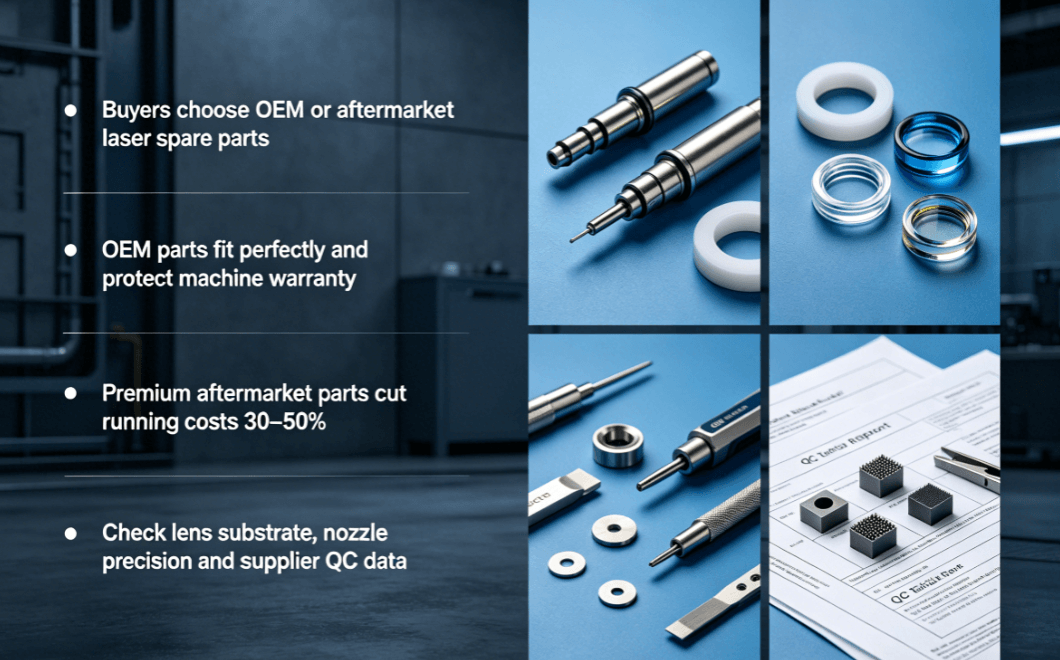
One of the most common questions in procurement is whether to source original equipment manufacturer (OEM) parts or third-party aftermarket consumables.
The Case for OEM Parts
For brand owners and high-precision manufacturers, OEM consumables (nozzles, ceramic rings, and lenses) offer a guarantee of compatibility. Using non-certified parts during the warranty period often voids the supplier's service agreement—a critical risk for new importers who rely on factory support.
Evaluating Aftermarket Suppliers
For the savvy sourcing business or bulk buyer, high-quality aftermarket parts can reduce operational costs by 30-50%. However, supplier verification is key.
- Material Grade: Ensure mirrors and lenses use the correct substrate (e.g., USA CVD ZnSe for CO2 lasers).
- Precision Machining: Poorly machined nozzles can cause turbulent gas flow, resulting in "burrs" on the cut edge.
- Testing Protocols: Ask the supplier for their QC reports regarding thermal stability.
Environmental Factors: The Invisible Enemies?
Manufacturing environments are often harsh. Sourcing professionals must consider the ecosystem surrounding the machine to ensure it survives the local climate.
Temperature and Humidity Control
Industrial lasers generate significant heat. If the ambient temperature exceeds 35°C (95°F), even the best chillers may struggle. Conversely, high humidity can cause condensation on the laser source or electrical boards, leading to catastrophic shorts. In tropical or coastal sourcing regions, industrial air conditioning or dehumidifiers are necessary additions to the procurement list.
Power Stability
In many manufacturing hubs, power surges or "brownouts" are common. A laser machine's sensitive electronics (the CNC controller and the laser source) require a stable voltage. We highly recommend including an Industrial Voltage Stabilizer in the initial RFQ for any high-power laser system to prevent motherboard failures.
Supplier Support and the Self-Service Myth?
When evaluating suppliers on B2B marketplaces, the depth of their maintenance documentation is a primary indicator of their quality.
The Maintenance Manual
A professional manufacturer provides localized, clear, and illustrated maintenance manuals. If a supplier only offers a generic one-page PDF, it is a red flag regarding their engineering depth.
Remote Diagnostics and 2026 Tech
Modern laser machines often come with IoT-enabled controllers. This allows the manufacturer to log in remotely to diagnose issues. For importers and international buyers, sourcing machines with remote diagnostic capabilities is a massive advantage, as it eliminates the need (and cost) of flying in a technician for minor software or calibration issues.
How Maintenance Influences Quality Inspection?
If you are a sourcing agent or a brand owner conducting a factory audit, the state of the machines on the factory floor tells the true story of the supplier's reliability. A factory with well-maintained machines is far more likely to deliver your order on time and within tolerance.
What to look for during a factory visit:
- Machine Cleanliness: Are the machines covered in layers of dust, or are they wiped down?
- Spare Parts Inventory: Does the factory keep a "first-aid kit" of nozzles, lenses, and sensors? A factory that waits for a part to break before ordering a replacement is a factory that will miss your delivery deadlines.
- Maintenance Logs: Ask to see the daily logbooks. A lack of documentation usually indicates a "run-to-fail" mentality, which creates inconsistent product quality for the buyer.
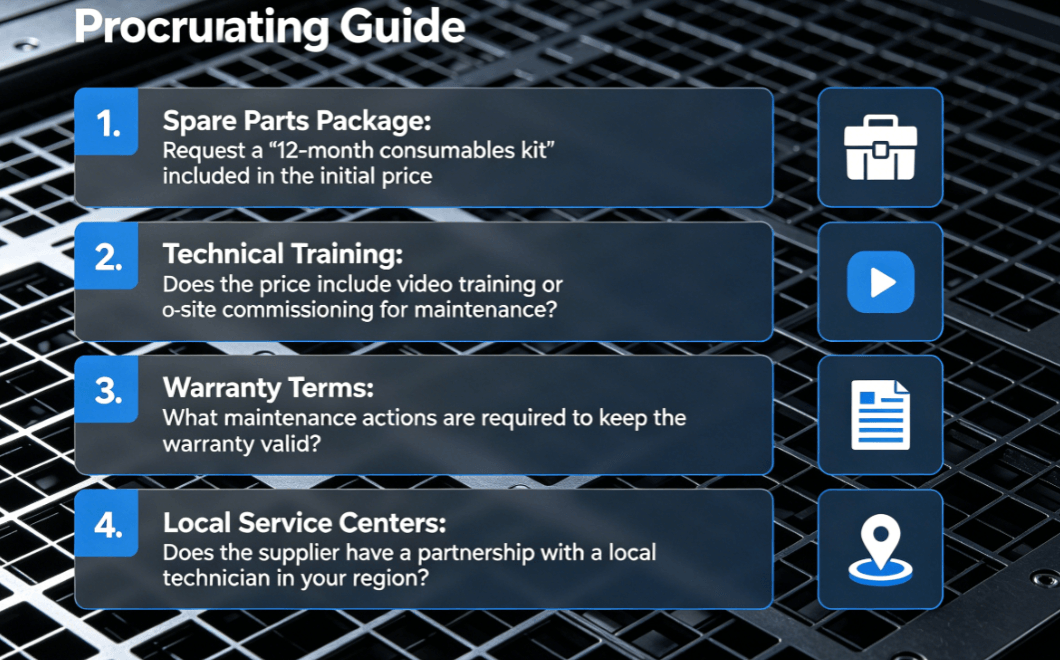
Procurement Checklist for Maintenance Support
When sending out your next RFQ for a laser machine, include these maintenance-focused requirements to ensure long-term success:
- Spare Parts Package: Request a "12-month consumables kit" to be included in the initial purchase price.
- Technical Training: Does the price include video training or on-site commissioning for maintenance?
- Warranty Terms: Specifically ask what maintenance actions are required to keep the warranty valid.
- Local Service Centers: Does the supplier have a partnership with a local technician in your region?
Summary
In 2026, the difference between a profitable manufacturing operation and a failing one often comes down to equipment uptime. For procurement professionals and sourcing agents, understanding laser maintenance is not about knowing how to turn a wrench; it is about knowing how to evaluate suppliers, manage spare parts supply chains, and protect the company’s capital investments. By integrating maintenance requirements into your sourcing workflow, you ensure that your laser machine remains a high-performing asset rather than a liability.
Reference Sources
IPG Photonics: Global Leader in Fiber Laser Technology.