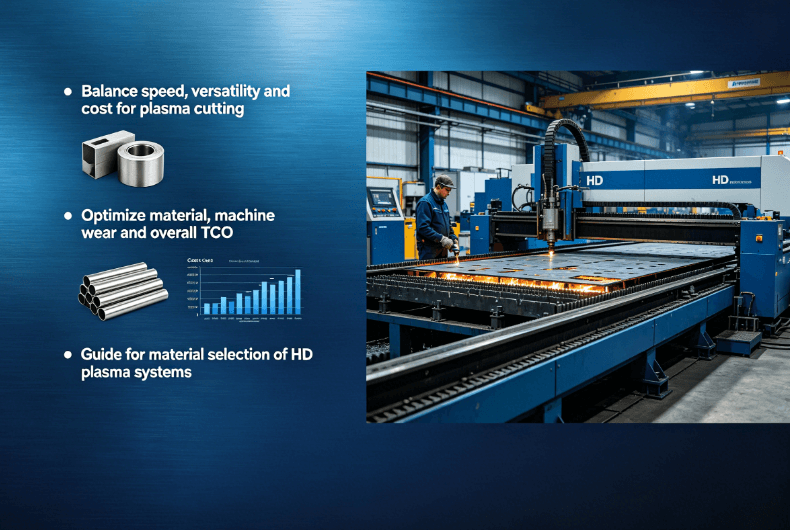
In the modern fabrication ecosystem, plasma cutting remains a cornerstone technology due to its balance of speed, versatility, and operational cost. However, for procurement managers and business owners, the "best" metal isn't just about what the torch can cut—it’s about optimizing the relationship between material properties, machine wear, and total cost of ownership (TCO).
As we move into 2026, the global supply chain for raw metals and the evolution of high-definition (HD) plasma systems have shifted the parameters of material selection. This guide provides a deep dive into the most effective plasma materials, evaluated through the lenses of both engineering precision and procurement realism.
Why Does Material Conductivity Impact Sourcing?
Plasma cutting operates by creating an electrical channel of superheated, ionized gas (plasma) to melt and blow away metal. Consequently, the primary requirement for any plasma material is electrical conductivity. From a sourcing perspective, understanding this fundamental constraint is vital. While laser cutting can handle non-conductive materials like plastics or wood, plasma is strictly a metallurgical process.
Key Factors Influencing Material Performance
- Thermal Conductivity: How fast heat moves through the metal.
- Melting Point: Determines the amperage required.
- Oxidation Levels: Affects the cleanliness of the cut edge (dross).
Top Plasma Materials for Industrial Use
Mild Steel (Carbon Steel)
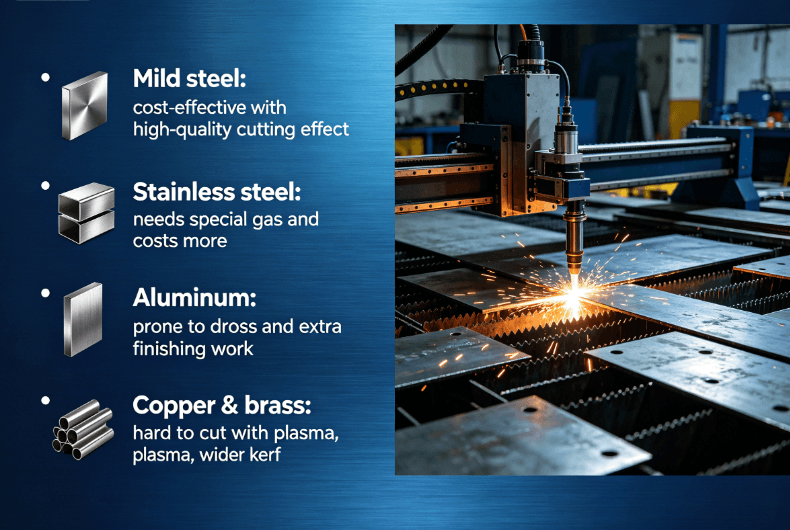
Mild steel is the "gold standard" for plasma cutting tables. It is the most cost-effective and predictable material for thermal cutting processes. High availability and lower price points per pound make it the default for structural components, base plates, and brackets. In 2026, high-definition plasma systems can achieve near-laser quality edges on mild steel up to 2 inches thick. When ordering A36 or similar grades, ensure the surface is free of heavy mill scale or rust, as these impurities can deflect the arc and increase nozzle wear.
Stainless Steel Alloys
Stainless steel is frequently sourced for the food service, medical, and marine industries. However, it presents unique challenges for plasma systems. Unlike mild steel, which "burns" (oxidizes) to assist the cut, stainless steel relies purely on the heat of the plasma. To avoid "sugaring" (oxidation) on the edges, procurement should verify if the fabricator uses secondary gases like Nitrogen or an Argon-Hydrogen mix (H35). Cutting stainless is generally 15–25% more expensive than mild steel due to slower travel speeds and specialized gas consumption.
Aluminum and Lightweight Alloys
As industries push for light-weighting, aluminum sourcing has surged. Aluminum is highly reflective and thermally conductive. While older plasma units struggled, modern 2026 systems utilize "water injection" or "dual gas" setups to mitigate dross. Buyers should be aware of "dross" (hardened slag) on the bottom edge. While it can be removed, it adds a secondary labor cost to your RFQ. 5000 and 6000 series alloys are the most common plasma materials in this category.
Copper and Brass Challenges
These are often considered "difficult" metals for plasma cutting. Their extreme thermal conductivity whisks heat away from the cut zone so fast that the plasma struggles to maintain a melt. Most high-volume sourcing for copper is better suited for waterjet or fiber laser. If plasma is used, expect significantly higher costs and thicker kerf (cut width) requirements.
Comparative Analysis for Procurement Decisions
For a sourcing manager, choosing the right metal involves balancing material cost against processing time.
| Metal Type | Plasma Suitability | Speed Rating | Edge Quality | 2026 Sourcing Complexity |
|---|---|---|---|---|
| Mild Steel | Excellent | High | 5/5 | Low (Widely available) |
| Stainless Steel | Good | Medium | 4/5 | Moderate (Requires gas prep) |
| Aluminum | Good | High | 3/5 | Moderate (Market volatility) |
| Copper | Poor/Fair | Low | 2/5 | High (Specialized shops only) |
| Hardened Steel | Excellent | Medium | 4/5 | Moderate (Industrial niche) |
How to Evaluate Your Fabrication Partner?
When issuing an RFQ for plasma-cut parts, the "best metal" is only half the equation. You must evaluate the supplier’s capability to handle specific plasma materials.
Essential RFQ Questions
- "Do you use High-Definition (HD) or Conventional Plasma?" HD systems offer tighter tolerances (±0.010" to 0.020") which may eliminate the need for secondary machining.
- "What is your gas delivery system for stainless and aluminum?" If they only use shop air, the edge quality on stainless will be poor, leading to higher finishing costs.
- "What are your MOQ requirements for specialized alloys?" Many shops stock mild steel but will require you to pay for a full sheet of high-grade aluminum or AR500 plate.
Material Thickness Guidelines
Plasma cutting is the "sweet spot" for thicknesses between 1/4" (6mm) and 2" (50mm).
- Under 1/4": Fiber laser is often more cost-effective due to speed.
- Over 2": Oxy-fuel or waterjet becomes more viable for carbon steels.
2026 Trends in Material Sustainability
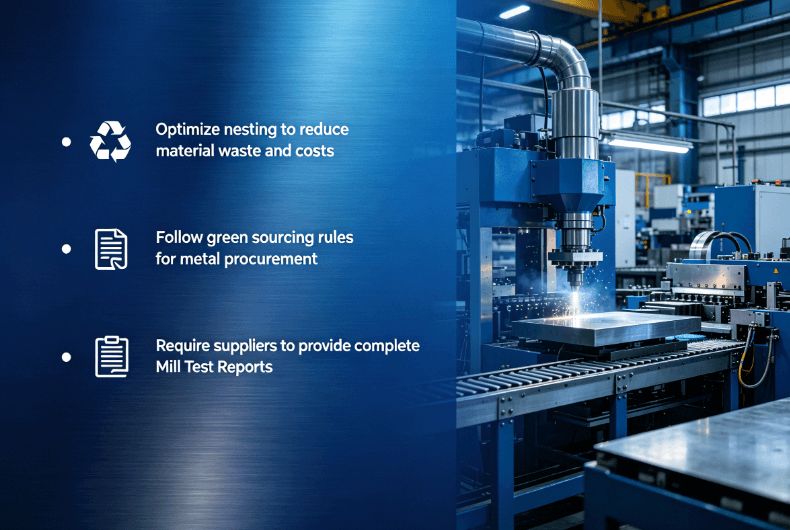
Procurement SEO in 2026 cannot ignore the "Green Sourcing" mandate. Plasma cutting produces significant fumes and scrap. Ask your supplier about their nesting software efficiency. Better nesting means less material waste, which should be reflected in your per-part price. Brands are increasingly requiring documentation on the recycled content of their plasma materials (especially aluminum and steel). Ensure your supplier can provide Mill Test Reports (MTRs).
Summary
Selecting the right plasma materials in 2026 requires a balance of metallurgical knowledge and commercial strategy. While mild steel remains the most efficient choice for most industrial applications, the rise of specialized stainless and aluminum alloys demands a more nuanced approach to gas selection and supplier verification. By prioritizing high-definition capabilities and material-specific workflows, procurement teams can significantly reduce post-processing costs and improve lead times in a competitive manufacturing landscape.
Reference Sources
American Welding Society Official Standards