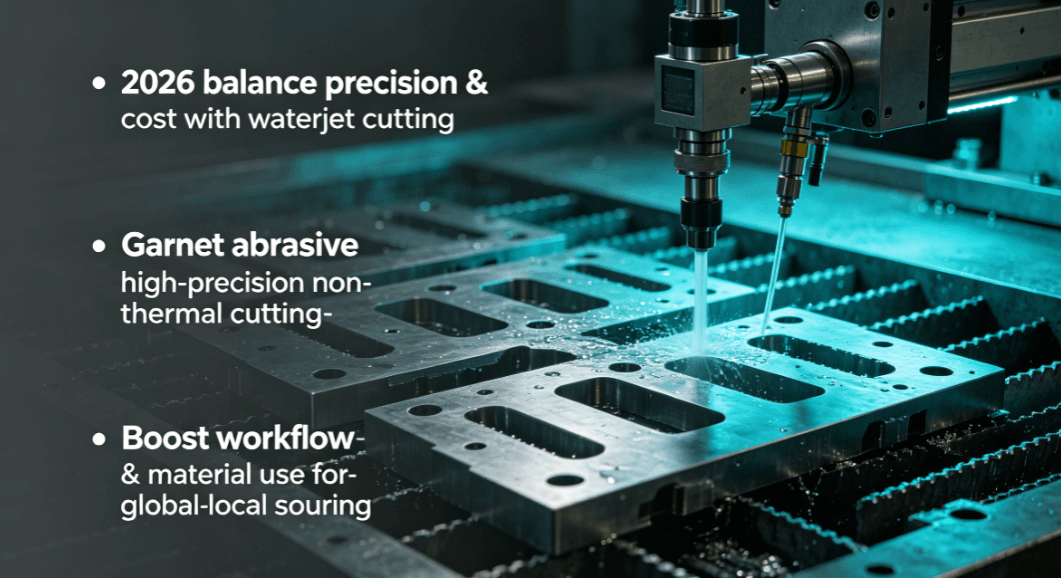
In the 2026 manufacturing landscape, procurement teams face increasing pressure to balance precision with cost-efficiency. Waterjet cutting has emerged as a primary solution for high-complexity sourcing needs. Unlike traditional thermal methods, waterjet technology utilizes supersonic water pressure and abrasive garnet to erode material, offering unique waterjet advantages that directly impact a buyer's bottom line.
Whether you are managing a global supply chain or a local OEM project, understanding the technical and commercial benefits of this process is essential for optimizing production workflows and material utilization.
Why Choose Cold Cutting for Material Integrity?
The most critical technical advantage of waterjet cutting is that it is a non-thermal process. For procurement officers in the aerospace, medical, and defense sectors, maintaining the original metallurgical properties of a part is a non-negotiable requirement.
Eliminating the Heat Affected Zone (HAZ)
Thermal cutting methods like laser or plasma create a Heat Affected Zone (HAZ) that can harden edges or cause warping. Waterjet cutting eliminates these risks, ensuring that the material's structural integrity remains intact from the first cut to the last.
Reducing Inspection Failures
Because there is no thermal distortion, parts cut via waterjet are more likely to pass stringent quality control (QC) audits. This reduces the rejection rate in the procurement cycle, saving both time and raw material costs.
Maximizing ROI through Unmatched Material Versatility
A major challenge in procurement is managing multiple specialized vendors for different materials. One of the standout waterjet advantages is the ability to cut almost any substance on a single machine.
Metals and Reflective Alloys
Waterjets easily handle titanium, stainless steel, and even reflective metals like copper and brass, which often pose challenges for fiber lasers.
Advanced Composites and Sensitive Materials
From carbon fiber to laminated glass and rubber, waterjets provide clean cuts without delamination or melting. This versatility allows brand owners to consolidate their supplier ecosystem, using one specialized waterjet partner for diverse product lines.
Thick Material Cutting and Efficiency Gains
While laser technology has increased in speed, it remains limited by thickness. For bulk buyers in heavy industry, waterjet cutting remains the superior choice for thick-gauge materials.
| Material Type | Waterjet Thickness (2026) | Laser Thickness (Avg) |
|---|---|---|
| Stainless Steel | Up to 10.0" (250mm) | Up to 1.25" (30mm) |
| Aluminum Alloys | Up to 12.0" (300mm) | Up to 1.50" (40mm) |
| Carbon Steel | Up to 10.0" (250mm) | Up to 1.25" (30mm) |
| Stone/Granite | Up to 6.0" (150mm) | Not Applicable |
By utilizing stack cutting—placing multiple sheets of material on top of one another—buyers can significantly increase throughput for high-volume orders, effectively lowering the per-unit cost.
Reducing TCO by Eliminating Secondary Operations
Procurement professionals often focus on the "cost per cut," but the true metric is the Total Cost of Ownership (TCO). Waterjet cutting produces a finished edge that rarely requires additional labor.
The Satin Finish Edge
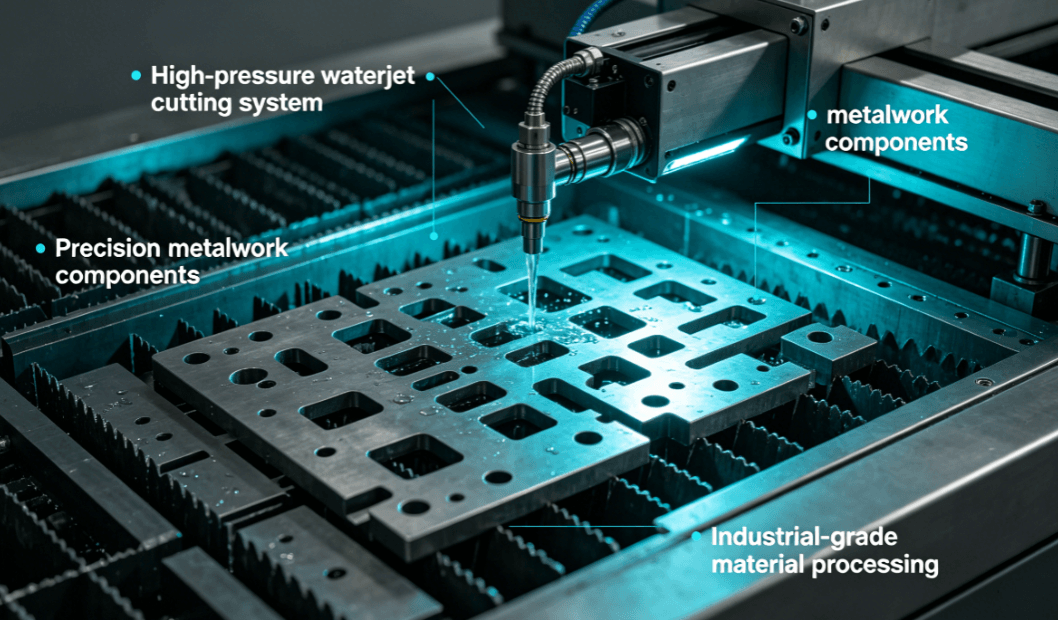
The edge quality produced by a waterjet is smooth and burr-free. This eliminates the need for manual de-burring or edge grinding, which are common hidden costs in plasma or laser procurement.
Ready-for-Assembly Workflow
Parts can move directly from the cutting bed to welding or final assembly. By removing secondary finishing steps, manufacturers can shorten lead times by 20-30%, a vital advantage for E-commerce sellers and brand owners with tight inventory cycles.
Strategic Nesting and Material Cost Management
Raw material is often the most expensive component of a manufacturing contract. Modern waterjet software optimizes "nesting," which is the arrangement of parts on a single sheet of material to minimize scrap.
- Narrow Kerf Width: The cutting stream is approximately 0.030" wide, allowing parts to be nested extremely close together.
- Common Line Cutting: Skilled operators can use a single cut to create the edges of two adjacent parts, further reducing waste.
- Intricate Geometry: Waterjets can cut complex internal shapes that are impossible for mechanical saws, allowing for more creative and efficient part layouts.
Meeting ESG Goals with Waterjet Technology
For sourcing businesses and bulk buyers focused on Environmental, Social, and Governance (ESG) criteria, waterjet cutting is the "greenest" choice among heavy-duty cutting technologies.
- No Toxic Fumes: The process does not generate hazardous gases or smoke, improving factory air quality.
- Recyclable Materials: Both the water and the garnet abrasive can be filtered and reused in closed-loop systems.
- Resource Efficiency: Reduced material waste translates directly to a lower carbon footprint for the finished product.
Buyer’s Checklist: How to Evaluate Suppliers?
When sourcing a Water Jet Machine or a service provider, use these criteria to ensure you are capturing all waterjet advantages.
1. Does the machine have 5-axis capability?
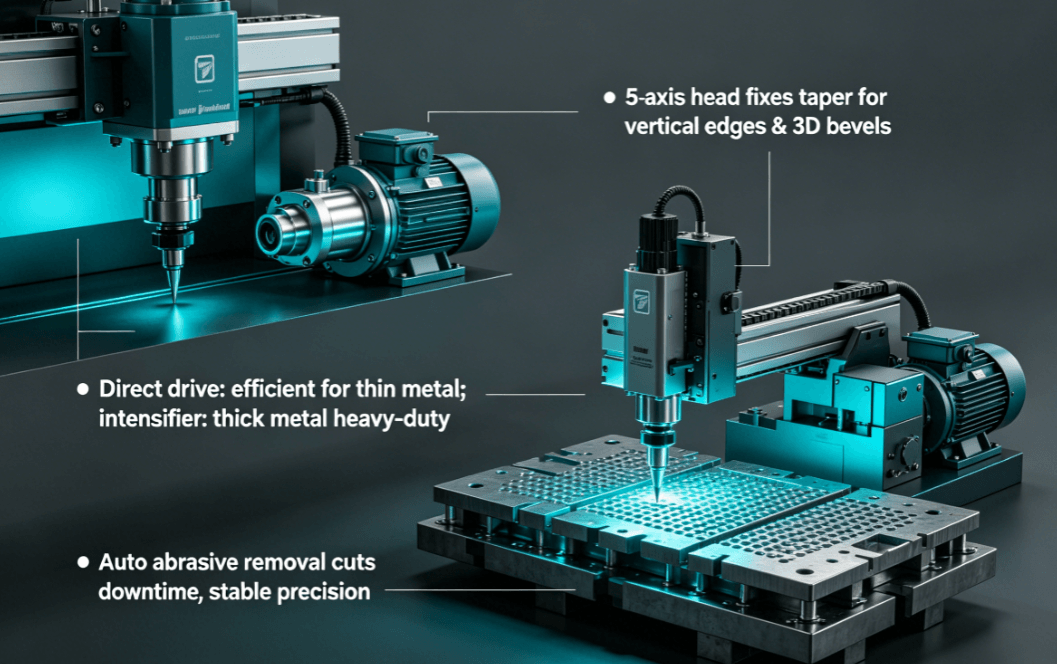
5-axis heads can tilt to compensate for the natural taper of the water stream, ensuring perfectly vertical edges and the ability to cut complex 3D bevels.
2. What pump technology is utilized?
Direct drive pumps offer high energy efficiency for thinner materials, while intensifier pumps are preferred for ultra-thick materials and 24/7 heavy industrial production.
3. How is the abrasive managed?
An automated abrasive removal system indicates a high-efficiency shop that minimizes downtime and maintains consistent cutting precision.
Summary
In 2026, the strategic use of waterjet cutting allows procurement teams to bypass the limitations of thermal processing. By prioritizing material integrity, reducing secondary labor, and maximizing nesting efficiency, buyers can achieve a higher ROI. This technology is not just a cutting tool; it is a strategic asset for any supply chain requiring precision, versatility, and sustainability.
Reference Sources
WJTA - Waterjet Technology Association Official Site