In modern manufacturing procurement, selecting the right cutting technology is rarely about which machine is "better"—it is about which process optimizes the cost-per-part for your specific material stack. For sourcing professionals and engineers, the choice between Pure Waterjet and Abrasive Waterjet often represents the difference between a high-speed, low-cost solution for soft goods and a high-precision, heavy-duty solution for hard alloys.
As we move into 2026, the shift toward sustainable "cold cutting" processes has made waterjet technology a cornerstone of Aerospace, Medical, and Automotive supply chains. Understanding the technical nuances and commercial trade-offs between these two methods is essential for accurate RFQ (Request for Quote) evaluation and supplier vetting.
What is the Fundamental Difference for Buyers?
At its core, the distinction lies in the medium used to erode material.
- Pure Waterjet Cutting: Uses a supersonic stream of highly pressurized water (up to 90,000 PSI) channeled through a tiny jewel orifice (typically ruby or diamond). It acts like a high-speed "water saw," ideal for porous or soft materials.
- Abrasive Waterjet Cutting: Uses the same pressurized water stream as a vacuum to pull an abrasive medium—usually crushed garnet—into a mixing chamber. The water Feld accelerates the garnet particles, which do the actual mechanical cutting. This turns the tool into a high-powered "grinding" stream capable of slicing through inches of titanium.
From a procurement perspective, the decision is dictated by the Material Hardness and Part Complexity.
Material Compatibility: Matching the Process to the Project
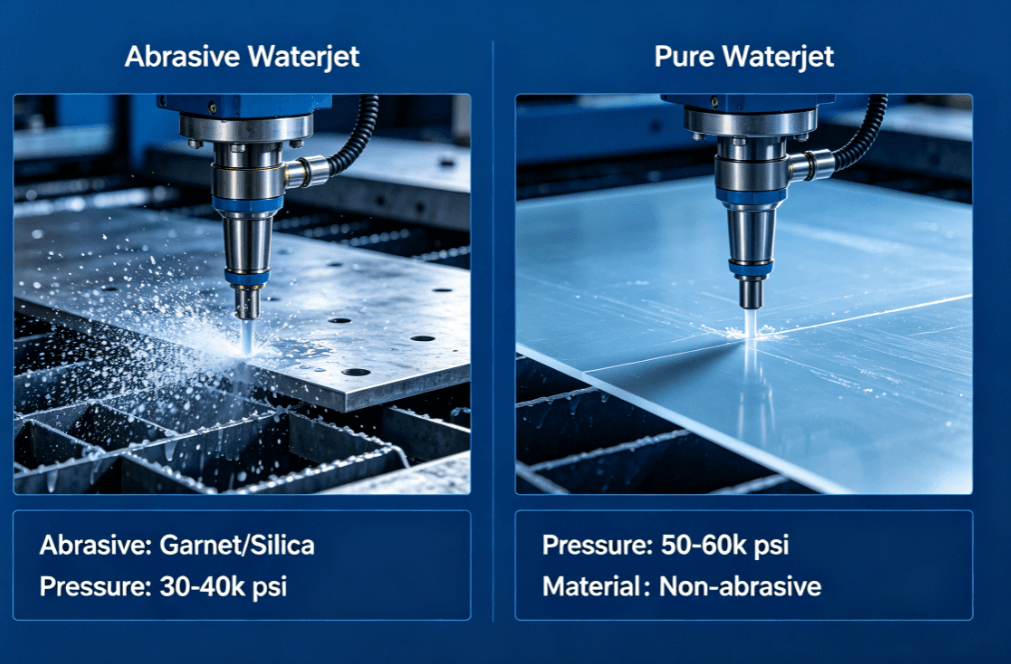
A common mistake in sourcing is over-specifying. Using an abrasive waterjet for a project that only requires pure water increases lead times and consumable costs unnecessarily.
Pure Waterjet Applications (Soft Materials)
Pure waterjet is the preferred choice for materials that are thin, soft, or fibrous. Because the stream is extremely thin (0.004" to 0.010"), it allows for incredible detail and minimal material waste.
- Common Sourcing Categories: Rubber gaskets, automotive interiors (carpets/headliners), foam packaging, food products, and thin plastics.
- Key Advantage: No moisture absorption in most closed-cell materials and zero risk of contamination from abrasive dust.
Abrasive Waterjet Applications (Hard Materials)
When the material density increases, pure water lacks the "teeth" to penetrate. The addition of garnet allows for the cutting of virtually any known material.
- Common Sourcing Categories: Stainless steel, aluminum, titanium, carbon fiber, stone, glass, and hardened tool steels.
- Key Advantage: Ability to cut thicknesses up to 10 inches without a Heat Affected Zone (HAZ), preserving the structural integrity of expensive alloys.
Comparison Table: Procurement Decision Matrix
| Feature | Pure Waterjet | Abrasive Waterjet |
|---|---|---|
| Typical Materials | Rubber, Foam, Gaskets, Food | Metal, Stone, Glass, Composites |
| Cutting Speed | Very High (up to 1000+ ipm) | Lower (depends on thickness/quality) |
| Kerf Width | Extremely Narrow (0.004" - 0.010") | Narrow (0.030" - 0.050") |
| Operating Cost | Lower (Electricity + Water) | Higher (Includes Garnet + Nozzle wear) |
| Edge Quality | Excellent for soft goods | Variable (depends on speed settings) |
| Secondary Ops | Rarely needed | Minimal; eliminates heat-distortion rework |
| Environmental | High (Pure water is recyclable) | Moderate (Requires garnet disposal/recycling) |
Cost Analysis: The "Invisible" Expenses in Sourcing
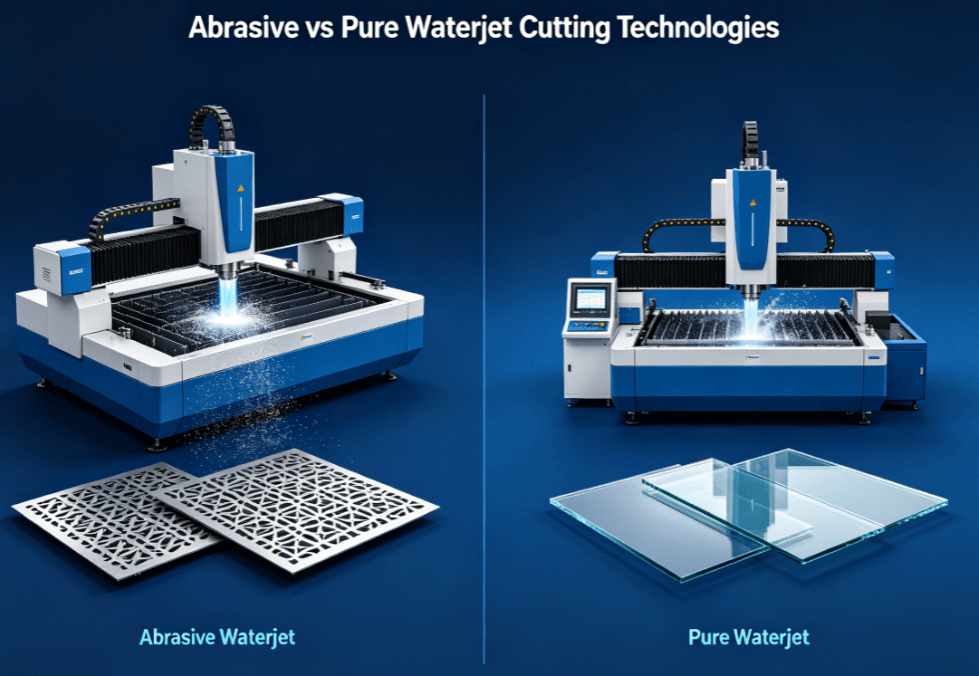
When reviewing supplier quotes, the "hourly rate" of a waterjet machine is only one part of the equation. Buyers must look at the Total Cost of Ownership (TCO) of the part.
Consumable Logic
In Abrasive Waterjet cutting, the abrasive (garnet) can account for 50% to 70% of the total operating cost. If a supplier is quoting significantly lower than competitors, verify their garnet flow rate and the grade of abrasive used. Low-quality abrasives can lead to "striation" (rough lines) on the cut edge, requiring expensive secondary sanding or machining.
Maintenance and Downtime
Pure waterjet systems have fewer components in the cutting head, leading to longer orifice life and higher machine uptime. Abrasive systems, however, suffer from "accelerated wear." The mixing tubes and nozzles are eroded by the very abrasive they carry. For bulk buyers, this means lead times may be slightly longer for abrasive projects due to frequent maintenance cycles.
Why "Cold Cutting" Matters for High-Value Sourcing
One of the primary reasons procurement officers choose waterjet over Laser or Plasma cutting is the absence of heat.
Laser and Plasma cutting rely on thermal energy, which creates a Heat Affected Zone (HAZ). This alters the molecular structure of the metal at the edge, potentially making it brittle or prone to cracking.
- For Aerospace and Medical Buyers: Abrasive waterjet is often the only approved method for certain components because it maintains the original material properties (T6 temper in aluminum, for example).
- Sourcing Tip: If your project involves secondary welding or precision tapping near the cut edge, waterjet's cold-cutting nature will save you money on "rejection rates" compared to laser-cut parts that may have hardened edges.
Supplier Evaluation: What to Ask in Your RFQ?
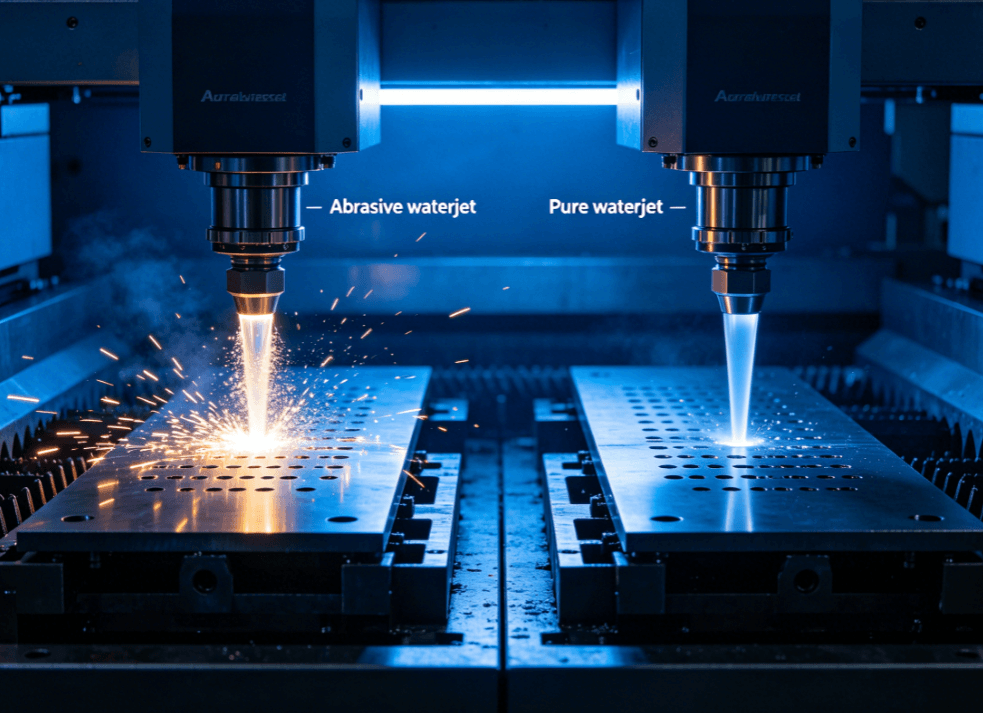
To ensure you are matching with the right manufacturing partner, include these specific technical questions in your procurement workflow:
- What is the "Quality Level" quoted? Waterjet speeds are typically rated Q1 (fast/rough) to Q5 (slow/precise). Ensure all suppliers are quoting the same Q-level to avoid "apples-to-oranges" pricing.
- How do you manage abrasive disposal? Sustainable sourcing is becoming a regulatory requirement. Ask if the supplier uses a garnet recycling system to reduce environmental impact.
- Do you offer 5-axis cutting? For complex abrasive waterjet parts, 5-axis heads can compensate for "taper" (the tendency of the stream to widen at the bottom), ensuring a perfectly square edge on thick materials.
- What is your orifice/nozzle replacement schedule? This indicates the supplier’s commitment to precision. Worn nozzles lead to out-of-tolerance parts.
The 2026 Outlook: Automation and AI Integration
The waterjet industry is currently seeing a surge in AI-driven path optimization. For buyers, this is good news. New software can now predict exactly how the water stream will lag or taper, allowing machines to run faster while maintaining high tolerances.
When sourcing in 2026, look for suppliers who have invested in automatic abrasive delivery systems and clog detection. These technologies significantly reduce human error and unexpected delays, leading to more reliable delivery schedules for bulk orders.
Summary
Choosing between pure and abrasive waterjet is a balance of material density and budget. Pure waterjet offers rapid, clean cutting for soft goods, while abrasive waterjet is the industrial standard for metals and composites where heat-free precision is non-negotiable. Effective procurement in 2026 requires vetting suppliers not just on price, but on their ability to manage abrasive costs and maintain high-pressure component integrity.
Reference Sources
Official Waterjet Technology Association (WJTA) Resources
ASME Manufacturing and Material Integrity Standards
Research on Abrasive Waterjet Precision and Kerf Analysis