The global drinkware market is increasingly driven by material innovation—specifically the shift toward 304/316 stainless steel and BPA-free Tritan. For procurement professionals, sourcing from China is no longer just about finding the lowest price; it is about navigating the "1688 ecosystem" vs. the "Export-oriented factory" model.
Whether you are a brand owner looking for OEM vacuum flasks or a bulk buyer seeking generic coffee mugs, understanding the manufacturing landscape in 2026 is critical for supply chain stability.
The Drinkware Manufacturing Landscape in China
China accounts for over 70% of the world’s drinkware production. However, the market is highly fragmented into specialized industrial clusters. To source effectively, you must know where your specific product type is "born."
1. The Stainless Steel Hub: Yongkang & Wuyi (Zhejiang)
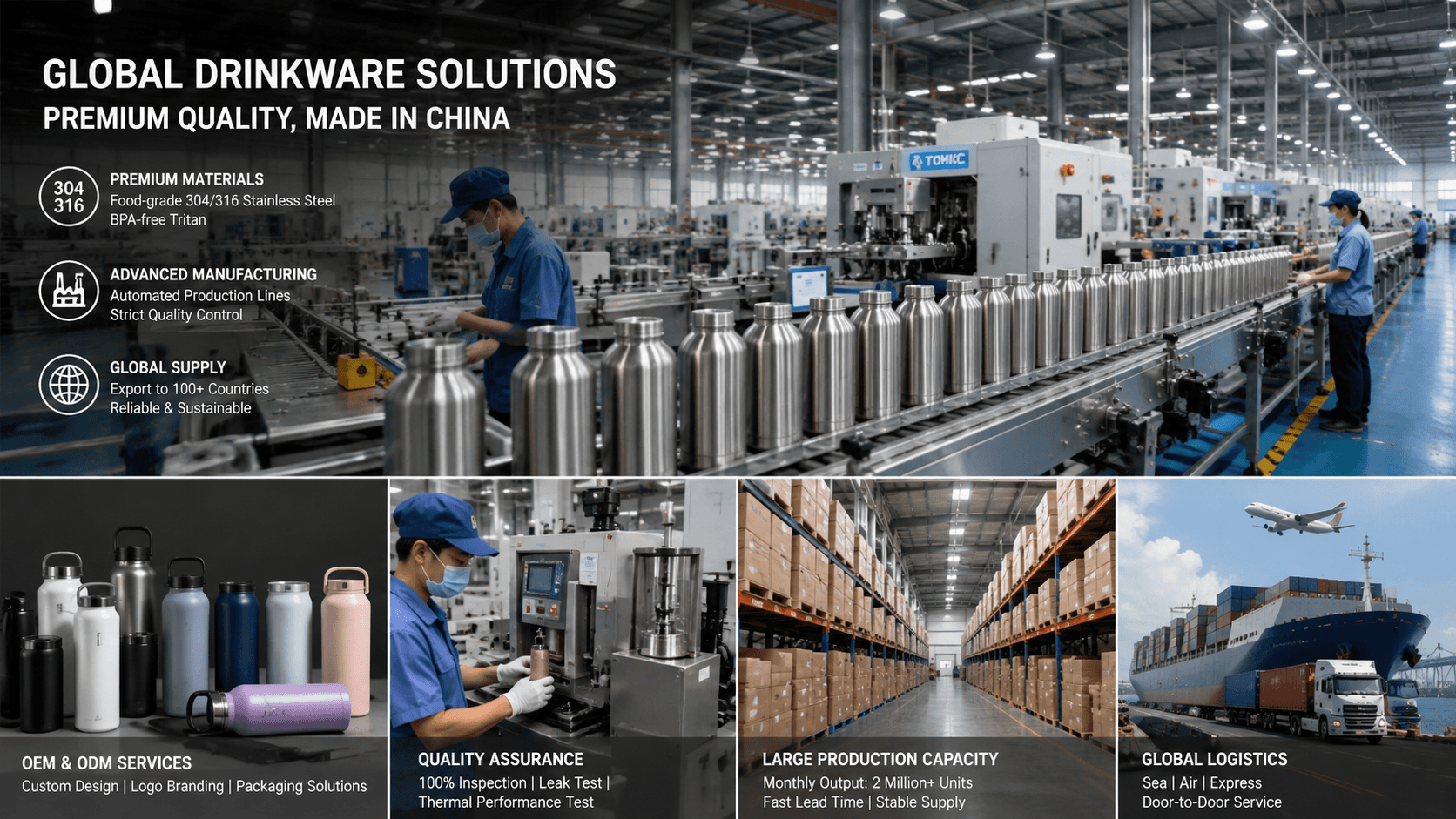
Yongkang is known as the "Cup Capital of China." If you are sourcing vacuum-insulated tumblers, sports bottles, or thermos flasks, 90% of the top 1688 suppliers are based here.
- Specialization: Double-wall vacuum insulation, powder coating, and laser engraving.
- Best For: Ecommerce sellers (Amazon/Shopify) and outdoor brands.
- Procurement Insight: While Yongkang offers the best prices, quality variance is high. Always verify if the factory uses 304 (18/8) stainless steel versus the cheaper 201 grade, which is prone to rusting.
2. The Glassware Hub: Hejian (Hebei) & Zibo (Shandong)
For borosilicate glass and high-end double-walled glass mugs, Hejian is the primary cluster.
- Specialization: Hand-blown borosilicate glass, heat-resistant teapots.
- Best For: Home decor brands and premium kitchenware importers.
- Procurement Insight: Glass manufacturing on 1688 often involves smaller workshops. For bulk buyers, Zibo offers more mechanized, high-volume production lines suitable for promotional items.
3. The Ceramic Hub: Chaozhou (Guangdong) & Liling (Hunan)
Chaozhou is the king of daily-use ceramics, focusing on trendy designs and mass production.
- Specialization: Sublimation mugs, stoneware, and fine bone china.
- Best For: Promotional gift companies and retail chains.
1688 Suppliers vs. Export-Oriented Manufacturers
When searching for "drinkware manufacturers China," buyers often encounter a dilemma: should they buy from 1688.com (domestic) or Alibaba.com (international)?
| Feature | 1688.com Suppliers (Domestic) | Export-Oriented Factories (International) |
|---|---|---|
| Pricing | 15–25% lower on average. | Higher (includes export overhead). |
| MOQ | Low (often 10–50 units). | High (usually 500–1,000+ units). |
| Certifications | Often lack FDA/LFGB/BSCI. | Usually hold full international compliance. |
| Communication | Chinese only; requires a sourcing agent. | English-speaking sales teams. |
| Customization | Limited for small orders. | Full OEM/ODM capabilities. |
Why Navigating 1688 is Trending in 2026
More brand owners are moving toward 1688 to find "raw" factory designs that haven't hit the international market yet. By the time a drinkware design appears on Alibaba.com, it is often already saturated on Amazon. 1688 allows buyers to capture the "First Mover" advantage in design.
Evaluating Drinkware Manufacturers: A Procurement Checklist
To avoid the common pitfalls of sourcing—such as "leaking lids" or "lead-paint finishes"—your evaluation must go beyond the digital storefront.
1. Material Verification (The 304 Test)
In the drinkware industry, "Food Grade" is a legal requirement, not a suggestion.
- Action: Ask for a material analysis report (Spectrometer test).
- Risk: Some suppliers mix 201 stainless steel in the outer wall to save costs. Only the inner wall is 304. For premium brands, 316 (medical grade) is the 2026 standard for high-end tea/coffee tumblers.
2. Lid and Seal Integrity
The most common point of failure in drinkware is the lid.
- Action: Request "Leak-proof" vs. "Spill-proof" clarification.
- Realism: On 1688, many factories buy lids from third-party injection molding shops. Ensure your manufacturer has a dedicated QC process for gasket fitment.
3. Surface Treatment Capabilities
The longevity of a product's "look" depends on the finish. Compare:
- Powder Coating: Durable, eco-friendly, and provides a premium grip.
- Spray Painting: Cheaper but prone to chipping.
- Electroplating: High shine, but requires strict environmental compliance (ensure the factory isn't at risk of government shutdown).
The Sourcing Workflow for Bulk Buyers
For those managing large-scale procurement, the process should follow this structured path:
- RFQ Phase: Send a detailed specification sheet (Capacity, Material, Insulation time, Packaging).
- Sample Consolidation: If sourcing from multiple 1688 suppliers, use a warehouse in Ningbo or Yiwu to consolidate samples before air-shipping them to your office.
- Factory Audit: For orders over $50,000, a third-party audit (like V-Trust or QIMA) is non-negotiable. Check for "Production Capacity" to ensure they aren't outsourcing your order to a smaller, unregulated shop during peak season.
- Pre-Shipment Inspection (PSI): Focus on the "Drop Test" and "Vacuum Insulation Test" (checking if the temperature holds for 12-24 hours).
Logistics and Compliance Considerations
Sourcing drinkware involves "shipping air"—these products are bulky.
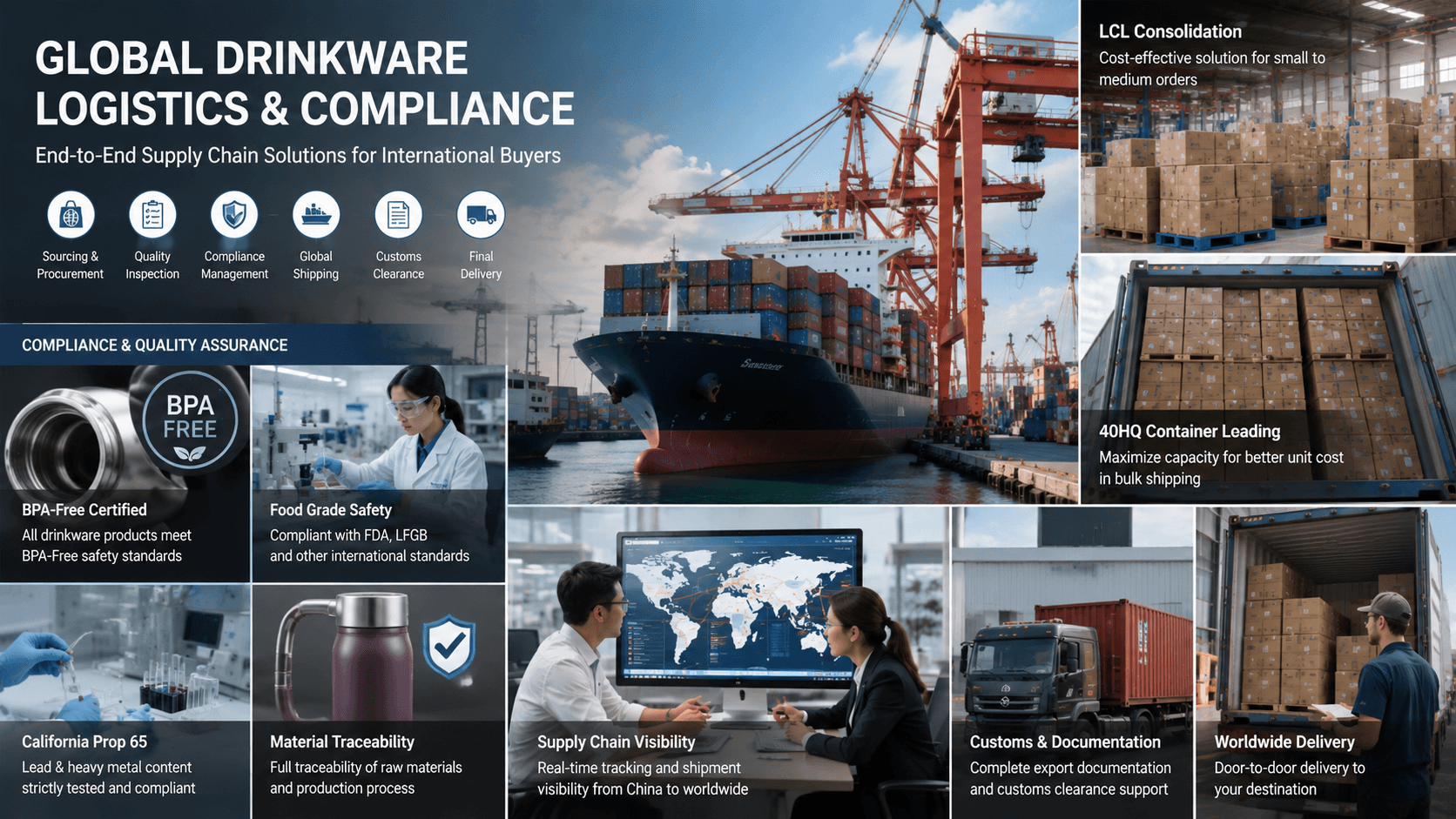
- Freight: For small buyers, LCL (Less than Container Load) is common. For bulk buyers, 40HQ containers are the only way to make the unit cost viable.
- Compliance: Ensure your manufacturer provides BPA-free certificates. In 2026, California Prop 65 compliance is a major focus for US-based importers; check the lead content in any decorative inks or coatings.
Summary: Matching Buyer Types to Suppliers
- Small Buyers/Dropshippers: Stick to 1688 via a sourcing agent to access low MOQs and trendy designs.
- Ecommerce Sellers (Private Label): Look for Yongkang-based factories with BSCI audits who can handle laser-logo customization.
- Bulk Buyers/Distributors: Focus on direct factory relationships in the Zhejiang or Guangdong provinces, prioritizing production scale and long-term price stability.
Reference Sources
- China Household Electrical Appliances Association (CHEAA): Reports on domestic manufacturing trends.
- Statista: Global Drinkware Market Share and Growth Projections 2024-2028.
- 1688.com (Alibaba Group): Supplier verification and industrial cluster data.
- SGS/TUV Rheinland: Compliance guidelines for food-contact materials (FCM).