The narrative of "Made in China" is undergoing its most significant transformation in decades. Driven by China’s national "Dual Carbon" goals—peaking carbon emissions by 2030 and achieving carbon neutrality by 2060—the manufacturing landscape has shifted from high-volume output to high-value, sustainable production.
For international procurement officers, brand owners, and bulk buyers, finding a sustainable manufacturer in China is no longer just a "nice-to-have" for marketing; it is a critical requirement for navigating the EU’s Carbon Border Adjustment Mechanism (CBAM) and global ESG (Environmental, Social, and Governance) mandates.
This guide explores seven powerhouse manufacturers that lead their respective industries in sustainability, verified through international certifications and real-world procurement transparency.
1. Esquel Group (Textiles & Apparel)
Specialization: Premium Cotton Shirts and Sustainable Textiles
Best For: Brand owners and high-end retailers requiring a completely vertical, carbon-neutral supply chain.
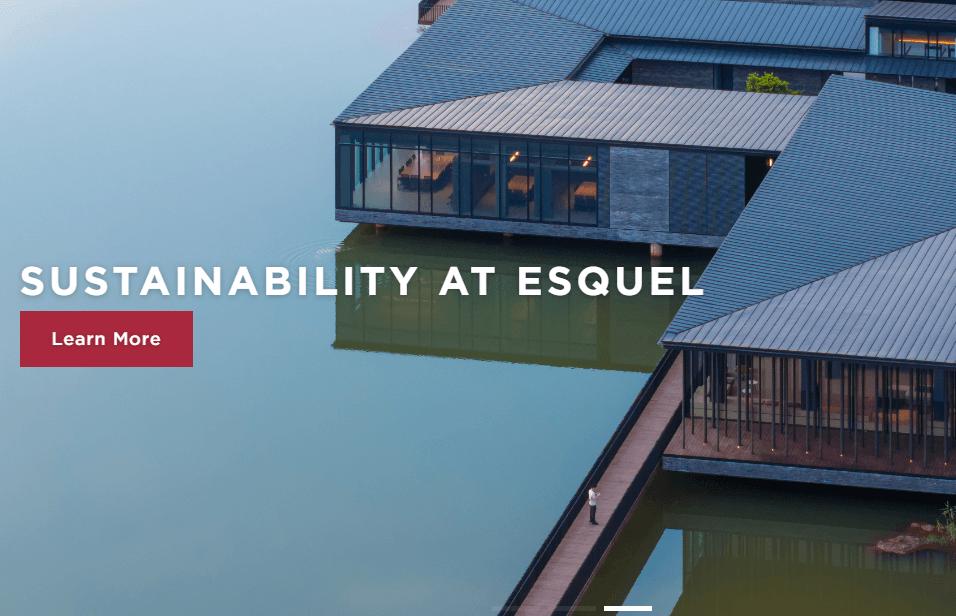
Esquel is a global leader that has redefined sustainable textile production. Their "Integral" eco-tourism and manufacturing park in Guilin serves as a blueprint for sustainable factory design, proving that industrial production can coexist with natural ecosystems.
- Sourcing Suitability: They utilize non-aqueous (waterless) dyeing technology and high-efficiency wastewater treatment, significantly reducing the environmental footprint of garment production.
- Procurement Realism: As a Tier-1 supplier for brands like Ralph Lauren, their MOQs are high. However, their recycled fabric lines are becoming more accessible to mid-sized brand owners focused on circularity.
- Limitations: Pricing is at a premium compared to standard mills in Zhejiang or Guangdong.
2. Shanying International (Packaging & Paper)
Specialization: Recycled Paper Packaging and Circular Fiber Solutions
Best For: E-commerce sellers, logistics firms, and retail chains.
Shanying is a titan of the circular economy. They operate a global recycling network, ensuring that waste paper is reclaimed and transformed into high-strength packaging materials.
- Sourcing Suitability: They offer FSC-certified (Forest Stewardship Council) and 100% recycled containerboard. For brands looking to eliminate virgin plastic shipping materials, Shanying provides robust, eco-friendly alternatives.
- Procurement Realism: They handle massive industrial volumes but have dedicated divisions for "sustainable branding" that work with growing retail brands.
- Limitations: Lead times can fluctuate based on the global recovered paper market.
3. Bloomage Biotechnology (Bio-based Ingredients)
Specialization: Hyaluronic Acid and Bio-fermented Cosmetic Raw Materials
Best For: Skincare, beauty, and pharmaceutical brand owners.
Bloomage is the world’s largest producer of Hyaluronic Acid. Their sustainability edge lies in "Green Science"—replacing traditional animal-tissue extraction with advanced microbial fermentation, which uses significantly less energy and produces biodegradable waste.
- Sourcing Suitability: Their fermentation technology allows for high-purity ingredients that meet "Vegan" and "Non-GMO" certifications, essential for the "Clean Beauty" sector.
- Procurement Realism: They offer various grades of raw materials (from medical to food grade), making them accessible for both boutique startups and massive distributors.
4. Sunwin Stevia (Food & Ingredients)
Specialization: Natural Sweeteners and Sustainable Agricultural Extracts
Best For: Food and beverage (F&B) manufacturers.
Sustainability in food manufacturing involves clean extraction. Sunwin uses a proprietary water-extraction method for their stevia products, avoiding the harsh chemical solvents (like methanol) typical in the industry.
- Sourcing Suitability: They operate a "Zero-Waste" processing loop where stevia leaf residue is converted into organic fertilizer, which is then used by their partner farmers to grow the next crop.
- Procurement Realism: Excellent for brands seeking "Organic" and "Sustainable" labels for the US and EU markets.
5. BYD Company (Energy & Electronics)
Specialization: Rechargeable Batteries and Zero-Emission Tech
Best For: Bulk buyers and tech firms sourcing energy storage or EV infrastructure.
While famous for electric vehicles, BYD’s battery manufacturing is among the world’s most sustainable. They have committed to "Zero Carbon Industrial Parks," leveraging their own solar and energy storage solutions to power the production of electronics components.
- Sourcing Suitability: For buyers in the consumer electronics space, BYD’s commitment to carbon neutrality provides a massive advantage in Scope 3 emissions reporting.
- Procurement Realism: Negotiating with BYD requires significant volume. They are a Tier-1 supplier with impeccable compliance documentation but low flexibility for small-scale customization.
6. Luxshare Precision (Electronics Assembly)
Specialization: Consumer Electronics and High-Precision Connectivity
Best For: Tech brands requiring high-level ESG compliance for complex assemblies.
As a major Apple supplier, Luxshare has integrated renewable energy across its production lines. They focus heavily on energy conservation and are key participants in the RE100 initiative (committing to 100% renewable electricity).
- Sourcing Suitability: If your brand requires precision electronics with a verified low-carbon footprint, Luxshare’s "Smart Green Factory" model is the gold standard in China.
- Limitations: Primarily functions as an OEM/ODM for massive tech conglomerates; onboarding for small players is difficult.
7. Zhongce Rubber Group (ZC Rubber) (Industrial/Automotive)
Specialization: Eco-friendly Tires and Recycled Rubber Products
Best For: Automotive distributors, logistics fleet managers, and industrial buyers.
ZC Rubber is China’s largest tire manufacturer and a leader in green industrial production. They have invested heavily in "Low Rolling Resistance" tire technology, which improves vehicle fuel efficiency and reduces carbon emissions during use.
- Sourcing Suitability: They utilize a sophisticated rubber recycling system that reclaims scrap tires into high-quality reclaimed rubber, reducing the need for virgin natural and synthetic rubber.
- Procurement Realism: They have a global distribution network, making their sustainable tire lines relatively easy to source for international wholesalers.
Comparison Table: Sustainable Manufacturers 2026
| Manufacturer | Industry | Primary Green Innovation | Best For | Verification |
|---|---|---|---|---|
| Esquel | Textiles | Waterless Dyeing | Premium Apparel | GRS / OEKO-TEX |
| Shanying | Packaging | Circular Fiber Loop | E-commerce | FSC / GRS |
| Bloomage | Biotech | Bio-fermentation | Skincare Brands | ISO 14001 |
| Sunwin Stevia | Food | Water-Extraction | F&B Brands | Organic / Non-GMO |
| BYD | Energy/Tech | Zero-Carbon Parks | Bulk Energy | ISO 14064 |
| Luxshare | Electronics | Renewable Energy (RE100) | Tech Brands | ESG / Apple Audit |
| ZC Rubber | Industrial | Recycled Rubber Tech | Automotive | Smart Green Factory |
Procurement Guide: How to Verify a "Sustainable" Manufacturer
In the China sourcing landscape, "Greenwashing" is a real risk. To protect your brand, follow this verification workflow:
1. Request the "Social Credit Code"
Every Chinese company has a Unified Social Credit Code. Use platforms like IPE.org.cn (Institute of Public & Environmental Affairs) to see if a factory has any outstanding environmental violations or government fines.
2. Verify Certificates at the Source
Don't just accept a PDF. Cross-reference license numbers on official databases:
- GRS (Global Recycled Standard): Use the Textile Exchange database.
- FSC (Forest Stewardship Council): Check the FSC Public Certificate Search.
- ISO 14001: Verify via the CNCA (Certification and Accreditation Administration of China) website.
3. Request a Transaction Certificate (TC)
A "Scope Certificate" proves the factory can make sustainable goods. A Transaction Certificate (TC) proves the specific batch you are buying actually contains the recycled or organic materials promised.
Reference Sources:
China Ministry of Industry and Information Technology (MIIT) - National Green Factory List.Institute of Public & Environmental Affairs (IPE) - Blue Map Database.
Textile Exchange - Global Recycled Standard (GRS) Oversight.
FSC International - China Regional Standards.