The performance of any automated carving system relies heavily on the quality of CNC router bits. These cutting tools act as the primary contact point between the machine and the raw material. Selecting the appropriate bit ensures clean edges and prolongs the life of the machine spindle.
In 2026, machining technology has advanced to require tighter tolerances and faster feed rates. Understanding the differences in tool geometry is no longer optional for professional woodworkers or hobbyists. Every specific project demand requires a tailored approach to tool selection to avoid material waste.
High-quality CNC router bits are engineered to handle extreme rotational speeds while maintaining structural integrity. They must effectively evacuate chips to prevent heat buildup and potential fire hazards. This comprehensive guide examines the essential categories of bits used in modern manufacturing environments.
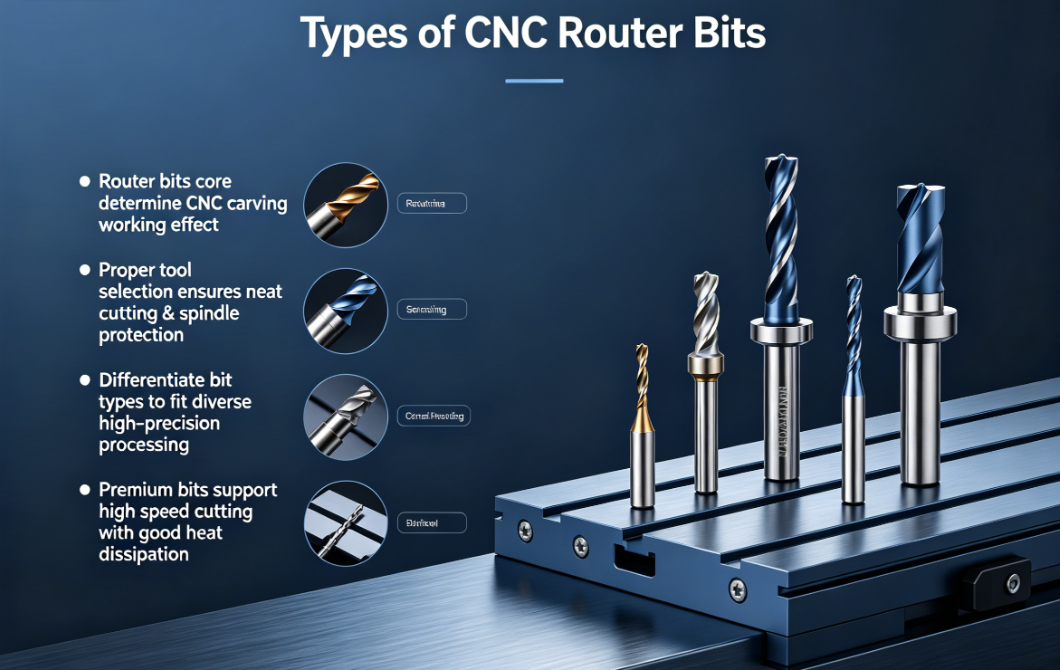
Categorizing Common CNC Router Bits by Flute Geometry
The flute of a bit refers to the deep groove that spirals around the tool body. Flutes play two vital roles: providing a cutting edge and creating a path for chip removal. The direction and number of flutes significantly impact the final surface quality of the workpiece.
Understanding Upcut Spiral Bits
Upcut bits are designed to pull wood chips upward and away from the cutting area. This design is highly effective for deep slotting where chip buildup could cause the tool to overheat. By removing waste quickly, these bits allow for faster feed rates during roughing passes.
However, the upward pulling force can cause splintering on the top surface of the material. This makes upcut bits less suitable for projects requiring a perfect top-edge finish. They are most commonly used for cutting through-holes or pockets where the top edge is hidden.
The Precision of Downcut Spiral Bits
Downcut bits operate with an opposite geometry by pushing chips downward toward the machine table. This action provides a very clean cut on the top surface of the workpiece. It is the preferred choice for thin laminates and delicate veneers that might otherwise peel.
The downward pressure also helps hold smaller workpieces in place during the machining process. One disadvantage is that chips can become packed inside the cut path. This requires the operator to monitor heat levels closely to prevent scorching the material.
The Versatility of Compression Bits
Compression bits combine the advantages of both upcut and downcut designs into a single tool. The bottom portion of the bit pulls upward while the top portion pushes downward. This creates a dual-action force that cleans both the top and bottom edges of the material.
These bits are indispensable for cutting double-sided laminates, plywood, and melamine in 2026. They are generally more expensive due to their complex manufacturing process and specialized geometry. However, the time saved in sanding and finishing often justifies the initial investment.
| Bit Geometry | Direction of Force | Primary Advantage | Best Material |
|---|---|---|---|
| Upcut Spiral | Upward | Excellent chip clearing | Solid wood, plastic |
| Downcut Spiral | Downward | Superior top finish | Thin veneers, laminates |
| Compression | Center-seeking | Clean top and bottom | Plywood, Melamine |
Specialized CNC Router Bits for Intricate Designs
Standard spiral bits are efficient for cutting shapes, but intricate designs require specialized profiles. Advanced CNC router bits allow operators to create complex 3D textures and fine engravings. Choosing the right profile depends on the desired visual outcome and the level of detail required.
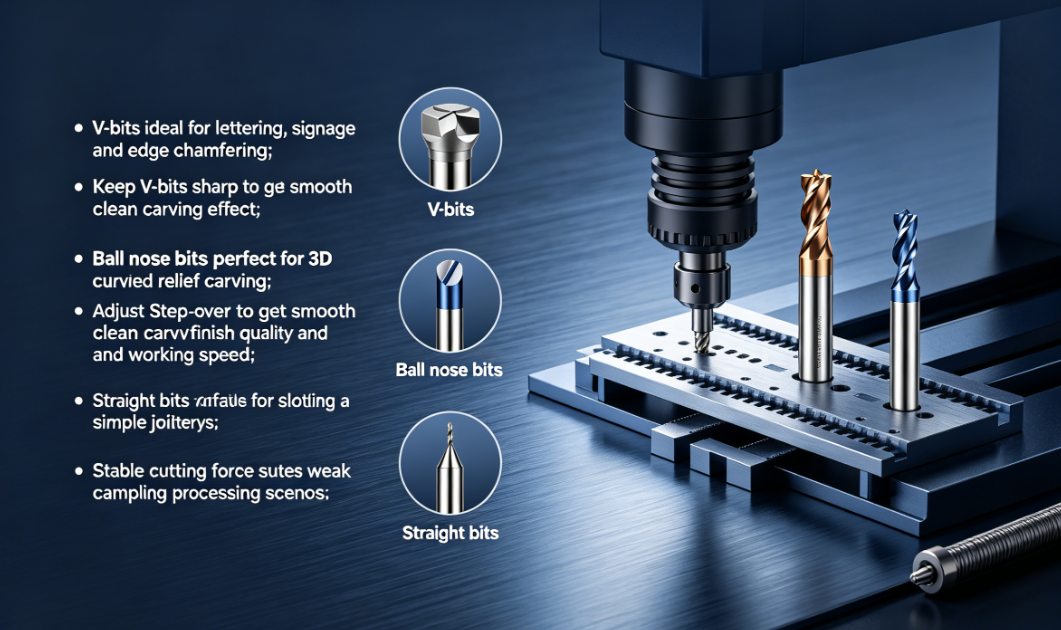
V-Groove Bits for Engraving
V-bits are characterized by their pointed tips and angled cutting edges, typically 60 or 90 degrees. They are the standard choice for sign making, decorative lettering, and chamfering edges. The width of the cut is directly controlled by the depth of the tool within the material.
In 2026, many professionals use specialized software to vary the depth of the V-bit during a single pass. This technique creates a "carved by hand" appearance that adds value to the finished product. These bits must be kept extremely sharp to prevent "fuzzing" at the tip of the V-groove.
Ball Nose Bits for 3D Contouring
Ball nose bits feature a rounded tip that resembles the shape of a sphere. They are used primarily for 3D relief carving and creating smooth, curved surfaces. The rounded profile allows the tool to transition seamlessly between different elevations in a digital model.
When using ball nose bits, the "step-over" setting in the CAM software is crucial for surface quality. A smaller step-over produces a smoother finish but significantly increases the total machining time. Many operators use a large bit for roughing and a tiny bit for the final detailed pass.
Straight Flute Bits for General Purpose
Straight bits do not have a spiral design and instead feature vertical cutting edges. While they are less efficient at chip removal, they are often the most affordable option. They work well for simple joinery tasks or cutting straight slots in stable materials like MDF.
Straight bits provide a neutral cutting action that does not pull the material up or push it down. This can be beneficial when working with machines that have limited clamping or vacuum hold-down power. However, they are prone to vibration if pushed too hard during a heavy cut.
Why Material Composition and Coatings Matter in 2026?
The durability of CNC router bits is determined by the materials used in their construction. In 2026, the industry has shifted almost entirely toward solid carbide for professional applications. Carbide is significantly harder than high-speed steel (HSS) and maintains a sharp edge much longer.
High-speed steel bits are still available but are mostly restricted to hobbyist use or soft plastics. HSS bits lose their temper and soften at temperatures above 500°C, which is easily reached in high-speed CNC routing. Solid carbide can withstand temperatures up to 900°C without losing its structural integrity.
Advanced coatings like Zirconium Nitride (ZrN) or Aluminum Titanium Nitride (AlTiN) are now common. These coatings act as a thermal barrier, reducing the amount of heat transferred to the carbide core. Coated CNC router bits can last up to three times longer than uncoated versions in abrasive materials.
Polycrystalline Diamond (PCD) bits represent the pinnacle of tool longevity for industrial manufacturing. These bits feature diamond particles fused to a carbide body for extreme wear resistance. While very expensive, a PCD bit can outlast standard carbide by a factor of 50 in high-volume production.
| Tool Material | Hardness (Vickers) | Heat Resistance | Relative Lifespan |
|---|---|---|---|
| High-Speed Steel | 800 HV | Low | 1x |
| Solid Carbide | 1600 HV | High | 10x |
| Coated Carbide | 2200 HV | Very High | 25x |
| PCD Diamond | 7000+ HV | Extreme | 100x+ |
How to Determine the Best Tooling Specifications for Your Machine?
Choosing the right CNC router bits involves more than just matching the tool to the material. You must also evaluate if the bit is compatible with the specific mechanical limits of your machine. A mismatch between the tool and the machine's rigidity often leads to poor results or broken bits.
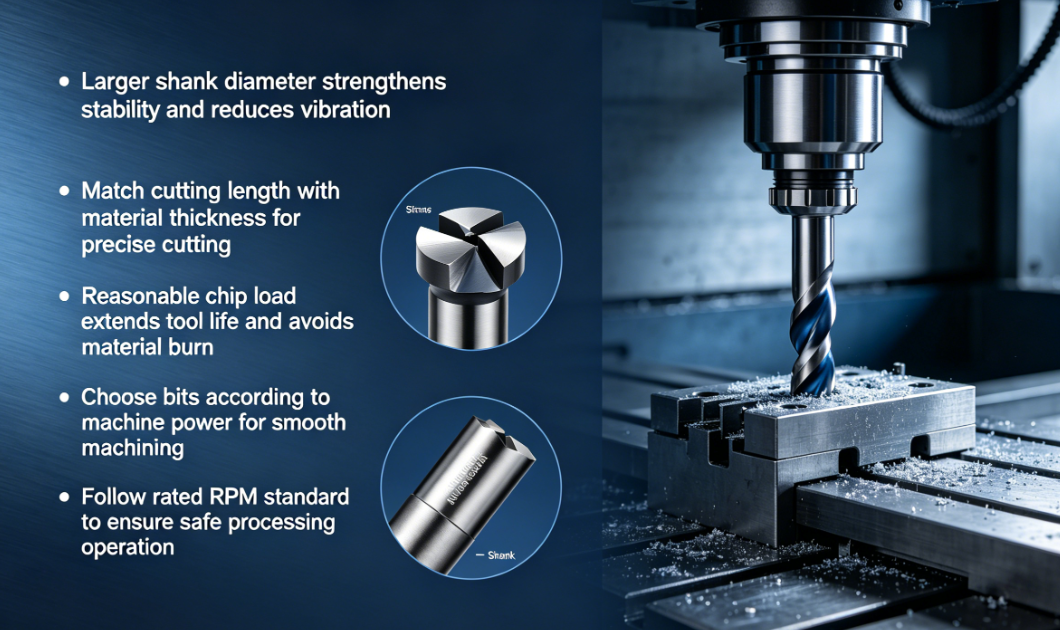
The shank diameter is a primary indicator of tool stability and should be as large as possible. A 1/2-inch shank is significantly more rigid than a 1/4-inch shank and reduces vibration during heavy cuts. If your spindle supports larger collets, always opt for the thicker shank to improve accuracy.
Consider the "cutting length" of the bit relative to the thickness of your material. Using a bit with a 2-inch cutting length for 1/2-inch material increases the risk of tool deflection. The shortest bit that can complete the job will always provide the cleanest and most accurate results.
Calculating the correct "chip load" is essential for maximizing tool life and preventing material burning. Chip load is the actual thickness of the chip that each flute removes during one revolution. In 2026, most tool manufacturers provide digital calculators to help users find the perfect balance of RPM and feed rate.
Machine horsepower also dictates which CNC router bits are appropriate for your specific setup. Large diameter bits require more torque to maintain a constant speed through dense hardwoods. If your machine bogs down during a cut, it is better to use a smaller bit with multiple shallow passes.
Reliable performance depends on using tools that are rated for the maximum RPM of your spindle. Some large-diameter bits are balanced for lower speeds and can become dangerous if spun too fast. Always verify the manufacturer's speed ratings before starting a new machining program on your CNC router.
Summary
Selecting the correct CNC router bits is the foundation of successful automated woodworking and metalworking. By understanding flute geometry, material composition, and machine compatibility, you can achieve professional-grade results. High-quality tooling reduces waste, saves time, and ensures that your CNC projects meet the highest standards of precision in 2026.
PRO TIP
When cutting resinous woods like pine or cherry, clean your CNC router bits frequently with a specialized bit cleaner. Pitch and resin buildup can act as an insulator, causing the bit to overheat and dull prematurely, even if the cutting edge is still physically intact.
FAQ
1. What is the main difference between upcut and downcut bits?
Upcut bits pull chips upward for efficient removal but may splinter the top surface. Downcut bits push chips downward to ensure a clean top finish but can trap heat in deep cuts. Choose upcut for fast material removal and downcut for delicate surface finishes.
2. Can I use a single bit for all my CNC projects?
No, using a single bit for every project will result in poor quality and short tool life. Different materials and designs require specific geometries, such as V-bits for engraving or compression bits for plywood. Always match the tool to the specific requirements of the workpiece.
3. How do I know when it is time to replace my router bits?
You should replace your bit if you notice burning on the wood, increased noise, or a rougher surface finish. In 2026, many operators also track tool hours to proactively replace bits before they fail or damage the workpiece. Dull bits increase the load on your spindle and can lead to machine wear.
4. Are coated carbide bits worth the extra cost?
Yes, coated bits are typically worth the investment for high-volume or abrasive material projects. The coating reduces friction and heat, which are the primary causes of tool dulling. For occasional hobbyist use, standard solid carbide bits are usually sufficient for most tasks.
Reference Sources
Amana Tool High-Performance Industrial Tooling