In the global hosiery market, China remains the undisputed heavyweight, producing approximately one-third of the world’s socks. For procurement professionals, the challenge isn’t finding a supplier; it’s identifying a factory that aligns with your specific volume, quality standards, and technical requirements.
Most of China's sock production is concentrated in Datang (Zhuji), known as "Socks City," and industrial clusters in Haining and Yiwu. As we move into 2026, the landscape is shifting toward sustainable materials (bamboo, recycled polyester) and high-performance functional knits.
This guide ranks the top manufacturers based on production scale, export experience, and buyer suitability to help you navigate the 2026 sourcing season.
How to Categorize Socks Manufacturers in China
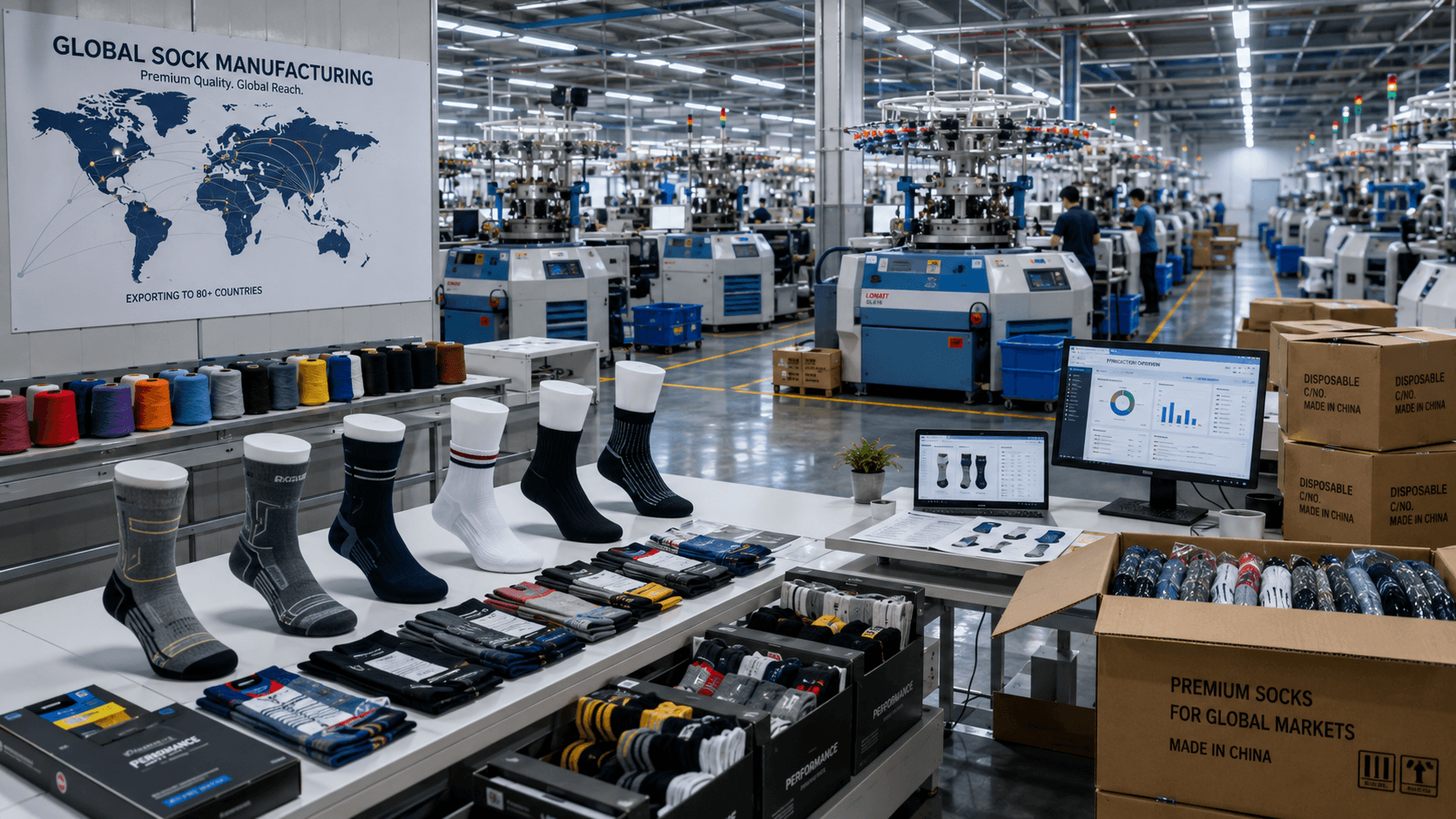
Before shortlisting suppliers, it is vital to understand that the Chinese market is segmented by "Tier" and "Specialization."
- Tier 1 (Global OEM Giants): Massive facilities serving brands like Nike, Adidas, and Uniqlo. High MOQs (10,000+ pairs) but world-class compliance.
- Tier 2 (Specialized Performance Factories): Focus on technical socks (compression, hiking, anti-slip). Moderate MOQs (1,200–3,000 pairs).
- Tier 3 (Fast-Fashion & Wholesale): High-speed production for low-cost items. Best for budget retailers and promotional goods.
Top Socks Manufacturers in China Ranked for 2026
1. Zhejiang Jasan Holding Group (Best for Global Brand Owners)
Jasan Group is a powerhouse in the hosiery industry, operating massive production bases in both China and Vietnam. They are a primary OEM for top-tier international sports and retail brands.
- Specialization: High-end sports socks, seamless hosiery, and cotton casuals.
- Best For: Large-scale brand owners and bulk importers requiring strict social compliance (BSCI, OEKO-TEX).
- Sourcing Suitability: Very high volume. They offer full R&D support but are generally inaccessible to small-scale buyers.
- Limitations: Extremely high MOQs and long lead times during peak seasons.
2. Langsha Group (Best for High-Volume Wholesale)
As one of the most recognizable names in Chinese textiles, Langsha operates thousands of advanced knitting machines. They dominate both the domestic market and high-volume export channels.
- Specialization: Everyday cotton socks, pantyhose, and traditional hosiery.
- Best For: Bulk buyers, distributors, and supermarket chains.
- Sourcing Suitability: Excellent for "standard" designs where price-per-unit is the primary KPI.
- Limitations: Less focus on niche "technical" socks; customization options for small batches are limited.
3. Zhuji Datang Yisheng Hosiery (Best for Ecommerce & Private Label)
Located in the heart of "Socks City," Yisheng represents the modern, agile Chinese factory. They have adapted quickly to the needs of Amazon and Shopify sellers.
- Specialization: Custom printed socks, bamboo fiber socks, and "fun" novelty patterns.
- Best For: Ecommerce sellers and mid-sized brands.
- Sourcing Suitability: They offer lower MOQs compared to the giants (often starting at 500–1,000 pairs) and provide rapid sampling.
- Limitations: Production capacity is lower than Jasan or Langsha, which may be a bottleneck for massive seasonal spikes.
4. Foshan Nanhai Okai Socks (Best for Functional & Compression Wear)
While Zhejiang is the heart of production, Guangdong-based manufacturers like Okai specialize in technical precision.
- Specialization: Medical compression socks, copper-infused athletic socks, and yoga grip socks.
- Best For: Medical supply brands and specialized fitness labels.
- Sourcing Suitability: Deep expertise in "needle counts" (200N/168N) and elastic tension testing.
- Limitations: Higher price point per unit due to technical complexity and specialized yarns.
5. Haining Superline Hosiery (Best for Sustainable & Premium Materials)
Haining is another critical cluster, often focusing on slightly higher-end exports compared to the mass-market Yiwu region. Superline has invested heavily in sustainable manufacturing.
- Specialization: Recycled yarn socks, organic cotton blends, and premium wool-mix hiking socks.
- Best For: Eco-conscious brands and premium boutique labels.
- Sourcing Suitability: Strong focus on GRS (Global Recycled Standard) certification.
- Limitations: Raw material costs for sustainable yarns fluctuate, impacting price stability.
At-a-Glance: Manufacturer Comparison Table
| Manufacturer | Primary Location | Best Buyer Match | Typical MOQ | Key Advantage |
|---|---|---|---|---|
| Jasan Group | Hangzhou/Jiangxing | Global Brands | 10,000+ | Scale & Compliance |
| Langsha | Yiwu/Zhuji | Wholesalers | 5,000+ | Lowest Unit Cost |
| Yisheng Hosiery | Zhuji (Datang) | Amazon/Shopify | 500 - 1,000 | Customization Speed |
| Okai Socks | Foshan | Fitness/Medical | 1,200+ | Technical Expertise |
| Superline | Haining | Premium/Eco-brand | 2,000+ | Sustainable Materials |
Critical Sourcing Factors for Socks in 2026
Understanding Needle Counts
When communicating with a Chinese factory, "Needle Count" is your primary language for quality:
- 96N - 108N: Thick, rugged socks (work boots).
- 144N: Standard casual socks; good durability.
- 168N: Finer gauge; used for most branded athletic socks.
- 200N: Premium, high-definition patterns and dress socks.
The Datang Ecosystem Advantage
Sourcing from Zhuji (Datang) offers a "supply chain density" advantage. Within a 5-mile radius, you have access to yarn dyers, specialized packaging printers, and logistics providers. This proximity typically reduces lead times by 7–10 days compared to isolated factories.
Compliance and Audits
For Brand Owners and Bulk Buyers, ensuring the factory holds a valid BSCI (Business Social Compliance Initiative) or Sedex audit is non-negotiable. European buyers should specifically look for OEKO-TEX Standard 100 certification to ensure no harmful chemicals are used in the dyeing process.
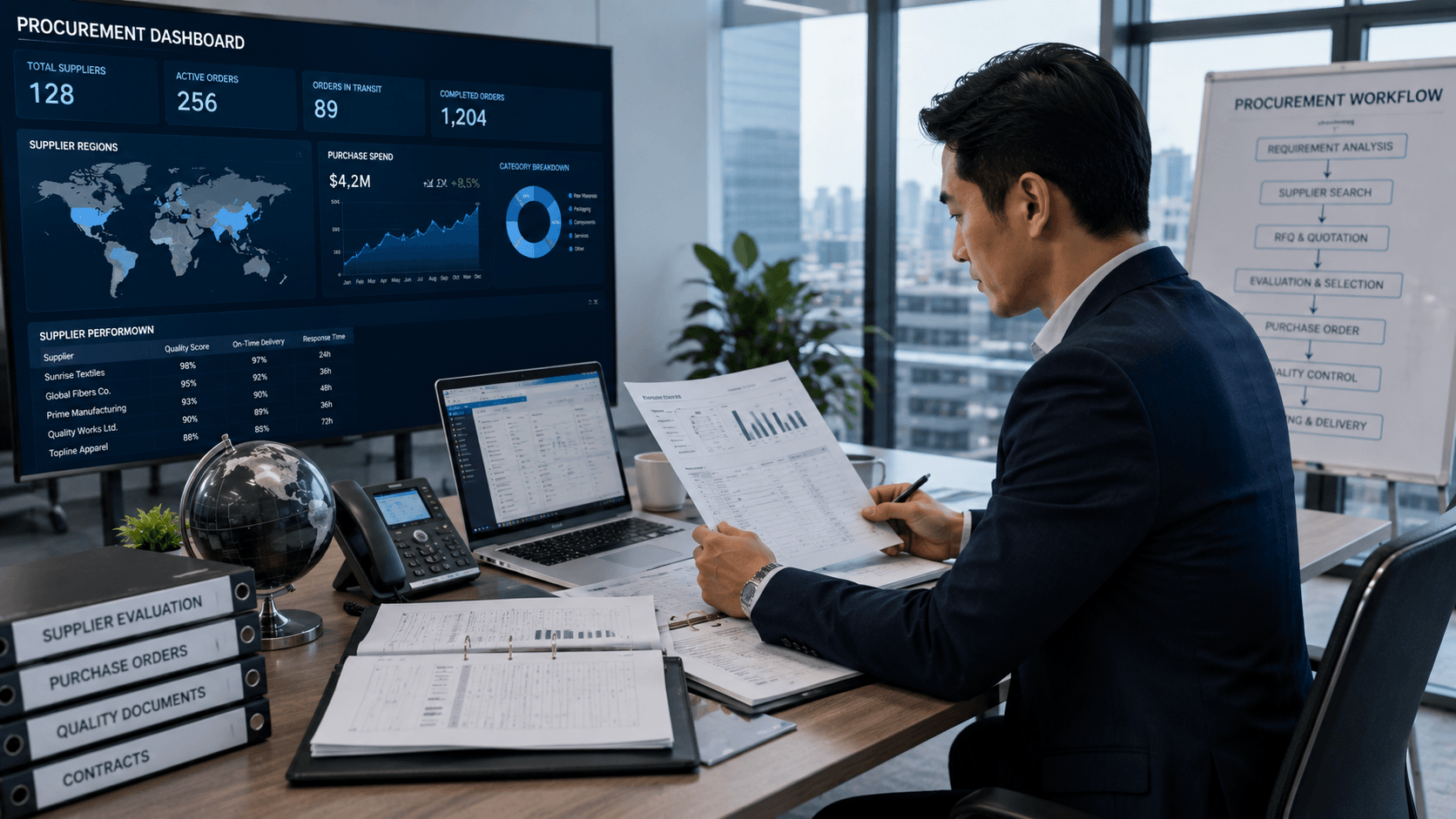
Procurement Workflow: From RFQ to Shipping
- Tech Pack Creation: Define your material blend (e.g., 75% Cotton, 23% Polyester, 2% Spandex), needle count, and size charts.
- Sampling (PPS): Expect to pay $50–$100 per custom sample. In 2026, many factories offer 3D digital samples before physical knitting to save time.
- Lab Testing: Request "Color Fastness" and "Shrinkage" tests during the sampling phase.
- Quality Inspection: For bulk orders, hire a third-party inspector (like QIMA or V-Trust) to perform a "During Production" or "Final Random Inspection."
Reference Sources:
- China National Textile and Apparel Council (CNTAC)
- General Administration of Customs of the People's Republic of China (Trade Data)
- Zhejiang Hosiery Industry Association