


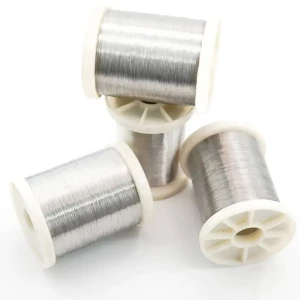
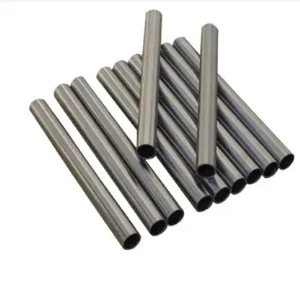
The titanium anodes for sodium hypochlorite generators produced by Shaanxi Zhuohangxin Metal Materials Co., Ltd. are the core electrolytic components. The following table summarizes the key information of this type of titanium anode to help you quickly understand its core characteristics.
Characteristic
Classification
Features
Core Material
Matrix
Commercially pure titanium (Grade 1/Grade 2), which provides structural support and corrosion resistance
Active coating
Ruthenium-iridium coatings (such as RuO₂-IrO₂) are designed for efficient chlorine evolution reactions and are key to efficient electrolysis of salt water.
performance
Electrocatalytic activity
Significantly reduces the overpotential of chlorine evolution reaction and low operating voltage
Current density
Able to withstand higher current density (e.g. up to 2500 A/m²), improving electrolysis efficiency
Service life
Under suitable conditions, the service life can reach several years (some applications mention up to 6 years)
Product form
Common types
Plate electrodes, tubular electrodes, etc., to meet the needs of different equipment structures
The Core Advantages of Titanium Anodes in Sodium Hypochlorite Generators
Ruthenium-iridium-coated titanium anodes are the preferred choice for modern sodium hypochlorite generators primarily due to their superior overall performance, offering significant advantages over traditional graphite or lead alloy anodes.
Energy Efficiency: The coating exhibits excellent electrocatalytic activity, effectively reducing the operating voltage during the electrolysis process, thereby saving energy consumption. DC power consumption can be reduced by 10%-20%.
Long Life and Stability: The titanium substrate and precious metal oxide coating are firmly bonded, resulting in dimensionally stable electrolysis environments (hence the name "Dimensionally Stable Anode" (DSA)). They exhibit excellent resistance to chlorine and alkaline corrosion, resulting in a service life far longer than graphite anodes, which can be only a few months. The substrate can also be re-coated and reused after the coating has worn off.
Safety, Reliability, and Enhanced Product Purity: As an insoluble anode, it avoids the problem of dissolution and electrolyte contamination by graphite or lead anodes, thereby ensuring the purity of the resulting sodium hypochlorite solution and avoiding the toxicity of lead anodes.
Strong Adaptability and High Efficiency: Able to withstand high current densities, this helps improve productivity per unit time and reduce equipment size.
Key Points for Selection and Use
To ensure optimal performance and extended service life of titanium anodes in sodium hypochlorite generators, consider the following points when selecting and using them:
Core Coating Matching: Sodium hypochlorite generators produce sodium hypochlorite through the electrolysis of brine. Chlorine evolution primarily occurs at the anode, so ruthenium-iridium coatings (such as ruthenium-iridium-titanium and ruthenium-iridium-tin-titanium) are typical choices. If the water hardness is high (high calcium and magnesium ion content), a formulation with improved anti-scaling properties (such as ruthenium-iridium-tin coatings with added tin) may be considered.
Water Quality Considerations: Closely monitor the levels of impurities such as fluoride ions (F⁻) and cyanide ions (CN⁻) in the electrolytic water, which can be harmful to the coating. High water hardness can easily lead to scaling, affecting heat dissipation and catalytic activity.
Operating Instructions:
Avoid Short Circuits: When powered on, be careful to prevent the cathode and anode from short-circuiting. Huge instantaneous currents can burn the electrodes.
Reduce Frequent Power Outages: When powered off, prolonged immersion of the coating in the electrolyte may damage it.
Avoid Reversal: Titanium anodes are designed for use as anodes and must not be used as cathodes. Doing so will cause the coating to rapidly fall off.
Proper Cleaning: Surface dirt or scale should be gently cleaned with a soft cloth and dilute acid (such as low-concentration citric acid or hydrochloric acid). Avoid scraping with hard objects such as wire brushes.
Summary
In summary, selecting a high-quality titanium anode for sodium hypochlorite generators is crucial to ensuring efficient, stable, and safe disinfectant production. The ruthenium-iridium-coated titanium anodes provided by Shaanxi Zhuohang Xinxin Metal Materials Co., Ltd., with their outstanding advantages such as high efficiency and energy saving, long life, and safety and stability, are undoubtedly the ideal choice for this application.We hope the above information will help you better understand titanium anodes for sodium hypochlorite generators. If you have a specific application scenario in mind or would like more specific details, we recommend communicating directly with the supplier's technical team.
We specialize in supplying titanium anodes designed specifically for sodium hypochlorite generators. These titanium anodes utilize a highly efficient ruthenium-iridium coating, resulting in high chlorine-releasing activity and significantly improved electrolysis efficiency. These anodes offer advantages such as low operating voltage, long life, and strong corrosion resistance, making them widely used in on-site disinfection, water treatment, and swimming pool applications. We offer custom options in a variety of specifications, including plate and tubular designs. These anodes are an ideal alternative to traditional anodes, ensuring stable and efficient operation of your equipment.
We have more categories for you. lf you can't find the products you want above,just fill in the form and tell us whatproducts you want to import from China.


