

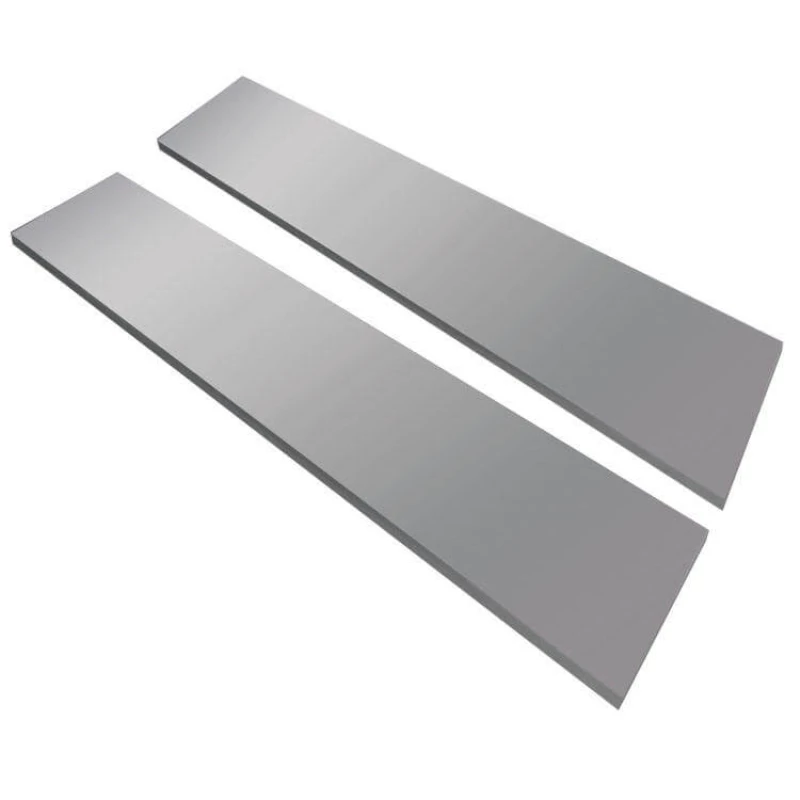
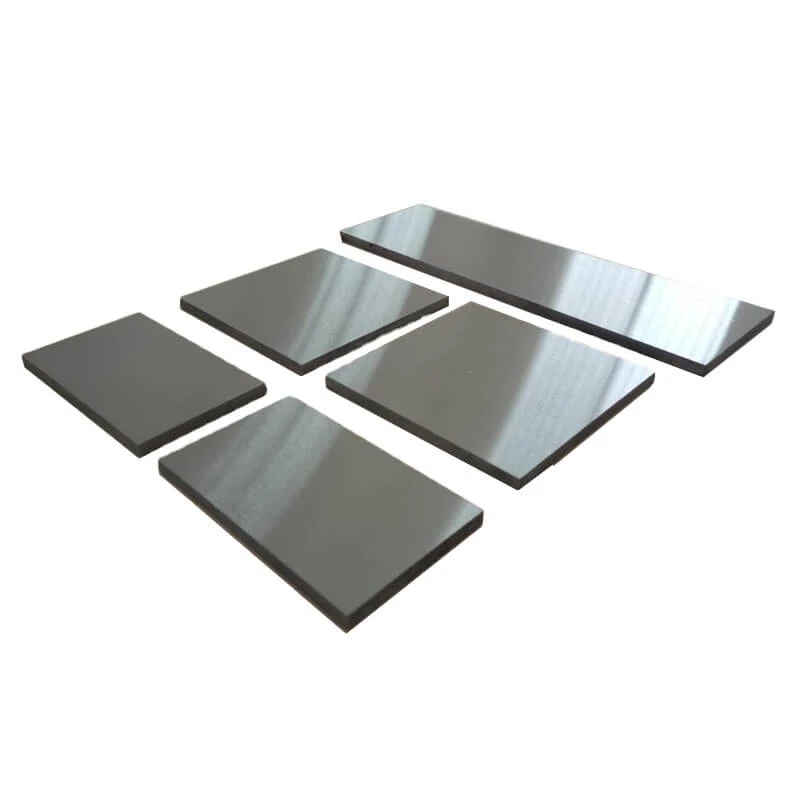

Hafnium Plate is a plate-shaped material made primarily of metallic Hafnium through processes such as electron beam melting, forging, and rolling. Hafnium is a rare, silvery-gray transition metal with unique physicochemical properties, playing a vital role in many high-tech fields.
Main Features
Hafnium plate possesses a range of excellent comprehensive properties:
Excellent Corrosion Resistance:
At room temperature, Hafnium is highly stable in seawater, fresh water, neutral salts, and alkaline solutions (such as NaOH).
It resists corrosion from fatty acids, salt water, and various organic chemicals.
However, it is soluble in hydrofluoric acid and aqua regia.
Outstanding High-Temperature Resistance: With a melting point as high as 2233℃ and a boiling point of 4603℃, it remains stable even under extreme high-temperature environments.
It maintains good strength and oxidation resistance at high temperatures, making it an ideal choice for high-temperature alloys.
Excellent Nuclear Properties: It possesses an extremely high thermal neutron absorption cross section, approximately 115b (600 times that of zirconium), making it an ideal material for nuclear reactor control.
Hafnium has a large thermal neutron trapping cross section, making it an ideal neutron absorber.
Good mechanical properties: Its density is 13.31 g/cm³, classifying it as a heavy metal.
It possesses medium to high strength, good plasticity and toughness, and is easily processed by cold and hot pressure.
Main applications:
Hafnium plates have extremely wide applications, primarily in high-tech fields:
* Nuclear energy industry (largest application area):
* Nuclear reactor control rods: Utilizing its excellent thermal neutron absorption capacity, it is used to regulate the reaction rate of nuclear reactors.
* Nuclear fuel cladding material: Its high heat resistance and stability make it suitable for use as a nuclear fuel cladding material.
Aerospace industry:
* Aero-engine components: Manufacturing high-temperature components such as turbine blades and gas turbine blades.
* Rocket nozzles and protective layers: Hafnium-niobium alloys containing 10% hafnium can be used as nozzles for lunar rockets, and tantalum-tungsten alloys containing 2% hafnium can be used as protective layer materials for spacecraft.
Electronics industry:
* X-ray tube cathode: Due to its easy emission of electrons, hafnium can be used as the cathode of X-ray tubes.
High-voltage discharge tube electrodes: Alloys of hafnium and tungsten or molybdenum are used as electrodes for high-voltage discharge tubes.
Chemical Industry
Corrosion-resistant equipment: Used in the manufacture of reactors, heat exchangers, piping systems, etc., operating stably in highly corrosive media.
Other fields
Medical devices: Used in the manufacture of artificial joints and dental restorative materials, exhibiting good biocompatibility.
Getting agent: Hafnium can be used as a getting agent in gas filling systems to remove unwanted gases such as oxygen and nitrogen.
Production process
The production of hafnium plates mainly adopts the following process flow:
Smelting: Secondary smelting is carried out in an electron beam furnace to obtain ingots.
Forging: The ingots are freely forged to obtain slabs.
Hot rolling: The slabs are hot-rolled to obtain plates.
Cold rolling: The plates are cold-rolled using a plate cold rolling mill.
Heat treatment: Vacuum annealing furnace is used for homogenization of the microstructure and heat treatment of the finished product.
Fine machining: The plates are precision ground to ensure dimensional accuracy and surface quality.
We have more categories for you. lf you can't find the products you want above,just fill in the form and tell us whatproducts you want to import from China.


