

Other recommendations for your business
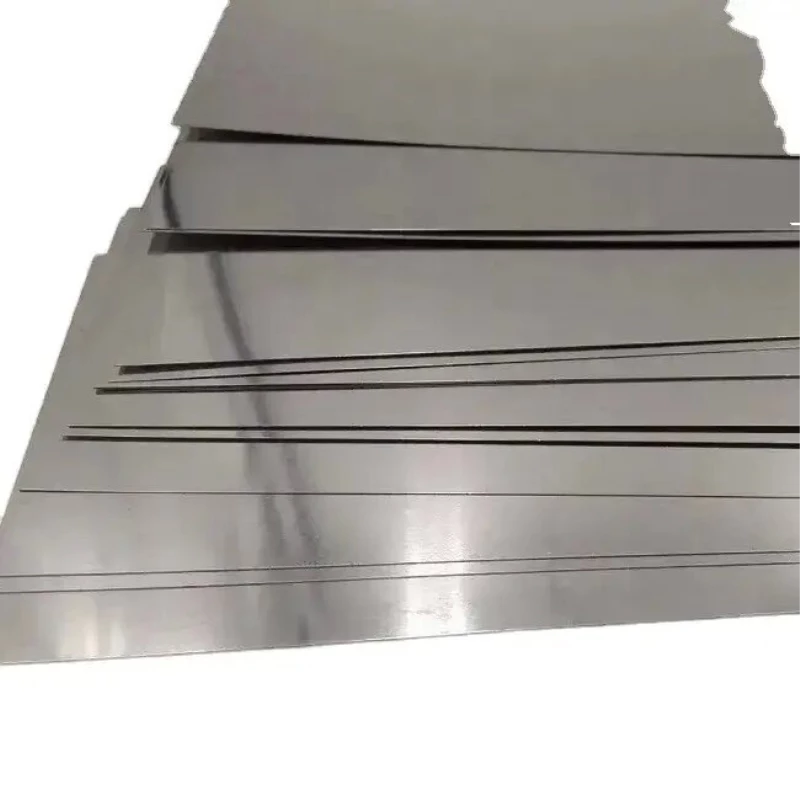
As an important high-performance metal material, tungsten sheets and plates play a key role in numerous industrial fields due to their unique properties. Below is a detailed summary of their core information.
Basic Properties and Implementation Standards
Tungsten's most prominent properties are its extremely high melting point (up to 3420°C) and high density (standard requirement: no less than 19.1-19.3 g/cm³). This enables it to maintain excellent strength and creep resistance even at high temperatures, as well as possessing excellent thermal and electrical conductivity. It also has a very low coefficient of thermal expansion and excellent dimensional stability.
In China, tungsten plate products primarily adhere to the national standard GB/T 3875-2017 "Tungsten Plate." This standard specifies requirements for product grade, chemical composition, dimensional tolerance, physical properties (such as density), and appearance quality. Another common international standard is the American Society for Testing and Materials' ASTM B760. The common W1 grade in this standard requires a tungsten content of no less than 99.95%.
Depending on thickness and application, these products are referred to by different names: extremely thin tungsten foil (typically less than 0.1mm thick), thin sheets, plates of a certain thickness, and thicker pieces, blocks. Surface treatments also vary, including rolled, alkali-washed, polished (surface roughness Ra can reach less than 0.6μm), and electropolished, to meet diverse application requirements.
Main Applications
Due to their exceptional performance, tungsten sheets and plates are widely used:
Electronics and Semiconductor Industries: Used in the manufacture of semiconductor ion implantation components, sputtering targets (for coating), and tungsten boats for vacuum coating.
High-Temperature Furnaces and Thermal Processing: Used as core components in high-temperature furnaces, such as heating elements, heat shields, crucibles, and pusher plates, they can operate stably and long-term in vacuum or inert gas environments below 2600°C.
Aerospace and High-End Manufacturing: Utilizing its high-temperature strength, tungsten sheets and plates can be used in rocket engine components or as a high-temperature mold material.
Medical and Radiation Protection: Used in the manufacture of medical diagnostic equipment (such as substrates for X-ray tube targets) and radiation shielding components.
Other Applications: Also includes vacuum devices and electric light source components.
Production Process and Key Processing Points
Tungsten products are typically produced using powder metallurgy: high-purity tungsten powder is compacted using techniques such as isostatic pressing, then sintered at high temperatures to produce dense slabs. Finally, the final product is obtained through a series of rolling processes (hot rolling, warm rolling, and cold rolling) and subsequent treatments (such as annealing, alkali cleaning, and polishing).
Because tungsten has poor ductility and is relatively brittle at room temperature, it is difficult to process. The rolling process often requires heating (hot rolling can reach temperatures of 1350-1500°C) and the use of special rolls. Furthermore, tungsten is susceptible to oxidation at high temperatures (over 500°C) in air, so high-temperature applications typically require vacuum or inert atmosphere protection.
Summary and Material Selection Recommendations
In general, tungsten sheets and plates are refractory metals with excellent performance. When selecting, it's important to consider purity, density, dimensional accuracy, surface condition, and whether it meets specific requirements for use in high-temperature or corrosive environments. Many suppliers also offer custom production services for applications requiring specialized performance or dimensions.
I hope this information provides a more comprehensive understanding of tungsten sheets and plates. If you have further questions about a specific application scenario or detail, I'd be happy to provide further analysis.
Basic Properties and Implementation Standards
Tungsten's most prominent properties are its extremely high melting point (up to 3420°C) and high density (standard requirement: no less than 19.1-19.3 g/cm³). This enables it to maintain excellent strength and creep resistance even at high temperatures, as well as possessing excellent thermal and electrical conductivity. It also has a very low coefficient of thermal expansion and excellent dimensional stability.
In China, tungsten plate products primarily adhere to the national standard GB/T 3875-2017 "Tungsten Plate." This standard specifies requirements for product grade, chemical composition, dimensional tolerance, physical properties (such as density), and appearance quality. Another common international standard is the American Society for Testing and Materials' ASTM B760. The common W1 grade in this standard requires a tungsten content of no less than 99.95%.
Depending on thickness and application, these products are referred to by different names: extremely thin tungsten foil (typically less than 0.1mm thick), thin sheets, plates of a certain thickness, and thicker pieces, blocks. Surface treatments also vary, including rolled, alkali-washed, polished (surface roughness Ra can reach less than 0.6μm), and electropolished, to meet diverse application requirements.
Main Applications
Due to their exceptional performance, tungsten sheets and plates are widely used:
Electronics and Semiconductor Industries: Used in the manufacture of semiconductor ion implantation components, sputtering targets (for coating), and tungsten boats for vacuum coating.
High-Temperature Furnaces and Thermal Processing: Used as core components in high-temperature furnaces, such as heating elements, heat shields, crucibles, and pusher plates, they can operate stably and long-term in vacuum or inert gas environments below 2600°C.
Aerospace and High-End Manufacturing: Utilizing its high-temperature strength, tungsten sheets and plates can be used in rocket engine components or as a high-temperature mold material.
Medical and Radiation Protection: Used in the manufacture of medical diagnostic equipment (such as substrates for X-ray tube targets) and radiation shielding components.
Other Applications: Also includes vacuum devices and electric light source components.
Production Process and Key Processing Points
Tungsten products are typically produced using powder metallurgy: high-purity tungsten powder is compacted using techniques such as isostatic pressing, then sintered at high temperatures to produce dense slabs. Finally, the final product is obtained through a series of rolling processes (hot rolling, warm rolling, and cold rolling) and subsequent treatments (such as annealing, alkali cleaning, and polishing).
Because tungsten has poor ductility and is relatively brittle at room temperature, it is difficult to process. The rolling process often requires heating (hot rolling can reach temperatures of 1350-1500°C) and the use of special rolls. Furthermore, tungsten is susceptible to oxidation at high temperatures (over 500°C) in air, so high-temperature applications typically require vacuum or inert atmosphere protection.
Summary and Material Selection Recommendations
In general, tungsten sheets and plates are refractory metals with excellent performance. When selecting, it's important to consider purity, density, dimensional accuracy, surface condition, and whether it meets specific requirements for use in high-temperature or corrosive environments. Many suppliers also offer custom production services for applications requiring specialized performance or dimensions.
I hope this information provides a more comprehensive understanding of tungsten sheets and plates. If you have further questions about a specific application scenario or detail, I'd be happy to provide further analysis.
Supplier's popular products
Contact Supplier
We have more categories for you. lf you can't find the products you want above,just fill in the form and tell us whatproducts you want to import from China.


